Piye

King of Kush, who sent troops to unify Egypt and founded the 25th Dynasty.
Life
King of Kush
Piye was king of the Kingdom of Kush on the upper Nile, with his capital at Napata. Egypt at this time had long been divided in the Third Intermediate Period, with local princes holding their own territories and the rulers of the north fighting one another, while Kush was gradually building up strength in the south and saw itself as the true heir of Egypt's orthodox worship of Amun.
Northern campaign and unification
When the northern princes joined forces to close in on Thebes, he led his army north to intervene, advancing all the way to the walls of Memphis and capturing it. Local rulers submitted to him one after another, and he thereby founded the 25th Dynasty, ruling Upper and Lower Egypt and Nubia. After the war, however, he promptly returned to Napata, keeping Nubia as the core of his rule.
Victory Stela
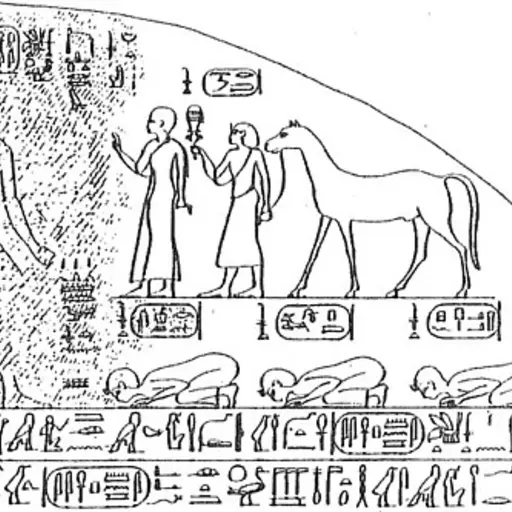
He recorded this campaign in detail on the famous "Victory Stela," in a solemn style close to epic, emphasizing his pious service to Amun and his clemency toward the defeated. Such royal inscriptions are strongly self-promotional in nature, and scholars using them as sources usually cross-check them against other local Egyptian inscriptions.
Legacy
Piye inaugurated the 25th Dynasty, under which Nubians ruled Egypt for nearly a century, and is often seen as the start of the era of the "Black Pharaohs." He presented himself as a guardian of Egypt's orthodox religion and traditions rather than as a foreign conqueror, a stance that led his successors to build temples on a grand scale across Egypt and revive ancient styles. His Victory Stela, set up in the Temple of Amun at Jebel Barkal, is one of the most detailed sources for the political landscape of the Third Intermediate Period.
Major works & achievements
- Marched north and took Memphis
- The lords submit; founds the 25th Dynasty
- Erected the Victory Stela recording his campaigns
Did you know? The Victory Stela records that after entering the city he flew into a rage on finding the horses in the enemy king's stables starving; sacrificed horses have also been found near his royal tomb.
Key dates
- 744 BCEBecame King of Kush
- 732 BCEMarched north to intervene in Egypt's civil war
- 728 BCEReached Memphis; the states submitted
- 720 BCEReturned to Napata and ruled Egypt from afar
- 714 BCEDied; the Victory Stela was erected to record his deeds