Plato
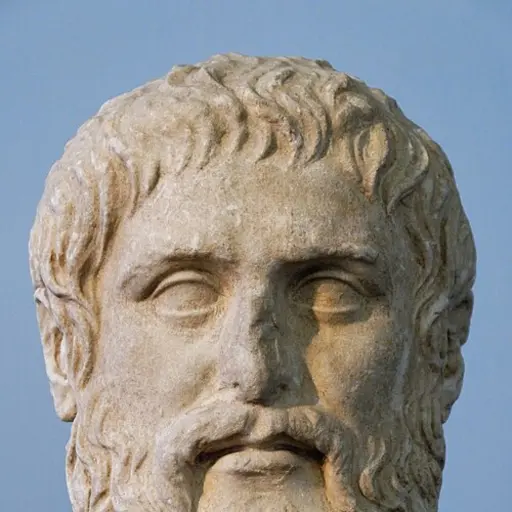

Founded the Academy and proposed the Theory of Forms, setting the basic questions of Western philosophy.
Life
Political Ideals Shattered
Plato came from a prominent Athenian family and aspired to politics as a young man. Athens' defeat in the Peloponnesian War, the tyranny of the Thirty and the death of his teacher Socrates left him thoroughly disillusioned with actual politics, and he turned to asking what kind of order in the city and in the soul could truly be called just.
Founding the Academy
He traveled to southern Italy and Sicily, where he encountered the Pythagoreans, and c. 387 BCE founded the Academy on the outskirts of Athens, teaching mathematics and dialectics. His dialogues, with Socrates as the main character, put forward the Theory of Forms, the tripartite soul and the idea of the philosopher-king; The Republic is his best-known work.
Journeys to Sicily
He went to Syracuse three times to try to put his political ideas into practice, failing each time. The Academy lasted nearly 900 years, and his works survive complete; they profoundly influenced Aristotle, Neoplatonism and Christian theology. Later readers have also sharply criticized the hierarchical arrangements and censorship of speech designed in The Republic.
Legacy
Plato is one of the most influential thinkers in the history of Western philosophy; Whitehead once said that the European philosophical tradition consists of a series of footnotes to Plato. His Theory of Forms and his doctrine of the soul profoundly influenced Christian theology, and the Academy he founded is often seen as the prototype of Western higher education. However, modern thinkers such as Karl Popper have criticized the vision of The Republic as having totalitarian tendencies, a debate that continues today.
Major works & achievements
- The Republic
- Dialogues such as the Symposium and the Phaedo
- Founded the Academy in Athens
- Proposed the Theory of Forms and the philosopher-king
Did you know? The English word "academy," meaning a college or institute, comes from the name of the grove of Akademos where Plato's Academy stood.
Key dates
- 407 BCEStudies under Socrates
- 399 BCEDeath of Socrates; left Athens
- 388 BCEFirst trip to Sicily
- 387 BCEFounded the Academy in Athens
- 375 BCEWrites The Republic, c. this time
- 367 BCEReturned to Syracuse to tutor Dionysius the Younger
- 361 BCEThird trip to Sicily fails
- 347 BCEDied in Athens