Shang Yang
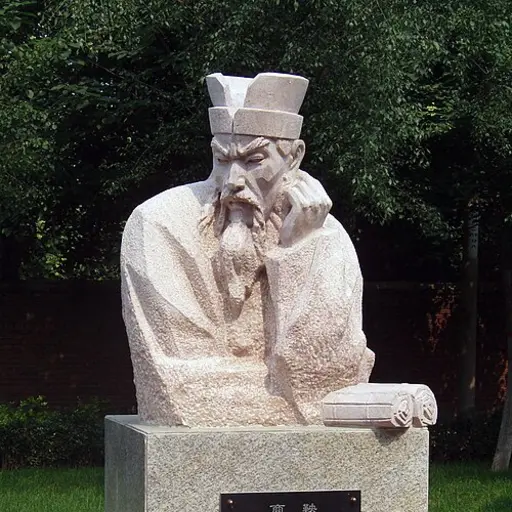

Strengthened Qin through reform, but after his success was torn apart by chariots at the hands of the old nobility.
Life
Rising in Qin
Shang Yang was a son by a secondary wife in the ducal clan of the State of Wey. In his early years he served in the chancellor's household in the State of Wei without being given any important post; later he went west to the State of Qin, bringing the reform experience of Li Kui and Wu Qi, and won the favor of Duke Xiao of Qin, who was determined to make his state strong and put him in charge of reform. Qin then lay on the western frontier and was regarded by the states of the Central Plains as a backward land.
Two Rounds of Reform
He rewarded farming and warfare, abolished the privileges of the hereditary nobility and granted ranks according to military merit; he also standardized weights and measures and set up a household registration system of groups of five and ten households bound by collective liability. His two rounds of reform quickly made Qin rich and strong and laid the institutional foundation for its later unification of the six states. At the start of the reforms he won the people's trust by setting up a wooden pole and rewarding whoever moved it, and he also established his authority by severely punishing the tutor of the crown prince, a nobleman who had broken the new laws.
Torn Apart by Chariots and Legacy
After Duke Xiao of Qin died, the old nobles he had offended struck back and accused him of rebellion. When he fled, he could find nowhere to hide because his own new laws forbade inns to lodge anyone without credentials; he was finally captured and executed by being torn apart by chariots. Later generations often describe this end as being "caught by his own law," an example of harsh laws turning on their maker, but some scholars point out that the institutional framework he built endured for more than a century afterward and directly underpinned Qin's unification.
Legacy
The Reforms of Shang Yang were among the most thorough reforms of the Warring States period, lifting the State of Qin from a weak state on the western frontier to the foremost of the Seven Warring States and laying the institutional foundation for Qin's unification of the six states. His ideas of favoring agriculture over commerce, harsh punishments, and governing by law had a far-reaching influence on later centralized systems of rule, and many of his institutions endured for a thousand years as "the Han inherited the Qin system." But the reforms neglected moral education and imposed severe punishments; Sima Qian called him "harsh by nature," and later Confucians also criticized him widely.
Major works & achievements
- Led two rounds of reform in Qin
- Rewarded farming and warfare; granted ranks by military merit
- Introduced counties and collective liability in groups of ten and five
- Standardized weights and measures
Did you know? The Shanghai Museum holds the "Shang Yang square sheng," a measuring vessel made under Shang Yang's supervision and a precious physical relic of Qin's standardization of weights and measures.
Key dates
- 390 BCEBorn c. in the State of Wey
- 361 BCEEntered Qin and won the favor of Duke Xiao of Qin
- 356 BCELaunched the first round of reforms
- 350 BCEMoved the capital to Xianyang and carried out the second round of reform
- 341 BCEQin grew ever stronger after the Battle of Maling
- 338 BCEDuke Xiao of Qin died; Shang Yang was torn apart by chariots