Epaminondas
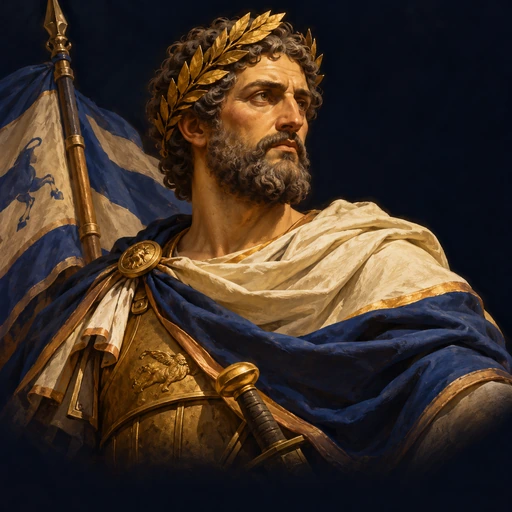
The Theban general who defeated Sparta at Leuctra with the oblique order, ending Spartan hegemony.
Life
Impoverished noble
Epaminondas came from an impoverished noble family of Thebes and lived in poverty; he studied Pythagorean philosophy, was renowned for his integrity, and led Thebes together with his close friend Pelopidas.
Leuctra
In 371 BCE at Leuctra he used the "oblique order," massing his forces on the left wing, to defeat the Spartan hoplites thought to be invincible; the Spartan king was killed in battle. He later marched into the Peloponnese several times, freeing the Messenians whom Sparta had enslaved for centuries and helping them found a city.
Liberation of Messenia
In 362 BCE he won again at the Battle of Mantinea but was mortally wounded; on learning of the victory, he had the spearhead pulled out and died. Plutarch's biography of him has been lost.
Legacy
Epaminondas's oblique order was a major innovation in military history; the Macedonian prince Philip (Alexander's father), who was held hostage in Thebes as a youth, learned a great deal from it.
Did you know? After his death, Theban hegemony quickly declined. Cicero called him the greatest man of Greece.
Key dates
- 371 BCEBattle of Leuctra
- 370 BCEMarched into the Peloponnese (approx.)
- 369 BCELiberation of Messenia
- 362 BCEKilled in battle at Mantinea