Marco Polo
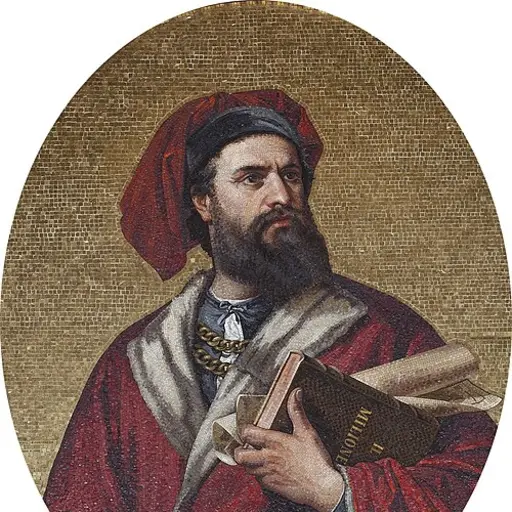

Traveled in Yuan China and left a travelogue that shaped European images of the East.
Life
Venetian Merchant Family
Marco Polo was born into a merchant family in Venice; his father and uncle had traveled east to the Mongol court. In the 13th century the Mongol Empire spanned Eurasia, its trade routes and relay stations were relatively safe, and the Italian city-republics were rapidly expanding their trade with the East, making long-distance travel possible.
Journey East and Service to the Yuan
In 1271 he set out with his father and uncle from the eastern Mediterranean coast, crossing Mesopotamia, the Iranian Plateau, the Pamirs and the Hexi Corridor, and c. 1275 reached Shangdu to meet Kublai Khan. By his own account he served the Yuan for more than ten years, was sent on missions to Yunnan, Burma and the southeastern coast, and in 1291 escorted Princess Kököchin west by sea.
Travels and Controversy
After returning home he dictated his experiences in a Genoese prison to Rustichello, who wrote them up as The Travels of Marco Polo. Its descriptions of Yuan cities, paper money, the postal relay system and the products of the East caused a sensation in Europe, though its authenticity has long been questioned. It fired the imagination of later navigators, including Columbus, about the East.
Legacy
Marco Polo's travelogue was an important source of knowledge about the East for medieval Europeans. It inspired later generations' fascination with Asia and had some influence on the Age of Discovery. Scholars have debated whether he actually reached China: skeptics point out that the book does not mention the Great Wall, Chinese characters or tea drinking, while supporters argue that its details about Yuan institutions and the escorting of a princess can be corroborated by Chinese sources. Most scholars today lean toward the view that he really did come to China.
Major works & achievements
- Dictated The Travels of Marco Polo
- Described Yuan cities, paper money and postal relays
- Escorted Princess Kököchin back west
Did you know? The original manuscript of his travelogue is lost; about 150 copies survive in various languages, and their contents differ considerably.
Key dates
- 1271Left Venice heading east with his father and uncle
- 1275Reaches Shangdu and meets Kublai Khan
- 1280Reportedly sent on missions to the southwest and the South Seas
- 1291Escorted a princess west by sea from Quanzhou
- 1295Returned to Venice
- 1298Captured in the war between Venice and Genoa
- 1299Dictates in prison; the Travels are written
- 1324Died of illness in Venice