Xu Xiake
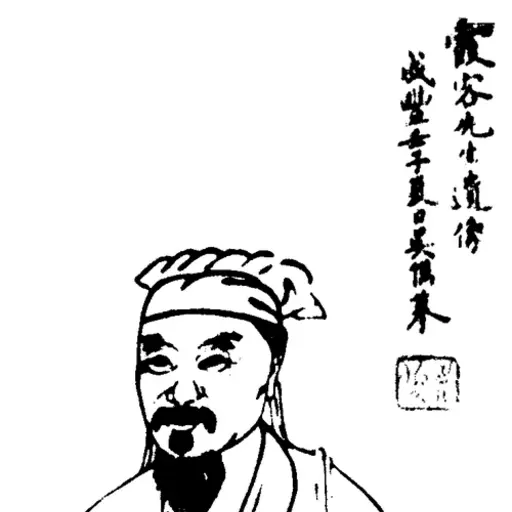

Explored most of China on foot and wrote a monumental geographical travelogue.
Life
Youth in Jiangyin
Xu Xiake came from a well-off family in Jiangyin, Jiangsu. From childhood he read widely in geographies and local gazetteers, disdained the imperial examinations, and with his mother's support set out to travel. By the mid and late Ming era post roads and trade routes were fairly well developed, but on the karst landforms and river sources of the southwestern frontier, scholars largely repeated old accounts, with little field investigation.
Traveling north and south
From his twenties onward he made dozens of journeys, reaching what is now East and South China and as far as the borders of Yunnan and Guizhou. He surveyed in particular detail the caves, underground rivers and mountain ranges of karst landscapes, corrected the old view in earlier geographies on the relationship between the sources of the Yangtze and the Jinsha, and recorded what he saw and measured along the way in diary form.
The long journey southwest
In 1636 he began his last and farthest journey, to the southwest, which lasted four years; on reaching Yunnan, a worsening foot ailment forced him to return home, and he died of illness the following year. His diaries were compiled by later editors as The Travels of Xu Xiake, valued both for geography and for their literary quality; because the original manuscripts were scattered and lost, the surviving versions went through multiple rounds of compilation, and scholars still debate the order of some entries.
Legacy
Through decades of travel on foot, Xu Xiake combined field observation with daily records and is regarded as an outstanding representative of geographical exploration in premodern China. The descriptions of karst landforms and river sources in The Travels of Xu Xiake were well ahead of their time and also possess the beauty of landscape literature, earning it later praise as "a unique book for the ages." Some scholars note, however, that his measurements and judgments were limited by the conditions of his time, and certain conclusions need to be re-examined with modern geography.
Major works & achievements
- The Travels of Xu Xiake
- Surveyed the karst landscapes of the southwest
- Investigated the sources of the Yangtze and the Jinsha
Did you know? May 19, the date recorded at the opening of his "Diary of a Journey to Mount Tiantai," has been designated "China Tourism Day."
Key dates
- 1607Began traveling
- 1613Toured the landscapes of Zhejiang and Fujian
- 1618Climbed Mount Huangshan again
- 1628Traveled south to Mount Wuyi in Fujian
- 1636Set out on his 10,000-li journey to the southwest
- 1638Reached Yunnan
- 1640Returned home from Yunnan due to illness
- 1641Died in his hometown