Pliny the Elder
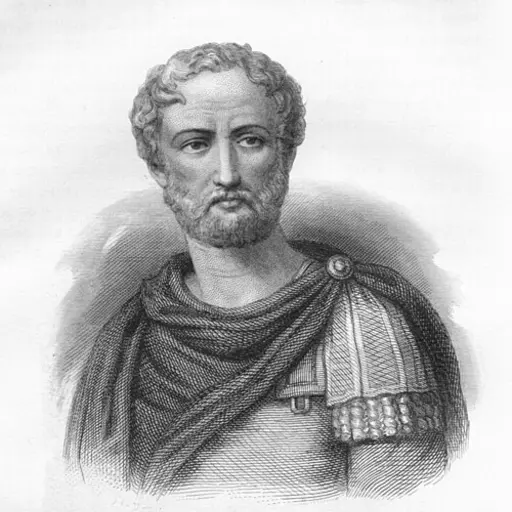

Wrote the Natural History and died during the eruption of Vesuvius.
Life
Equestrian military career
Pliny the Elder was born into an equestrian family in Como in northern Italy. In his early years he served in the army on the frontier of Germania, then held a series of administrative and military posts in several provinces, and late in life became commander of the Roman fleet on the Bay of Naples, stationed at Misenum.
Wrote the Natural History
He used his spare time from official duties to collect material widely and wrote the encyclopedic Natural History in thirty-seven books, covering astronomy, geography, animals, plants and minerals and even the arts; it is the largest work of natural history to survive from the ancient West and directly shaped European understanding of the natural world for more than a thousand years afterward.
Died at Vesuvius
When Mount Vesuvius erupted in 79 CE, he led the fleet across the bay to observe the strange phenomenon and try to rescue people on the shore, and died, suffocated by the thick smoke and toxic fumes; his nephew Pliny the Younger recorded what happened. Later generations often romanticize his death as the legend of "a scientist who gave his life for knowledge," but the contemporary account equally stresses his sense of duty in rescuing friends; the two are not mutually exclusive, yet they are often simplified into a single motive.
Legacy
Pliny the Elder's Natural History is the largest encyclopedia of classical antiquity. It preserves a wealth of material from ancient texts and art history that are otherwise lost; medieval manuscript copies circulated widely, and in the Renaissance it was still regarded as an authority on knowledge of nature. It is also mixed with many hearsay marvels and fabulous beasts, and later scholars criticized it for lacking discrimination. His martyrdom in the volcanic eruption was recorded by his nephew Pliny the Younger, and the volcanological term "Plinian eruption" derives from that account.
Major works & achievements
- Natural History in thirty-seven books
- Preface claims to gather 20,000 facts
- History of the Wars in Germania (Bella Germaniae), 20 books (lost)
Did you know? According to Pliny the Younger, he treasured every moment, having books read aloud to him even while bathing and dining and taking notes as he listened.
Key dates
- 23Born in Como, northern Italy
- 47Served in the army in Germania
- 70Governor of a province in Spain
- 77Completed the Natural History in thirty-seven books
- 79Led the fleet to the rescue during the eruption of Vesuvius and died