Charaka
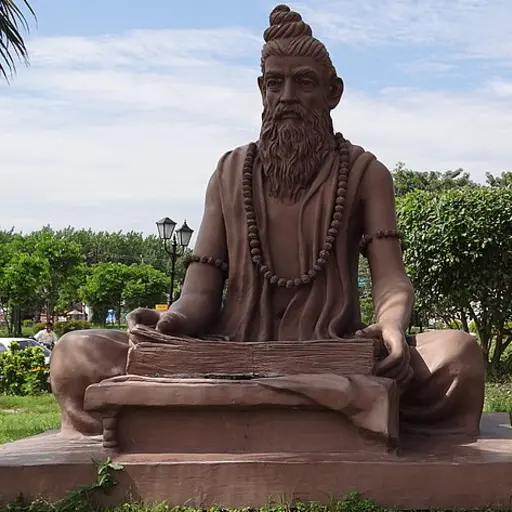

Expanded the Charaka Samhita, laying the foundations of Ayurvedic medicine.
Life
Physician of Legend
Almost nothing can be verified about Charaka's life. He is traditionally believed to have been a physician active in northwestern India during the Kushan Empire, who expanded and reorganized the older Agnivesha Samhita into the surviving Charaka Samhita, one of the most important foundational texts of the Ayurvedic system of medicine.
Essentials of the medical canon
This medical classic systematically discusses the causes of disease, methods of diagnosis, the combination of drugs and ways of preserving health. It stresses that physicians should examine patients in person and treat them according to their individual constitutions, and it also sets out a code of professional ethics resembling a "Physician's Oath," requiring physicians to keep patients' confidences and not seek personal gain, echoing the Hippocratic tradition of the Mediterranean world while having developed independently of it.
The man and the book
Because the text was continually expanded and revised over several centuries, scholars have not settled whether "Charaka" was a single historical person or a title borne by compilers over several generations. Many of the book's prescriptions and theories were later shown to be ineffective, but its methodological emphasis on observing each patient's individual differences is still regarded today as an important legacy in the history of traditional medicine.
Legacy
The Charaka Samhita is the most important classic of internal medicine in Ayurveda. Ranked alongside the surgery-focused Sushruta Samhita, it remains a foundational text of traditional Indian medical education today. It emphasizes investigating the causes of disease, individual constitution, and regulation of diet and daily habits, and its demands of medical ethics are often compared with the Hippocratic Oath of Hippocrates. Under the Abbasid Caliphate it was translated into Arabic, and its influence extended to Islamic medicine. However, Charaka's life is hard to verify and the text accumulated in layers, so it should not simply be treated as the work of one person.
Major works & achievements
- Compiled the Charaka Samhita
- Systematically set out the Humoral Theory of the three doshas: wind, bile and phlegm
- Set out a code of ethics for physicians
- Ranked with the Sushruta Samhita as one of the two great classics of Ayurveda
Did you know? The Chinese Buddhist scripture Za Baozang Jing records a physician named "Charaka" who served King Kanishka, a passage often used to date him.
Key dates
- 50Lived c. in the time of the Kushan Empire
- 80Edited and expanded the Charaka Samhita
- 100Systematically described causes of disease, diagnosis and remedies
- 120Advocated medical ethics and clinical observation
- 150Died c. (date unknown)