Su Shi
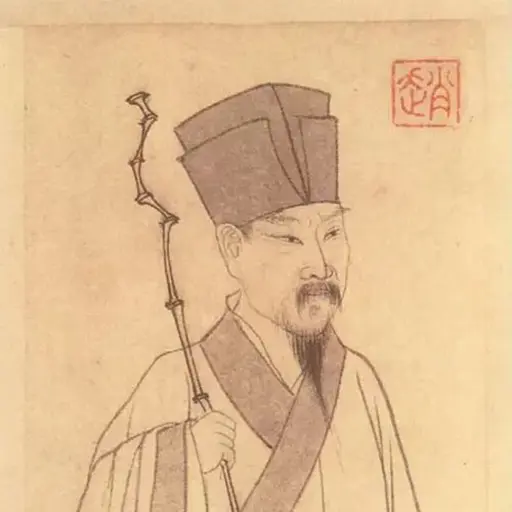

Master of poetry, ci lyrics, prose, calligraphy and painting who pioneered heroic-style ci poetry; an emblem of Song culture.
Life
The Three Sus Go to the Capital
Su Shi, courtesy name Zizhan, was from Meishan in Meizhou; with his father Su Xun and brother Su Zhe he was one of the "Three Su." In 1057 he and his brother passed the jinshi exam in the same year, and the praise of Ouyang Xiu made him famous in the capital. The Northern Song had long been at peace but was poor and weak, and the scholar-officials were split between reform and preserving the status quo; factional strife ran through almost his entire life.
Provincial Posts and Huangzhou
Because he opposed pushing the New Policies too quickly, he was posted out to Hangzhou, Mizhou, Xuzhou and elsewhere, where he built water-control works, provided famine relief and built the Su Causeway. In 1079 he was imprisoned in the Crow Terrace Poetry Case, narrowly escaped execution, and was demoted to deputy militia commissioner of Huangzhou. In Huangzhou he farmed the eastern slope (Dongpo) and wrote the Ode to the Red Cliff and Nian Nu Jiao: Meditating on the Past at Red Cliff, the high point of his literary achievement.
Further Exile and Equanimity
Under Emperor Zhezong of Song he briefly returned to court as a Hanlin academician, but, unwelcome to both the reformist and conservative factions, he was again banished to Huizhou and Danzhou, where he set up schools and taught in Lingnan and Hainan. Skilled in poetry, ci, prose, rhapsody, calligraphy and painting, he pioneered the heroic style of ci, ranked among the Eight Great Prose Masters of Tang and Song for his essays, and his broad-minded outlook on life became an important spiritual resource for later scholars.
Legacy
Su Shi was a rare polymath in the history of Chinese literature, first-rate in poetry, ci lyrics, prose, calligraphy and painting alike. He pioneered the heroic style of ci poetry, ranks among the Eight Great Prose Masters of Tang and Song, and heads the "Four Masters of Song" in calligraphy. Though repeatedly demoted and exiled throughout his life, he kept a broad-minded serenity in adversity, and his personal charm has been deeply admired by later generations. Politically he opposed the hasty pace of the New Policies yet did not support the conservatives' wholesale abolition of them, pleasing neither side, which also reflects his independent political views.
Major works & achievements
- Ode to the Red Cliff
- Nian Nu Jiao: Meditating on the Past at Red Cliff
- Shui Diao Ge Tou: When Will the Bright Moon Appear?
- Cold Food Observance
- Dredges West Lake and builds the Su Causeway
Did you know? Of the Eight Great Prose Masters of Tang and Song, three places are held by one father and his two sons: Su Xun, Su Shi and Su Zhe.
Key dates
- 1057Passed the jinshi exam in the same year as his brother Su Zhe
- 1071Sent to Hangzhou as vice prefect for opposing the New Policies
- 1077Governor of Xuzhou; leads the people against floods
- 1079Imprisoned in the Crow Terrace Poetry Case
- 1080Demoted to deputy militia commissioner of Huangzhou
- 1082Wrote the two Red Cliff Rhapsodies and "Meditation on the Past at Red Cliff"
- 1089Governor of Hangzhou again; dredges West Lake and builds the Su Causeway
- 1094Exiled to Huizhou
- 1101Died of illness at Changzhou on his way back north