Raden Adjeng Kartini
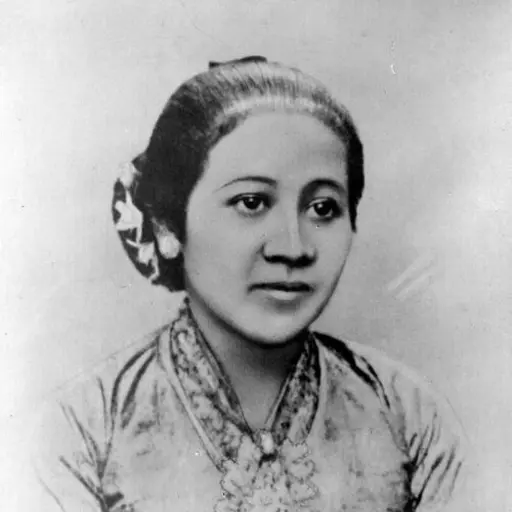

A Javanese noblewoman whose letters called for girls' education and social reform; she is honored as a forerunner of women's emancipation in Indonesia.
Life
Secluded until marriage
Kartini was born in 1879 in Jepara, Central Java, where her father was the local regent. She attended a Dutch-language primary school and excelled in her studies, but in keeping with the customs of the Javanese nobility, from the age of twelve she was required to stay at home awaiting marriage and could no longer attend school. During her long years of seclusion she read widely in Dutch books and periodicals, encountering the European women's movement and social thought.
Letters and ideas
From 1899 Kartini corresponded with Dutch friends, including the Dutch feminist Stella Zeehandelaar and the colonial education official J. H. Abendanon and his wife. In her letters she criticized the traditions of arranged marriage, polygamy and denying girls an education, and also reflected on the condition of Javanese society under colonial rule, hoping that education would allow Javanese women to become self-reliant. She won an opportunity to study in the Netherlands, but in the end did not go.
Schooling and legacy
In 1903 Kartini married the regent of Rembang and, with her husband's support, opened a school for girls of noble families. In September 1904 she died a few days after giving birth to a son, aged only twenty-five. In 1911 Abendanon compiled her letters and published them as Out of Darkness into Light, which attracted wide attention; girls' schools named after her were later opened across the Netherlands and Indonesia. In 1964 she was posthumously recognized as a national hero, and her birthday, April 21, was designated "Kartini Day."
Legacy
Raden Adjeng Kartini is regarded as a forerunner of women's emancipation and national awakening in Indonesia. Drawing on her own experience, her letters exposed the double bondage that colonial rule and traditional customs imposed on women, and they influenced the later movement for girls' education. Some scholars point out, however, that her letters were edited and published by Abendanon and carry a propaganda tinge of the Dutch "Ethical Policy," and that after Indonesian independence her image was shaped by the state, so understanding her thought requires a full examination of the original letters.
Major works & achievements
- Criticized arranged marriage and polygamy in her letters
- Opened a school for Javanese girls
- Letters collected as Out of Darkness Comes Light
- April 21 is designated "Kartini Day"
Did you know? The Indonesian song "Ibu Kita Kartini" (Our Mother Kartini) was written in her honor by W. R. Supratman, composer of the national anthem.
Key dates
- 1879Born in Jepara, Central Java
- 1892Left school per noble custom to stay home awaiting marriage (approx.)
- 1899Began corresponding with Dutch friends
- 1903Married the regent of Rembang; opened a girls' school
- 1904Died after childbirth
- 1911Letters collected as Out of Darkness Comes Light published
- 1964Posthumously recognized as a national hero