Cnut the Great
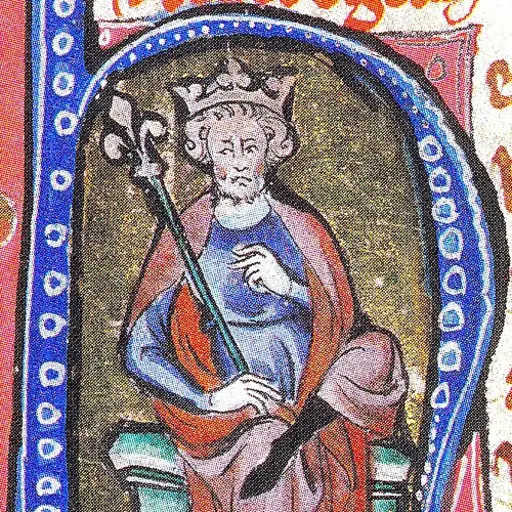

The most powerful monarch of the Viking Age, who built the "North Sea Empire" spanning the North Sea.
Life
Invading England with His Father
Cnut was the son of Sweyn Forkbeard, King of Denmark, born sometime around 990—995. In 1013 he joined his father's invasion of England, and Sweyn was briefly acknowledged as King of England but died the following year. Cnut was forced to withdraw to Denmark; in 1015 he crossed the sea again with a large army and fought fiercely against the English prince Edmund Ironside. In 1016 the two sides made peace and divided England, and when Edmund died that same year Cnut became king of all England.
North Sea Empire
After taking the throne, Cnut married Emma of Normandy, widow of the former king Æthelred II, as a sign of continuity. He kept England's existing laws and administrative institutions, divided the country into several great earldoms, and governed through both English and Danes. In 1018 he inherited the Danish throne, and in 1028 he drove out King Olaf II of Norway and took Norway, so that his rule covered England, Denmark, Norway and parts of Sweden.
Piety and Collapse
Cnut was a devout Christian. In 1027 he went to Rome to attend the coronation of the Holy Roman Emperor Conrad II and secured easier passage for northern pilgrims and merchants. After he died in 1035, his sons could not hold the empire together, and the North Sea Empire quickly fell apart. The later story of him ordering the tide to recede to show the limits of royal power first appears in the account of the 12th-century chronicler Henry of Huntingdon, and its truth cannot be verified.
Legacy
Cnut was the only ruler of the Viking Age to build an empire spanning the North Sea. In England he pursued policies of continuity and integration, stabilizing his rule through marriage alliances, preserving existing institutions and employing local nobles, and churchmen of his day praised him as a pious Christian king. Yet the empire depended heavily on his personal prestige and lacked a unified institutional basis; it fell apart within a few years of his death, and the English throne soon returned to the royal house of Wessex.
Major works & achievements
- 1016: Became king of all England
- Also king of Denmark and Norway
- Kept England's existing laws and administration
- 1027: Travels to Rome to attend an imperial coronation
Key dates
- 1013Invaded England with his father Sweyn
- 1016Became king of all England
- 1017Married Emma of Normandy
- 1018Inherited the Danish throne
- 1027Went to Rome for the coronation of Conrad II
- 1028Took the Norwegian throne
- 1035Died at Shaftesbury