Al-Biruni
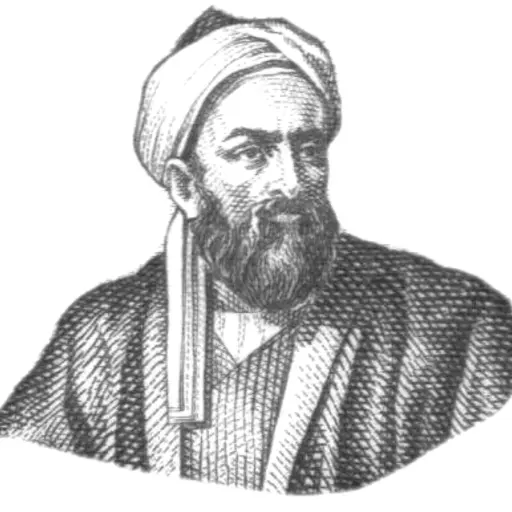

A master of astronomy, mathematics and Indology, he wrote a monumental work systematically describing Indian civilization.
Life
Moving Between Royal Courts
Al-Biruni was born in Khwarazm and in his youth studied mathematics and astronomy under several scholars. He served at the Khwarazmian court and with local Persian princes, moving several times because of the region's political turmoil. In 1017, after Sultan Mahmud of the Ghaznavids conquered and annexed Khwarazm, he was taken to the Ghaznavid court at Ghazni in Afghanistan.
Book of India
He accompanied Mahmud on several expeditions to India, using the opportunity to learn Sanskrit and study India's religions, philosophy, astronomy, calendars and social customs in depth. The result was the Book of India, which records Indian civilization in the restrained voice of an outside observer, with an evenhandedness rare among works of his time. He also calculated the radius of the Earth, discussed the possibility that the Earth rotates, and wrote several astronomical tables and works on mineralogy.
Polymath
Later generations regard al-Biruni as one of the most learned scholars of the Islamic Golden Age, with writings spanning mathematics, astronomy, geography, history, mineralogy and other fields. Although he spent many years in the service of the Ghaznavids, who conquered India by force, his Book of India shows a rare respect and curiosity toward Indian civilization; modern scholars often cite this contradiction as a classic case in discussing the complex relationship between "conquerors and conquered civilizations."
Legacy
Al-Biruni is known for his rigorous empirical approach, emphasizing observation, experiment and comparison, and did pioneering work in astronomy, geodesy, calendar science and mineralogy. His Book of India describes Indian religion, philosophy and science objectively and in detail, and is often regarded as a pioneering work of comparative religion and anthropology. Many of his works long went untranslated in Europe, and his scholarly stature was reappraised only in modern times.
Major works & achievements
- Book of India
- The Chronology of Ancient Nations
- Writes a monumental work of astronomy for Sultan Mas'ud
- Measured the Earth's radius using a mountain's height
Did you know? There is a crater on the Moon named after him.
Key dates
- 973Born in Khwarazm
- 995Left home to study amid political turmoil
- 1017Moved to Ghazni with Mahmud
- 1020Accompanied the army to India to study it
- 1030Completed the Book of India
- 1037Completed the Mas'udic Canon on astronomy
- 1048Died in Ghazni