Marquis of Pombal
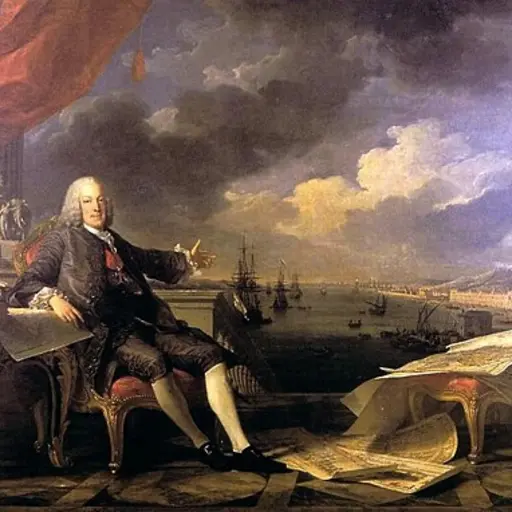

Directed reconstruction after the Great Lisbon Earthquake and pursued centralizing and mercantilist reforms.
Life
Diplomatic apprenticeship
The Marquis of Pombal, born Sebastião José de Carvalho e Melo, came from a family of the minor nobility in Lisbon and studied law at the University of Coimbra. From 1738 he served as envoy to London and then Vienna, observing at first hand Britain's commercial and naval power and becoming acutely aware of Portugal's excessive economic dependence on Britain. After Joseph I came to the throne in 1750, he was appointed minister of foreign affairs and war.
Earthquake and centralization
After the Great Lisbon Earthquake of 1755 he decisively directed relief and reconstruction (the phrase "bury the dead and care for the living" is said to have come from him or a colleague), rebuilding the Baixa on a regular grid and using earthquake-resistant timber frames. Thereafter he effectively ran the government, founding chartered trading companies, fostering domestic industry and overhauling taxation and education. In 1759 he used the Távora affair, an alleged plot to assassinate the king, to execute nobles, and he expelled the Jesuits.
Reform and fall from power
In 1761 he banned the import of slaves into mainland Portugal, and in 1773 he abolished the legal distinction between "New Christians" and "Old Christians," but slavery continued in Brazil and the other colonies. His rule was notorious for the harsh repression of opponents. After Joseph I died in 1777, Queen Maria I dismissed him, and he spent his final years in the town of Pombal.
Legacy
The Marquis of Pombal was one of the leading figures of European "enlightened despotism." In the rebuilding after the great earthquake he showed an awareness of modern urban planning and public administration, and his reforms advanced the modernization of Portugal's economy, education and administration. But he crushed the nobility and the Church by brutal means and suppressed dissent, and has been criticized as a despot. Opinion of him in Portugal has long been polarized: he is called both a reformer and a tyrant.
Major works & achievements
- Led the rebuilding of Lisbon after the great earthquake
- Planned the earthquake-resistant Baixa district
- Founded chartered trading companies
- Expulsion of the Jesuits
- Reformed the University of Coimbra
Did you know? Lisbon's rebuilt Baixa district is still called the "Baixa Pombalina" today.
Key dates
- 1699Born in Lisbon
- 1738Envoy to London
- 1750Becomes Minister of Foreign Affairs and War
- 1755Directs relief and reconstruction after the Great Lisbon Earthquake
- 1759Expulsion of the Jesuits
- 1769Made Marquis of Pombal
- 1777Dismissed by Maria I
- 1782Died in Pombal