Zhan Tianyou
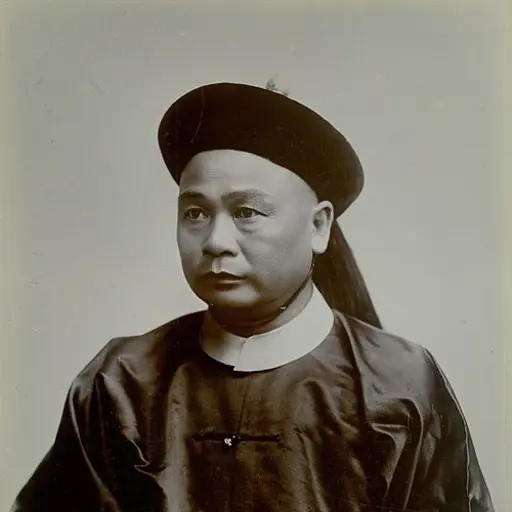

Oversaw building of the Beijing–Zhangjiakou Railway, the first trunk line built by the Chinese themselves.
Life
Boy student in America
Zhan Tianyou was born into a merchant family in Nanhai, Guangdong. In 1872 he went to the United States as one of the first boy students in America; although conservatives at the Qing court had the program recalled midway, he completed his studies in railway engineering at Yale's Sheffield Scientific School before returning to China, where for years he could serve only in assistant roles on railway projects run by foreign engineers.
Beijing–Zhangjiakou Railway
In 1905 the Qing court decided to build the railway from Beijing to Zhangjiakou on its own. Engineers from several countries judged the terrain too treacherous, but Zhan Tianyou was appointed to direct the project; he ingeniously used a "switchback line" to overcome the steep climb between Nankou and Badaling, finished ahead of schedule and well under budget, and the Beijing–Zhangjiakou Railway opened in 1909.
Father of China's railways
He is hailed as the "Father of China's railways," and the Beijing–Zhangjiakou Railway is still seen as a symbol of modern China's independent engineering capability. But some studies note that the Western engineering world's general disdain for Chinese engineers at the time amplified the project's symbolic significance, and scholars disagree over whether its technical difficulty was truly as unprecedented in the history of railway engineering as publicity claimed.
Legacy
Zhan Tianyou was the first outstanding railway engineer of modern China. The Beijing–Zhangjiakou Railway he oversaw was the first trunk railway designed and built by the Chinese themselves, breaking foreign monopoly over railway engineering in China, and he is hailed as the "Father of China's railways." He valued engineering standards and the training of talent, and helped professionalize China's engineering community. Some researchers caution that the technical achievements of the Beijing–Zhangjiakou Railway should be understood in light of the conditions of the time, and that its outstanding significance lies more in its symbolic value for national self-strengthening.
Major works & achievements
- Oversaw building of the Beijing–Zhangjiakou Railway
- Designed the switchback line at Qinglongqiao
- Promoted automatic couplers
- Founded the Chinese Institute of Engineers
Did you know? His tomb and bronze statue stand at Qinglongqiao Station on the Beijing–Zhangjiakou Railway, near Badaling.
Key dates
- 1872Goes to America as a boy student
- 1881Graduates from Yale and returns to China
- 1888Helps build the Tangshan–Xugezhuang Railway
- 1905Appointed to lead the Beijing–Zhangjiakou Railway project
- 1908Completes the Juyongguan and Badaling tunnels
- 1909Beijing–Zhangjiakou Railway opens in full
- 1919Died in Hankou