Oda Nobunaga
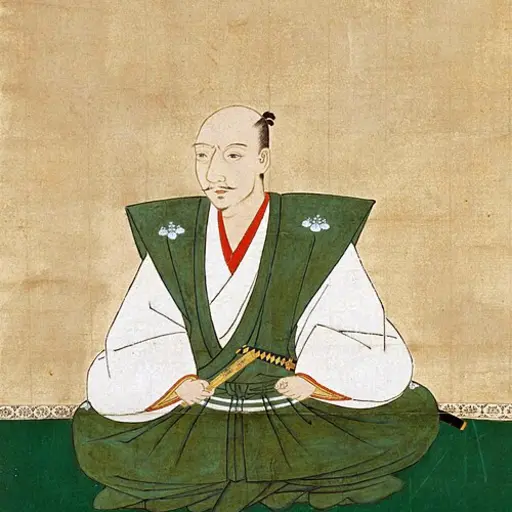

Rose to prominence with the surprise attack at Okehazama, ended the Muromachi shogunate and began the process of unification.
Life
Young lord of Owari
Oda Nobunaga was born into a local daimyo family in Owari Province. As a youth he was wild and unruly, mocked by retainers as "the Great Fool of Owari." Japan was then in the turmoil of the Sengoku period, with daimyo fighting one another everywhere, and the authority of the Muromachi shogun existed in name only.
Tenka fubu
In 1560, with a small force against a much larger one, he killed Imagawa Yoshimoto in a surprise attack at Okehazama, making his name. He then gradually annexed neighboring domains, and in 1573 he exiled the last shogun, Ashikaga Yoshiaki, ending the Muromachi shogunate. He promoted commerce through free markets and open guilds, introduced matchlock guns to reform tactics, and at the Battle of Nagashino crushed the Takeda cavalry with massed firearms.
Honno-ji Incident
In 1582, before his work of unification was complete, he was attacked by surprise at Honno-ji by his lieutenant Akechi Mitsuhide and forced to take his own life, an event known as the "Honno-ji Incident." The motive for the mutiny remains a puzzle hotly debated among Japanese historians to this day, with various explanations such as resentment, ambition and conspiracy, and no consensus. His unification was later carried on and completed by his lieutenant Toyotomi Hideyoshi.
Legacy
Oda Nobunaga broke the fragmentation of the Warring States period and laid the foundation for Japan's unification. His military innovations, commercial policies and blows against the power of temples and shrines were all highly pioneering, and he is often seen as the man who opened Japan's early modern era. But his burning of Enryakuji on Mount Hiei and his slaughter of Ikko sect followers were extremely brutal, and even his contemporaries were sharply divided in their opinions of him. In later Japanese literature and art he often appears as a decisive yet ruthless innovator.
Major works & achievements
- Killed Imagawa Yoshimoto at the Battle of Okehazama in 1560
- Expelled Ashikaga Yoshiaki in 1573, ending the Muromachi shogunate
- Defeated the Takeda army with firearms at the Battle of Nagashino in 1575
- Promoted free markets and open guilds and built Azuchi Castle
Did you know? Yasuke, an African who came to Japan with missionaries, was kept by him as a personal attendant, which was extremely rare at the time.
Key dates
- 1551Became head of the clan
- 1560Killed Imagawa Yoshimoto at the Battle of Okehazama
- 1568Installed Ashikaga Yoshiaki in Kyoto
- 1573Exiled Ashikaga Yoshiaki; the Muromachi shogunate ended
- 1575Defeated the Takeda with Firearms at the Battle of Nagashino
- 1580Subdued the Ishiyama Hongan-ji
- 1582Took his own life in the Honno-ji Incident