Nur Jahan
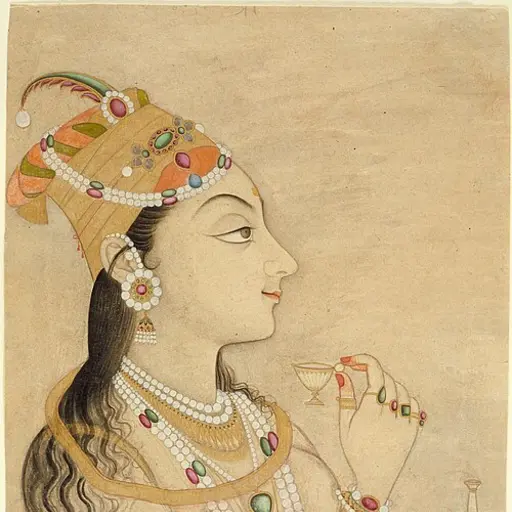

After marrying Jahangir, she held the real reins of power in the Mughal court.
Life
Noblewoman of Persian descent
Nur Jahan, born Mehr-un-Nissa, came from a noble family of Persian descent; her father served as a senior minister at the Mughal court. She had been married before, and after her husband died she entered the palace at the "advanced age" of thirty-four, yet she quickly won the exclusive favor of Emperor Jahangir, something quite rare at a court whose customs prized lineage and young consorts.
Running the court
After marrying Jahangir in 1611, she gradually took part in government, issuing decrees in the emperor's name, minting coins bearing her own name and approving the appointment and dismissal of officials. In his later years Jahangir sank into wine and opium and his health declined, and affairs of state great and small were in practice decided largely by her and the circle of her own family's confidants.
Fall from power and retirement
Her power rested on the emperor's personal favor rather than on any institutional authority. After Jahangir died, the newly enthroned Shah Jahan swiftly stripped her of all power and had her retire to Lahore, where she lived until her death. Later generations often reduced her to the legendary image of a "beauty who bewitched the monarch," but she in fact displayed quite sophisticated administrative and diplomatic skill, including leading foreign trade negotiations and building gardens and architecture.
Legacy
Nur Jahan was a rare Mughal empress to have coins struck in her own name; in the later reign of Jahangir she effectively ran the government, displaying outstanding political ability. She also left her mark on architecture, gardens and textile design, and her father's tomb is often seen as a precursor of the Taj Mahal. Contemporary and later historians often criticized her for factionalism, dominating power and meddling in the succession, which provoked Shah Jahan's rebellion; modern research tends instead to view her as a ruler who broke through the constraints of gender.
Major works & achievements
- Issued decrees and minted coins in her own name
- Built the Tomb of Itimad-ud-Daulah for her father
- Built gardens and caravanserais
- Took part in foreign trade and diplomacy
Did you know? "Nur Jahan" was a title bestowed on her by Jahangir, meaning "Light of the World."
Key dates
- 1594First marriage
- 1607Her husband died; entered the palace
- 1611Married Jahangir
- 1614Began issuing decrees in the emperor's name
- 1620Minted Coinage bearing her own name
- 1627Jahangir died; lost real power
- 1645Died in Lahore