Razia Sultana
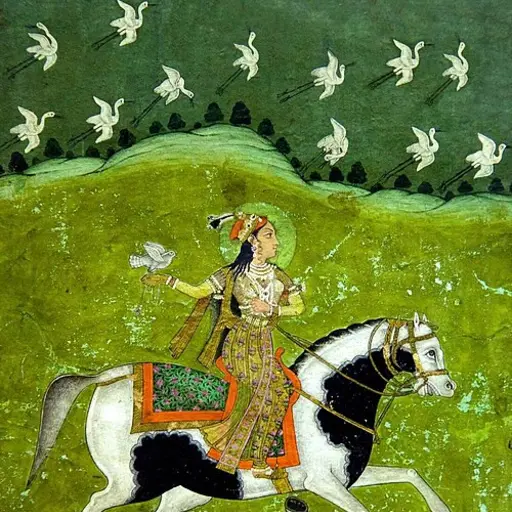

The only female ruler of the Delhi Sultanate, she reigned briefly in the face of opposition from nobles because of her sex.
Life
Favored by His Father
Razia was the daughter of Iltutmish, sultan of the Slave dynasty of the Delhi Sultanate. From childhood she helped her father with affairs of state and showed exceptional administrative and military ability; her father once declared publicly that none of his sons was as capable as she and for a time considered making her his successor—something extremely rare in the Islamic political tradition of the time.
Woman sultan
After Iltutmish died, the nobles first put one of his sons on the throne, but the new ruler was incompetent and misgoverned and was soon deposed. In 1236, with the support of some nobles and the populace, Razia became sultan, the only female ruler in the history of the Delhi Sultanate. She abandoned the dress code traditionally expected of royal women and instead wore men's clothing, rode on horseback to hold court and led her troops in person, seeking to break the Turkic nobles' monopoly on government. She made a general of Ethiopian origin her close confidant, which sharpened the conflict with the Turkic aristocracy.
Defeated and killed
The nobles rose in a joint revolt, and Razia was defeated and captured in the ensuing civil war; in 1240 she was killed in battle while trying to regain power, having reigned only about four years. Her rule is often reduced to a simple story of "a woman in power who failed," but the sources show that the core conflict she faced was the Turkic military nobility's fierce resistance to the centralization of royal power and to the promotion of a favorite of nontraditional background; her sex was only one of the factors the nobles used to rally opposition in this power struggle.
Legacy
Razia was one of the few women monarchs in the Islamic states of South Asia. She sought to rule on the strength of her abilities rather than her place in the line of succession, something extremely rare in the politics of her time. Her downfall stemmed mainly from the Turkic nobles' resistance to a centralizing monarch, with her gender used as one of the arguments against her. In modern times she has become a popular subject of Indian literature, theater, film and television, and some regard her as a symbol of women's political participation.
Major works & achievements
- Took the throne in 1236, becoming the only woman sultan
- Held court in men's clothing and led troops herself
- Tried to break the Turkic nobles' monopoly on government
Key dates
- 1205Born into the ruling family of the Delhi Sultanate
- 1220Helped her father govern
- 1236Became Sultan of Delhi
- 1237Personally led an army to crush local revolts
- 1239Nobles jointly rose in revolt
- 1240Defeated and killed