Ibn Sina (Avicenna)
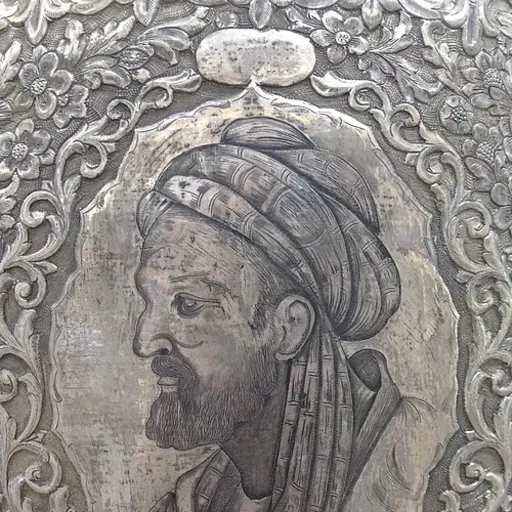

Wrote The Canon and The Healing, fusing Aristotle's philosophy with medical practice.
Life
Prodigy of Bukhara
Ibn Sina (Avicenna) was born near Bukhara, Central Asia. By his own account he had read through the entire Quran before the age of ten and was practicing medicine by sixteen. After curing a difficult illness of the Samanid sultan, he was granted access to the royal library, where he read widely and mastered philosophy, logic, mathematics and medicine, a classic product of Central Asia's polymathic tradition.
The Canon and The Healing
Later, amid political turmoil in Central Asia, he moved from one service to another under local princes in Khwarazm and across the Iranian Plateau, practicing medicine while writing. His major work The Book of Healing systematically integrated Aristotle's philosophy with Neoplatonic thought, building an encyclopedic system covering logic, natural philosophy and metaphysics; his great medical work The Canon of Medicine brought together the medical traditions of Ancient Greece, Persia and Islam, setting out the diagnosis of diseases and their treatment with drugs by category, and long served as a standard textbook.
Wanderings and Fame
After The Canon of Medicine was translated into Latin, it remained one of the core textbooks of medical education in European universities until the 17th century, and Ibn Sina was thus honored in the West as "Avicenna." In his later years he was repeatedly implicated in local political disputes and imprisoned, and he spent his life in wandering and hardship. This differs considerably from the later image of him as a pure scholar sitting calmly in his study; most of his important works were in fact written in the intervals between flights and the demands of political office.
Legacy
Ibn Sina (Avicenna) was one of the most influential philosophers and physicians of the Islamic Golden Age. The Canon of Medicine systematically organized the medical knowledge of Ancient Greece, Persia and the Arabs, and was long revered as an authoritative textbook in the Islamic world and in Europe. His philosophy had a profound influence on Islamic thought; al-Ghazali sharply criticized several of his views, while through Latin translations his teachings influenced European Scholasticism.
Major works & achievements
- The Canon of Medicine
- The Book of Healing
- The Book of Salvation
- Served as vizier at the court of Hamadan
Did you know? His mausoleum and memorial stand today in Hamadan, Iran.
Key dates
- 980Born near Bukhara
- 997Granted access to the library after curing the sultan's illness
- 1002Father died; began traveling on his own
- 1012Moved to Gorgan and began The Canon of Medicine
- 1020Served at the local courts of Rey and Hamadan
- 1025Main parts of The Book of Healing completed
- 1037Died in Hamadan