Confucius
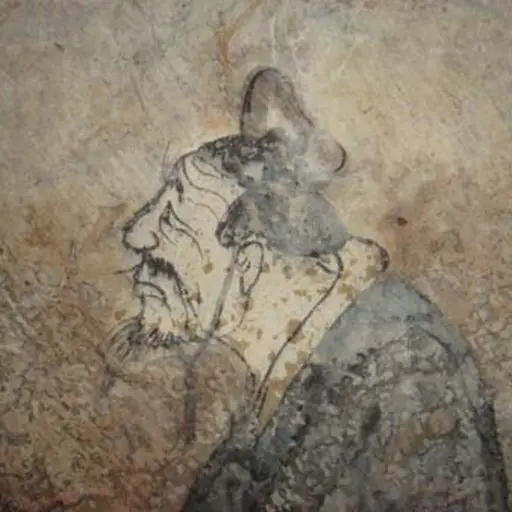

Founded Confucian teaching and pioneered private schooling, profoundly shaping East Asian ethics.
Life
Declining Nobility
Confucius, personal name Qiu and courtesy name Zhongni, was a native of Zouyi in the State of Lu. He came from a declining noble family, grew up poor, and worked as a minor official in charge of granaries and of cattle and sheep. In the late Spring and Autumn period the rites had collapsed and music had decayed, the lords overstepped their place and ministers and grandees dominated power; he called for restoring the order of the Zhou rites, with benevolence (ren) as the inner basis of ritual.
Office in Lu and Wanderings
In Lu he served for a time as magistrate of Zhongdu, minister of works and minister of justice, and tried without success to curb the power of the Three Huan families. He then traveled with his disciples for 14 years through Wey, Song, Chen, Cai and other states, lobbying the lords without finding employment. In old age he returned to Lu to edit the classics and devote himself to teaching; tradition says he had 3,000 disciples, 72 of whom mastered the Six Arts.
Teaching and Legacy
Confucius pioneered private teaching and proposed education without distinction, freeing learning from the monopoly of the nobility. His words and deeds were compiled by his disciples as the Analects. From the Han dynasty on, Confucianism became the official doctrine, and his thought profoundly shaped education, ethics and politics in East Asia; in modern times it has also long faced criticism and reassessment.
Legacy
Confucius is revered as the "Supreme Sage and Foremost Teacher." His system of thought, centered on benevolence and ritual and developed by Mencius and Xunzi, became China's orthodox doctrine for more than two thousand years from the Han dynasty onward and deeply influenced the Korean Peninsula, Japan, Vietnam, and elsewhere. His ideals of education without distinction and teaching according to aptitude remain important sources of educational philosophy today. In modern times Confucian thought has faced fierce criticism, but it has also been reinterpreted and promoted in the present day.
Major works & achievements
- Founded the first private school, advocating education without distinction
- Edited classics such as the Odes and the Documents
- Traditionally said to have revised the Spring and Autumn Annals
- His words and deeds compiled by disciples as the Analects
Did you know? The Temple of Confucius, the Kong Family Mansion and the Kong Family Cemetery in Qufu were inscribed on the World Heritage List in 1994, and the Kong family genealogy is considered one of the longest continuous family genealogies in the world.
Key dates
- 551 BCEBorn in Zouyi, State of Lu
- 522 BCEBegins taking students and teaching
- 501 BCEBecomes magistrate of Zhongdu in Lu
- 500 BCEAssists the Duke of Lu with rites at the Meeting at Jiagu
- 497 BCELeft Lu and traveled among the states
- 484 BCEReturned to Lu and edited the classics
- 479 BCEDied of illness in Qufu