Emperor Wen of Han
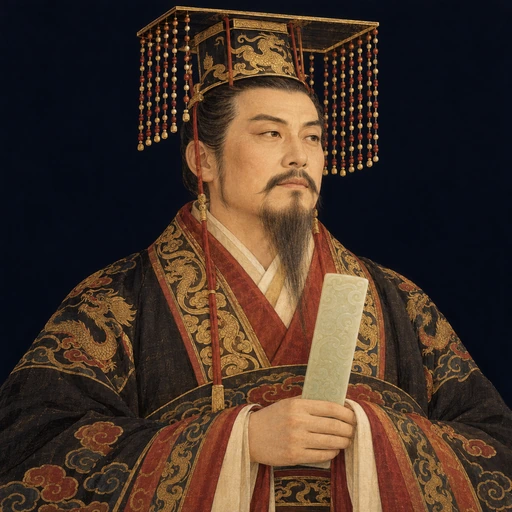
Lightened corvée and taxes, abolished mutilating punishments and practiced frugality himself, inaugurating the "Rule of Wen and Jing."
Life
Prince of Dai takes the throne
Liu Heng was a son of Liu Bang. His mother, Lady Bo, was not favored, and he was enfeoffed as Prince of Dai, far from the strife at court. After the Lü clan was wiped out in 180 BCE, the ministers installed him as emperor.
Abolished mutilating punishments
During his 23-year reign he reduced taxes, and in 167 BCE even remitted the land tax across the realm entirely. That same year, after a girl named Tiying submitted a petition offering to become a government slave to redeem her father's crime, he issued an edict abolishing mutilating punishments such as tattooing, cutting off the nose and amputating the feet.
Frugal and benevolent
He lived frugally. Once he wanted to build an open terrace, but on hearing that it would cost 100 jin of gold, equal to the property of ten middle-class households, he gave up the idea. Toward Nanyue and the Xiongnu he relied mainly on conciliation. He died in 157 BCE, leaving a testamentary edict that his funeral be kept simple.
Legacy
The "Rule of Wen and Jing," begun by Emperor Wen of Han and his son Emperor Jing, was the first universally recognized golden age in Chinese history, and it built up the national strength for Emperor Wu of Han's great achievements.
Major works & achievements
- Abolished mutilating punishments
- Light corvée and taxes
Did you know? In his 23 years on the throne he added nothing to his palaces, carriages and horses, or clothing.
Key dates
- 196 BCEEnfeoffed as Prince of Dai
- 180 BCEWelcomed to the throne
- 167 BCEAbolished mutilating punishments and remitted the land tax across the realm
- 157 BCEDied