Zhang Shizhi
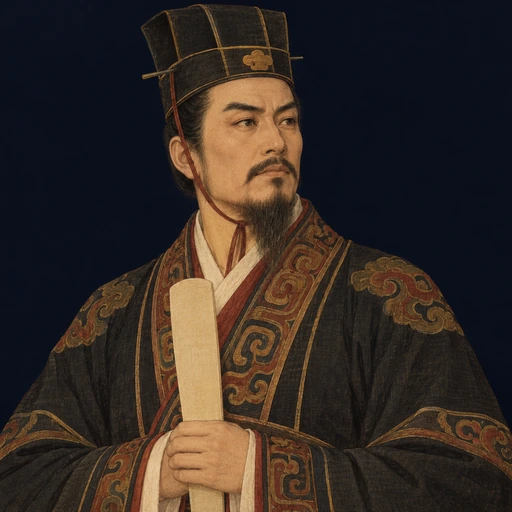
Enforced the law impartially, holding that "the law is something the Son of Heaven shares in common with all under heaven."
Life
Ten years as a palace attendant
Zhang Shizhi was a native of Nanyang. Under Emperor Wen of Han he spent ten years as a palace attendant without promotion and nearly resigned to go home, but after Yuan Ang recommended him he was gradually given greater responsibility and rose to Tingwei (chief justice).
Case of blocking the imperial procession
When Emperor Wen was crossing the Zhongwei Bridge, a man ran out from under the bridge and startled the imperial horses. The emperor wanted a heavy sentence, but Zhang Shizhi only imposed a fine according to the law, saying, "The law is something the Son of Heaven shares in common with all the realm"; if it were arbitrarily made harsher, the people would not know what to follow.
No one in the realm wronged
When someone stole a jade ring from the temple of Emperor Gaozu, Emperor Wen wanted the thief's whole clan exterminated, but Zhang Shizhi still sentenced him to death under the law on stealing objects from the ancestral temple. The emperor was furious at first but later accepted his verdict. People at the time said, "With Zhang Shizhi as Tingwei, no one in the realm is wronged."
Legacy
Zhang Shizhi is a model of judging cases strictly by law in ancient China, and his principle that "the law is something the Son of Heaven shares with all under Heaven" has been quoted again and again.
Major works & achievements
- Judged the procession and stolen-ring cases by law
Did you know? The praise "No one in the realm wronged" was already widespread in his own time.
Key dates
- 179 BCEBecame a court attendant (approx.)
- 170 BCEBecame Tingwei (chief justice) (approx.)
- 157 BCESent to a provincial post after Emperor Jing's accession