Ashoka
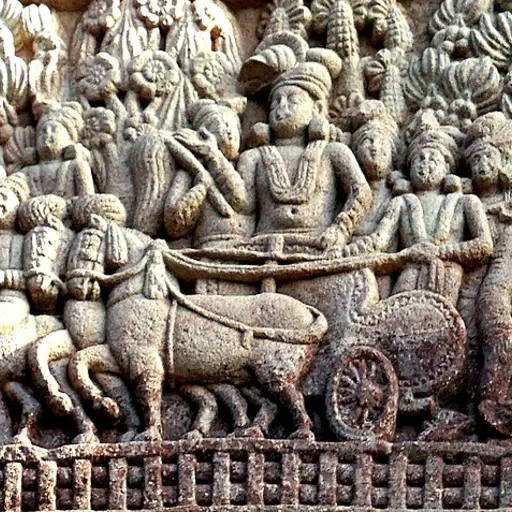

Converted to Buddhism after conquering Kalinga and sent envoys to spread the Dharma in every direction.
Life
Royal grandson's fight for the throne
Ashoka was the grandson of Chandragupta Maurya, founder of the Maurya Empire, and took the throne c. 268 BCE after a succession struggle. By then the Maurya Empire had unified most of northern India and was at its zenith, but Kalinga in the southeast remained independent and became the main target of the empire's further expansion.
Remorse over Kalinga
In 261 BCE he conquered Kalinga, a war that caused vast numbers of deaths and displaced many people. According to his inscriptions, he was struck with deep remorse and turned to the Buddhist Dharma, promoting ahimsa and tolerance; he sent envoys to spread the Dharma to Sri Lanka and Western Asia, and within his realm he erected stone pillars and inscribed rock faces with his edicts on governing.
Rule by Dharma
He promoted measures such as building roads, digging wells, providing medicine and sending out inspecting officials, and urged the various religious sects to respect one another. His inscriptions are the earliest securely datable written sources in India, and they also mark Buddhism's rise from a local community to a world religion. The dynasty quickly fell apart after his death, but South Asia long regarded him as the ideal monarch.
Legacy
Ashoka turned from a conqueror into a monarch who advocated ahimsa and tolerance, becoming the model protector of the faith in Buddhist history, and Buddhism thereby spread to Sri Lanka and Central Asia. His edicts are the earliest datable written sources in South Asia, and were brought back to light only after James Prinsep deciphered the Brahmi script in the 19th century. After India's independence, his Lion Capital became the national emblem and his Dharma wheel was placed on the national flag. Some scholars caution, however, that Buddhist texts' depictions of the brutality of his early life may have been meant to highlight his transformation after his conversion.
Major works & achievements
- Conquered Kalinga, bringing the Maurya Empire to its greatest extent
- Issued rock and pillar edicts promoting "Dhamma"
- Sent missions to spread the Dharma to Sri Lanka and elsewhere
- The Lion Capital of Sarnath is now India's national emblem
Did you know? In his edicts he mostly called himself "Devanampiya Piyadasi" (Beloved of the Gods, He Who Looks On with Kindness); the name "Ashoka" first appeared only in the Maski edict, discovered in 1915.
Key dates
- 268 BCEAscends the Maurya throne
- 261 BCEConquered Kalinga at a terrible cost in lives
- 260 BCEConverted to the Buddhist Dharma and issued edicts
- 257 BCECarved rock edicts promoting tolerance
- 250 BCESends Buddhist missions far and wide
- 249 BCEMade a pilgrimage to Lumbini and erected a commemorative pillar
- 240 BCESaid to have convened the Third Buddhist Council
- 232 BCEDied; the dynasty gradually declined