From the Taika Reform to Heian-kyo
A palace coup, a disastrous defeat overseas, and two new capitals modeled on Chang'an: how ancient Japan learned from the Tang to build a state.
Isshi Incident
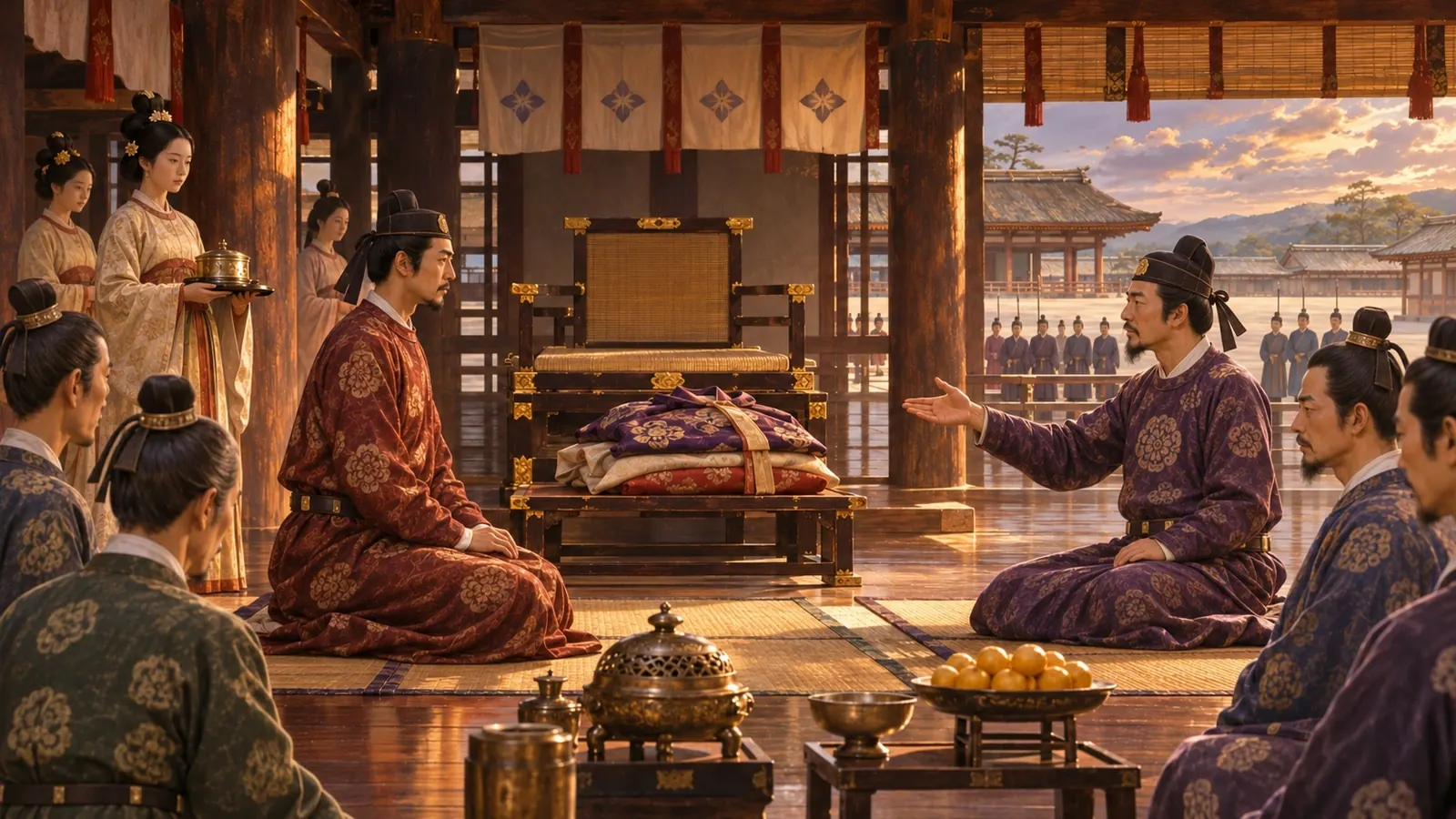
In the Asuka Itabuki Palace, Prince Naka no Oe and Nakatomi no Kamatari killed Soga no Iruka, who dominated the court, in front of the throne. The following year the Taika Reform Edict was issued, declaring that land and people belonged to the state and introducing the system of periodic land allotment; this was the Taika Reform. The model for the reform was the Sui and Tang institutions brought back by the envoys to China.
Defeat at Baekgang
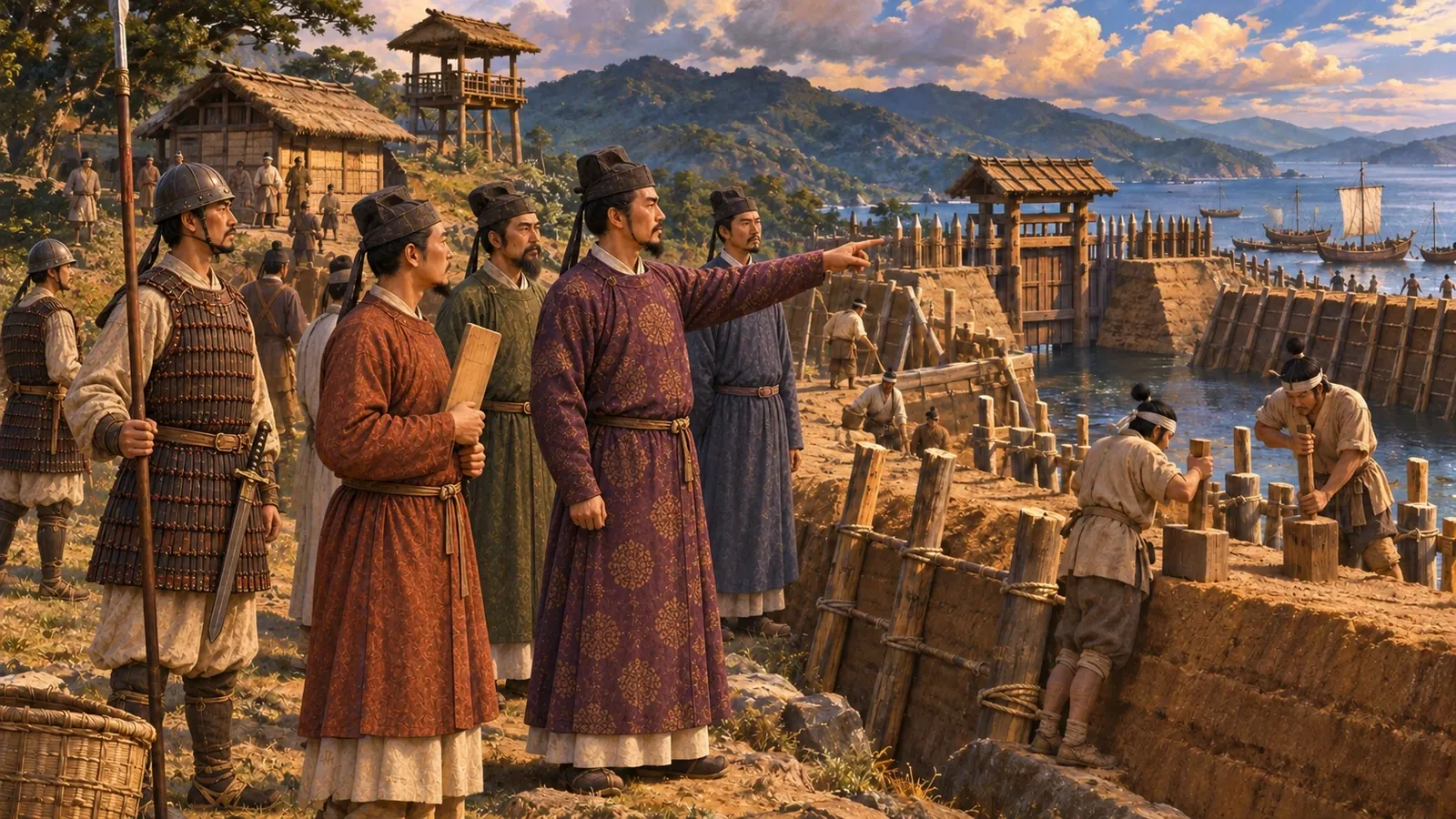
To help Baekje restore its state, Wa sent a large fleet across the sea, which fought the allied forces of Tang and Silla at the Baekgang estuary on the Korean Peninsula and returned in crushing defeat. Fearing a Tang invasion, the court built water fortresses and mountain castles in Kyushu, and turned its full energy to reorganizing the country at home, accelerating its transformation into a centralized state.
Jinshin War
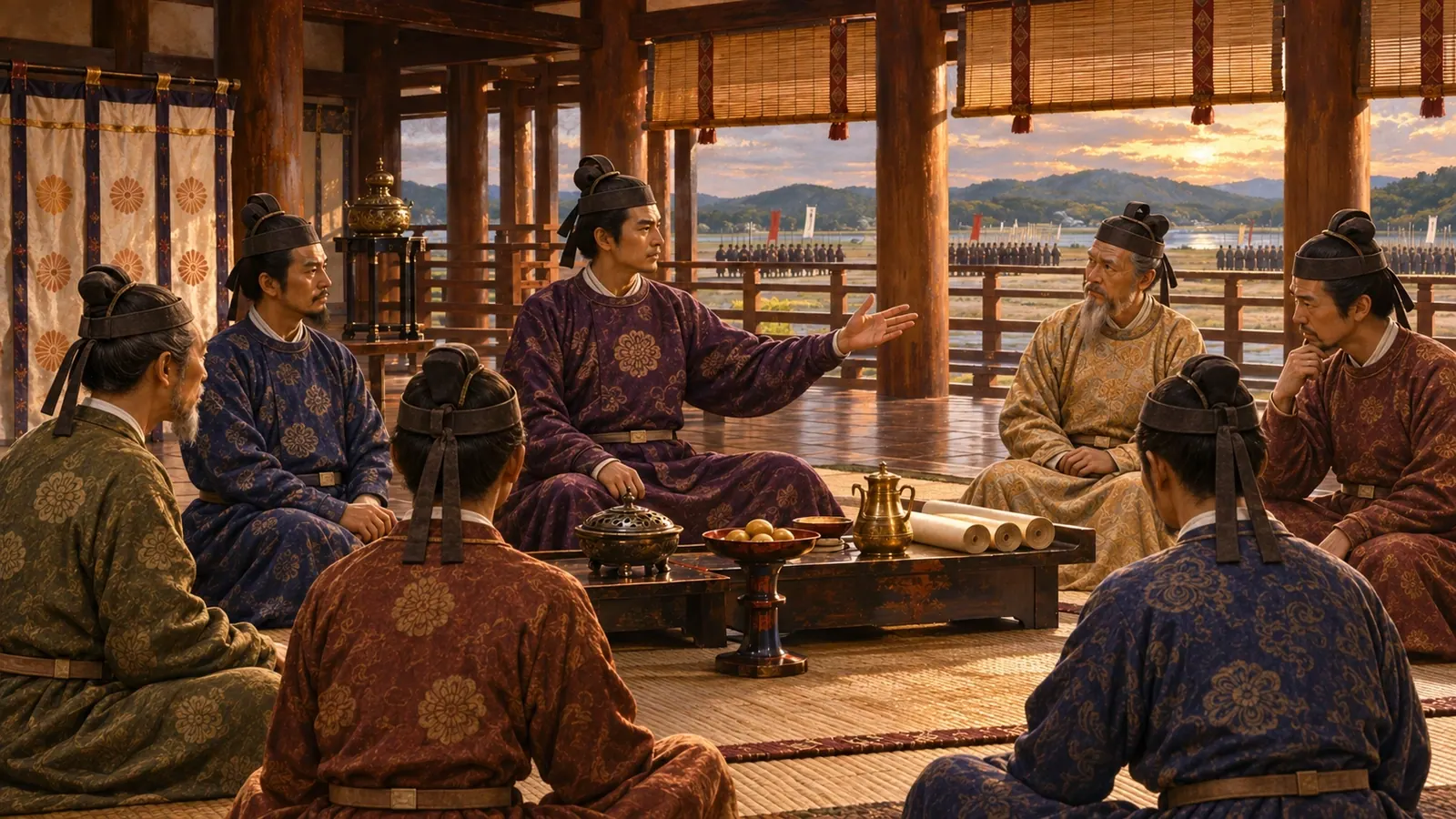
After the death of Emperor Tenji, his younger brother Prince Oama and the emperor's son Prince Otomo went to war; Oama won and took the throne as Emperor Tenmu. He raised the authority of the sovereign, and both the title "tenno" (emperor) and the country name "Nihon" (Japan) were probably established during his reign and that of his successor, Empress Jito.
Taiho Code
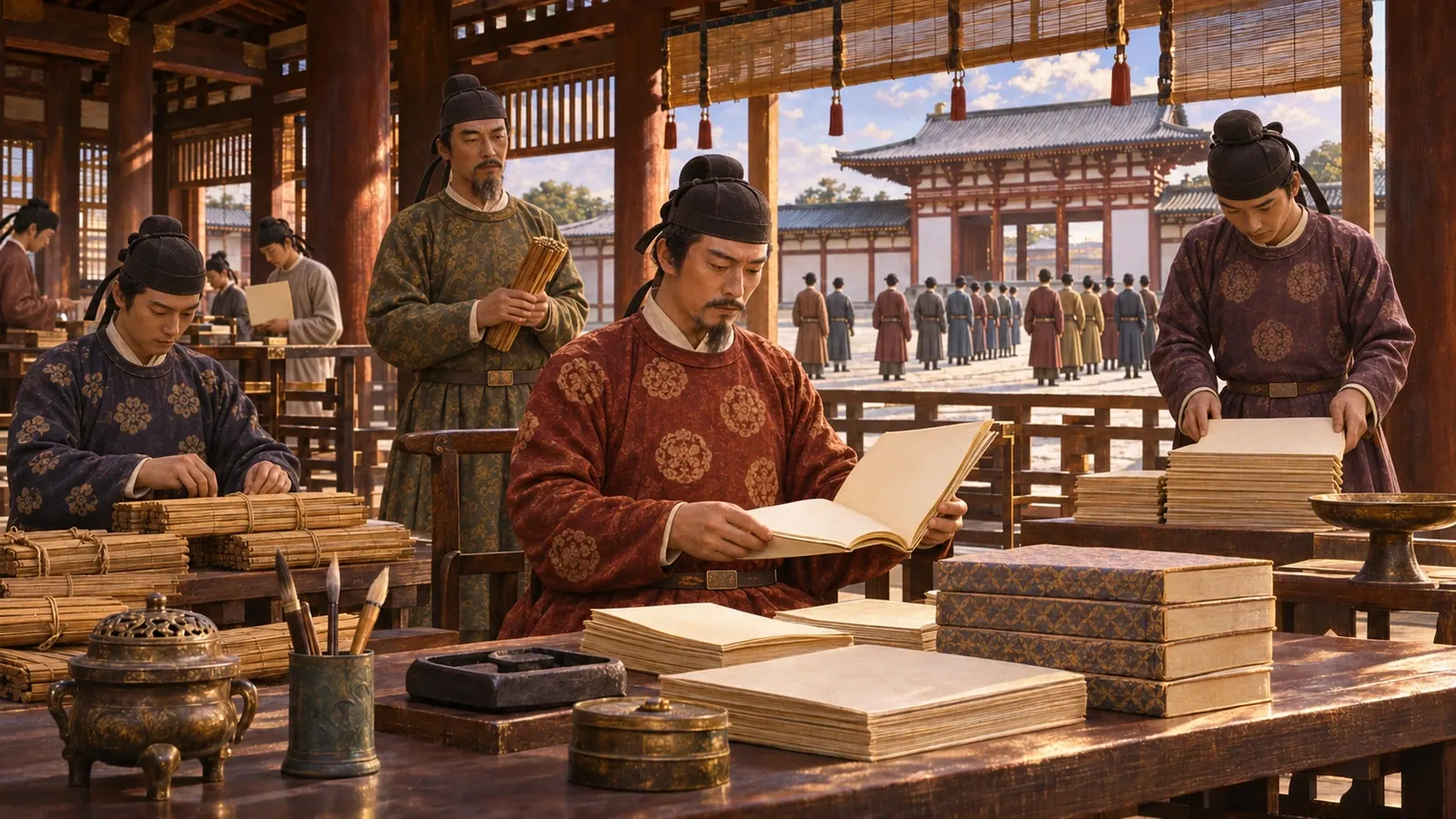
The Taiho Code, modeled on the Tang legal codes, was promulgated: the Council of State oversaw eight ministries, the country was divided into provinces, districts and villages, and the systems of household registers, land allotment and taxation in grain, labor and goods were fully established. The following year, envoys to the Tang set out again after a gap of more than thirty years and informed the Tang dynasty of the new country name "Nihon."
Heijo-kyo
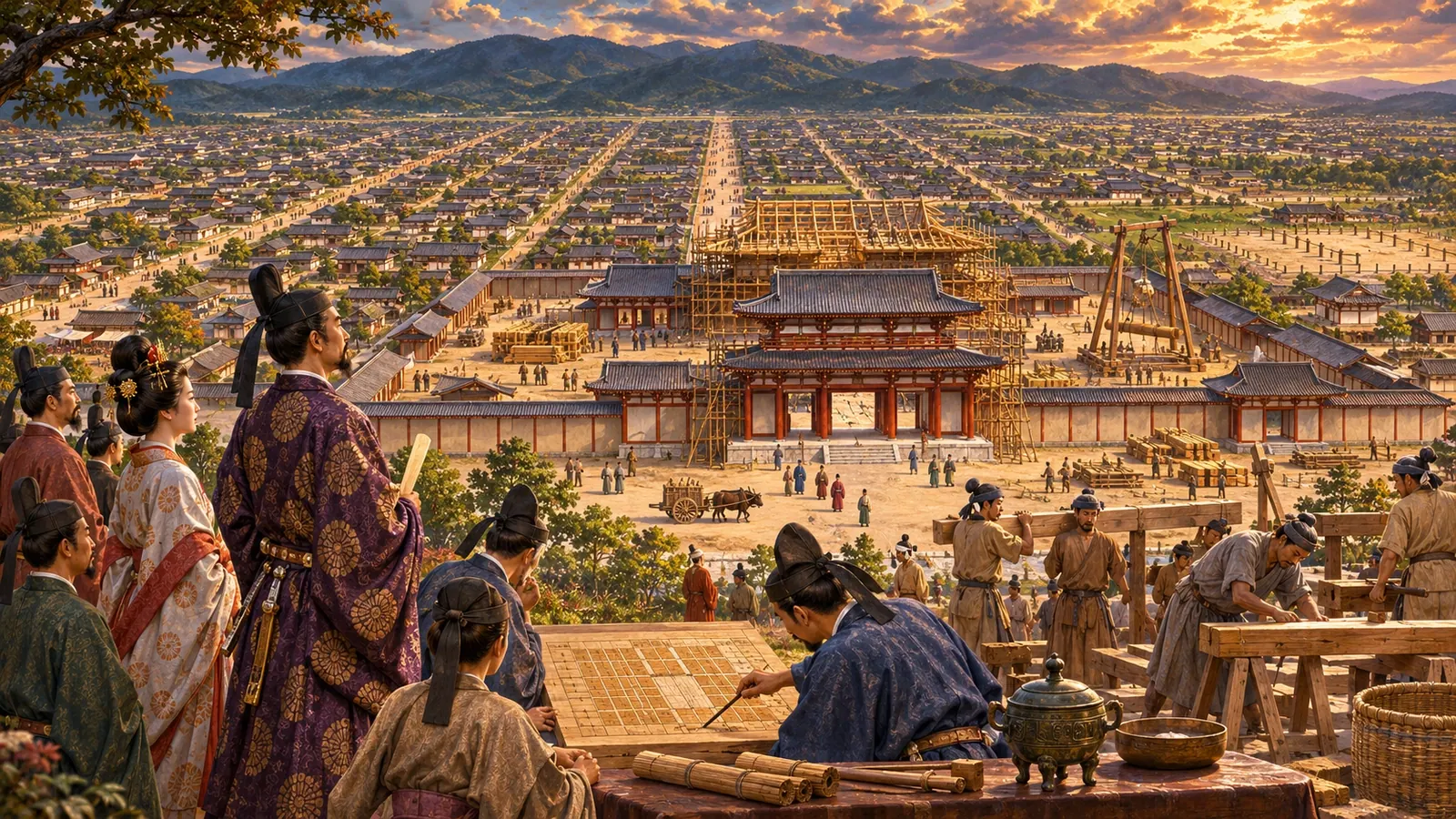
Empress Genmei moved the capital to Heijo-kyo (present-day Nara). The new capital imitated Chang'an, with Suzaku Avenue running north to south and streets laid out in a grid. Later Emperor Shomu built provincial temples throughout the country and cast the Great Buddha at Todai-ji, hoping the Buddhist Dharma would protect the state; the Tang monk Jianzhen also crossed the sea to Japan at this time to confer the precepts.
Capital moved to Heian-kyo
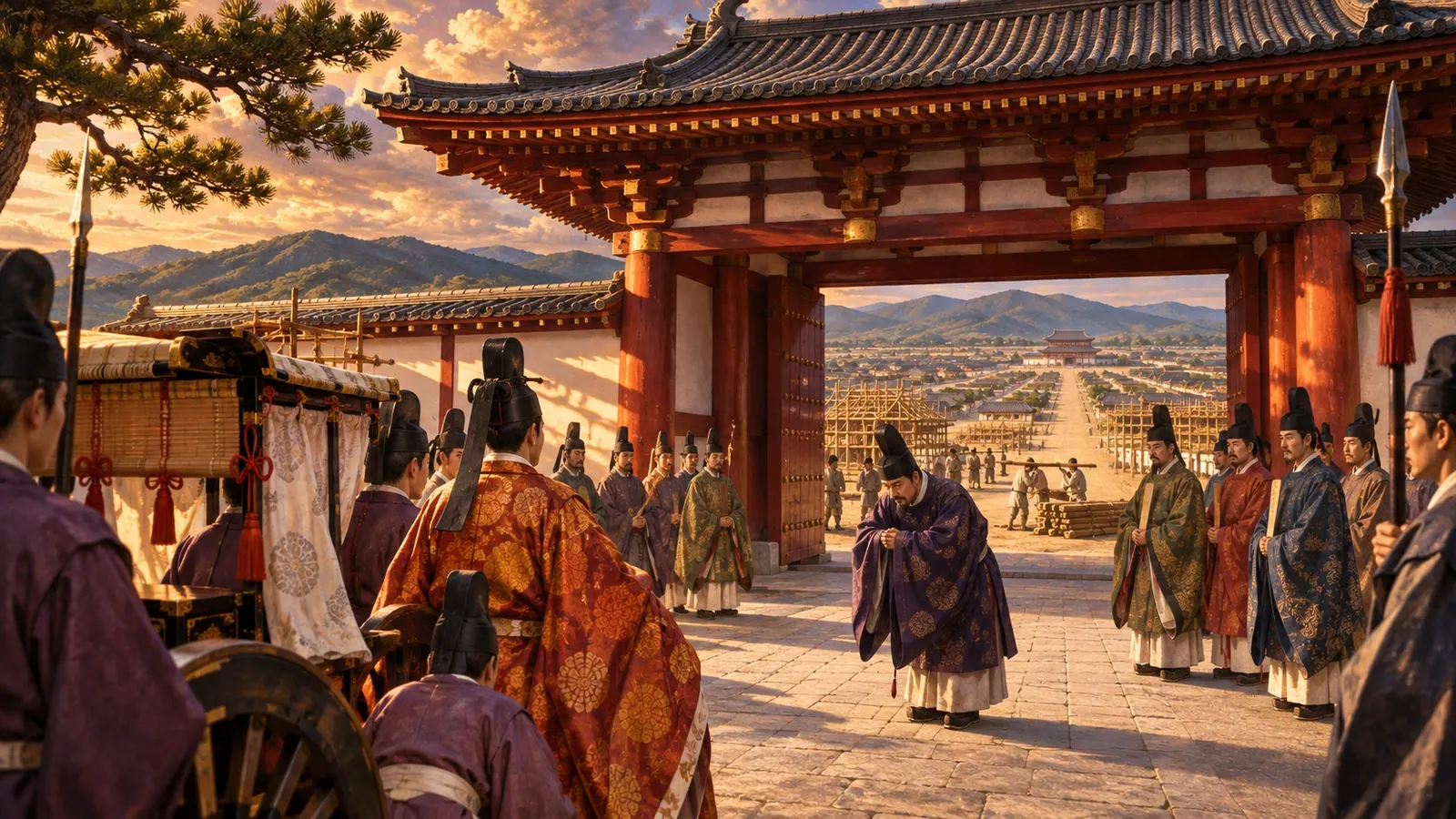
To free politics from the interference of the Buddhist temples of Nara, Emperor Kanmu moved the capital to Heian-kyo (present-day Kyoto). The nearly four hundred years that followed are called the Heian period: missions to the Tang were halted after 894 CE, kana script and a native court culture, including works such as The Tale of Genji, flourished, and Japan forged its own path on the basis of what it had absorbed from Tang culture.