Roman Roads and Aqueducts: The Empire's Infrastructure
All roads lead to Rome is more than a proverb. Paved stone roads and elevated aqueducts held together an empire spanning Europe, Asia, and Africa, on a scale no one matched for more than a thousand years.
Construction of the Appian Way begins
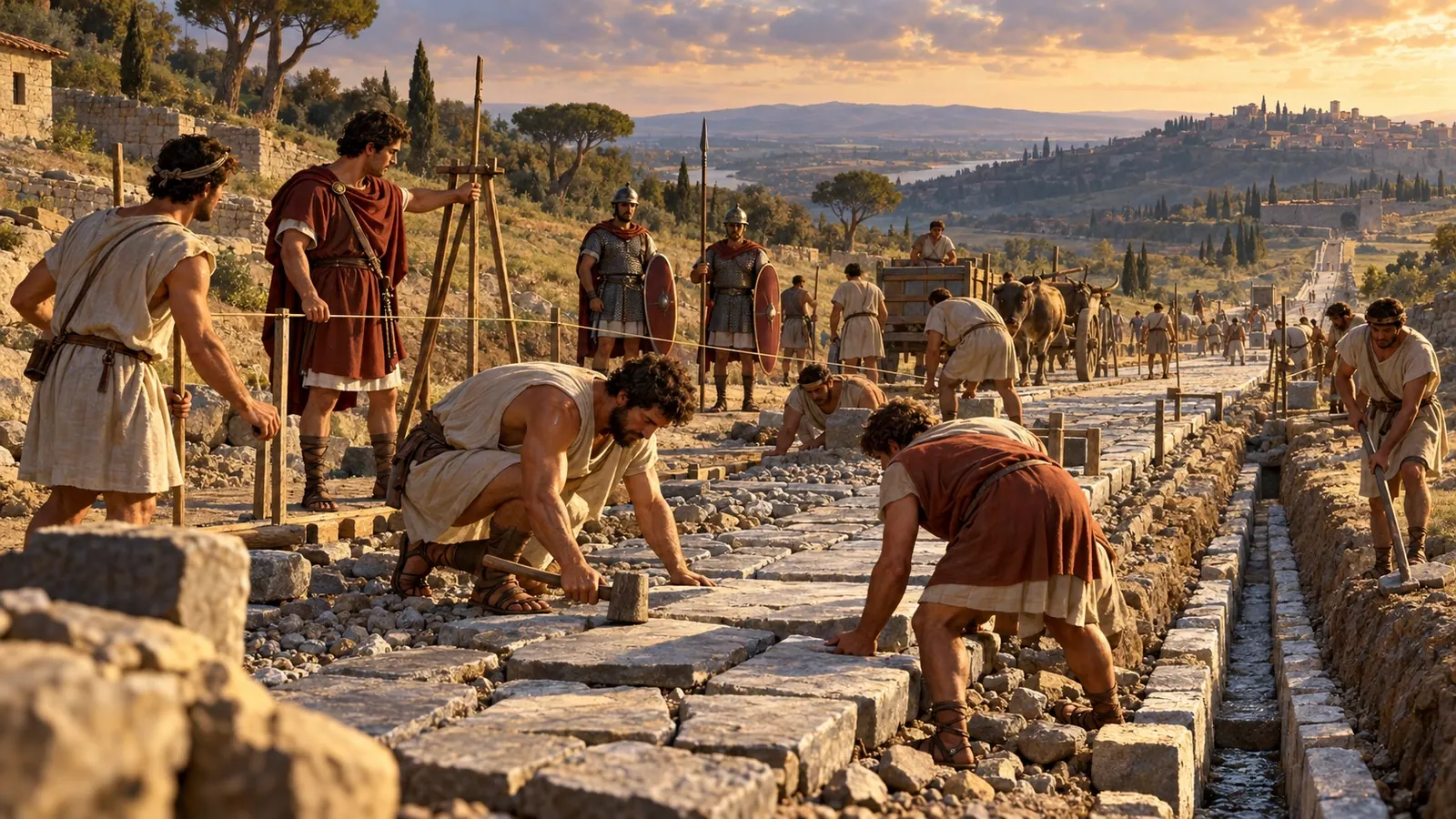
The censor Appius Claudius ordered the building of the Appian Way from Rome to Capua, paved with large stones and fitted with full drainage ditches. It was later extended all the way to the port of Brundisium (Brindisi) on the Adriatic. "All roads lead to Rome" began here.
Underground works of the Aqua Marcia
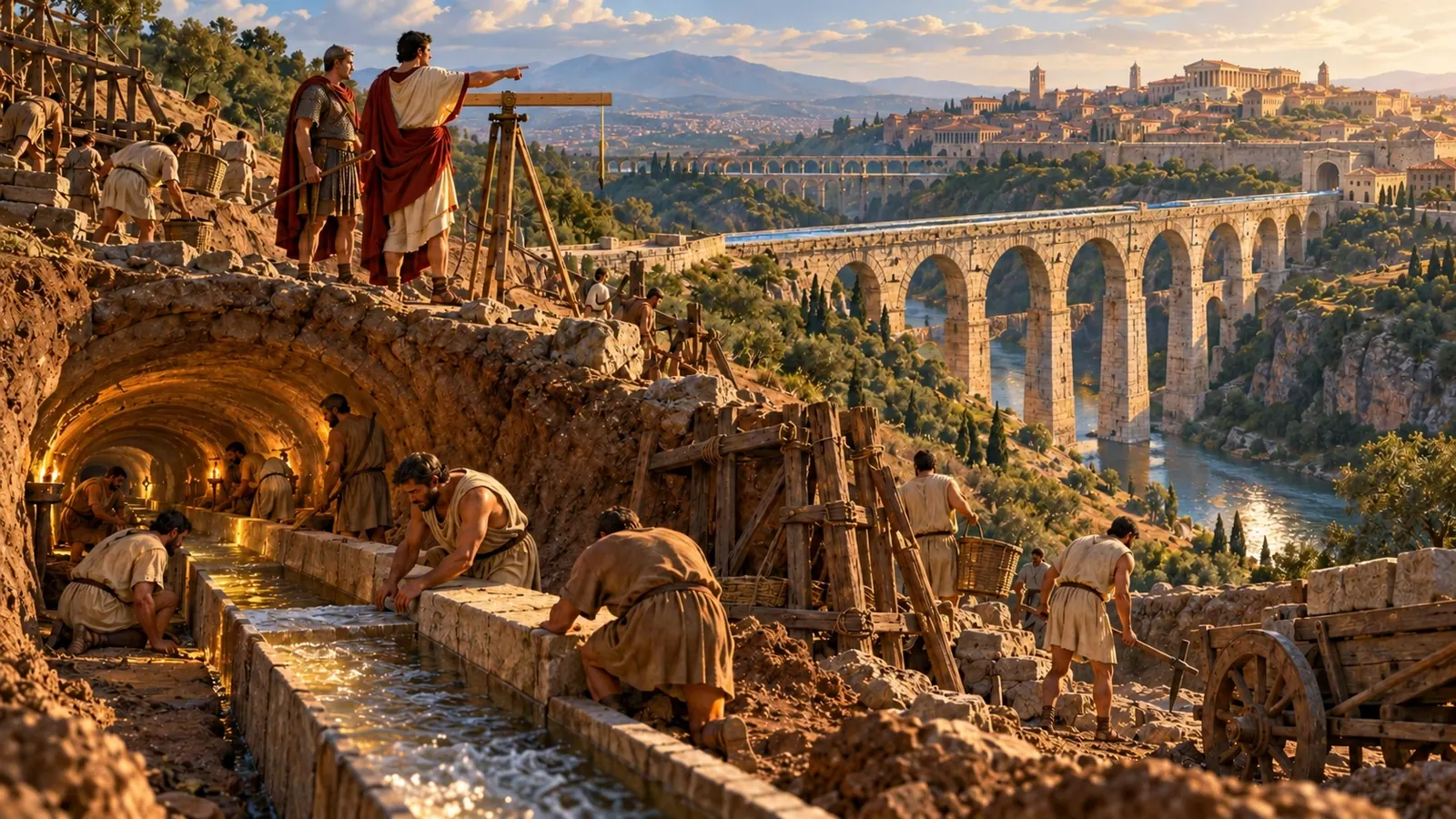
Rome completed the Aqua Marcia, nearly 100 kilometers long. Most of it ran through the hills as underground channels, rising onto tall stone arches only to cross valleys, bringing distant spring water into the city and showing a mastery of precise gradient calculation.
Pont du Gard
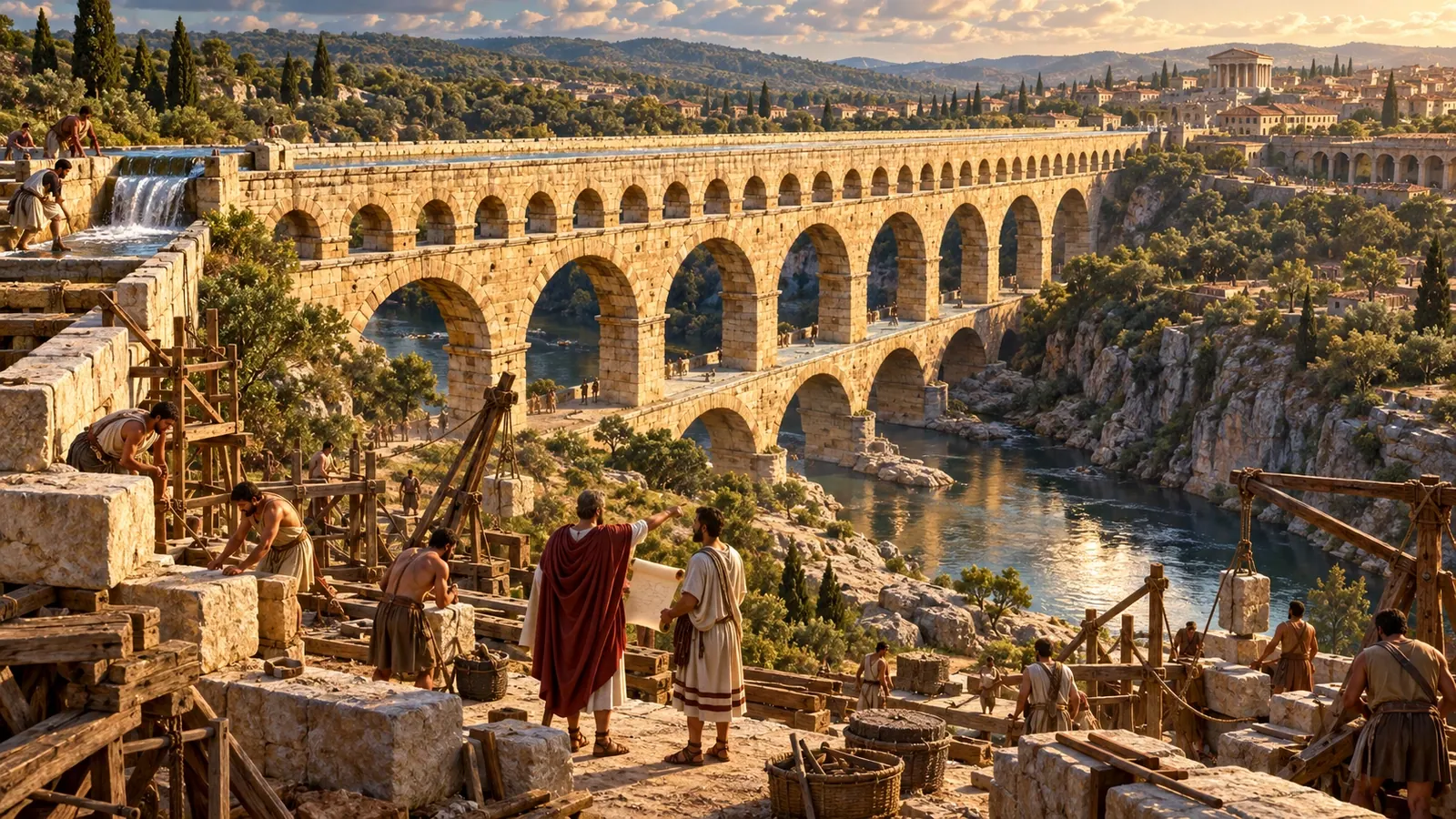
In the province of Gaul (near modern Nîmes in France), the Pont du Gard, built of three tiers of stone arches, spanned the Gardon River, carrying spring water from 50 kilometers away steadily into the city of Nîmes. It remains one of the landmarks of Roman engineering.
The road network in Trajan's time
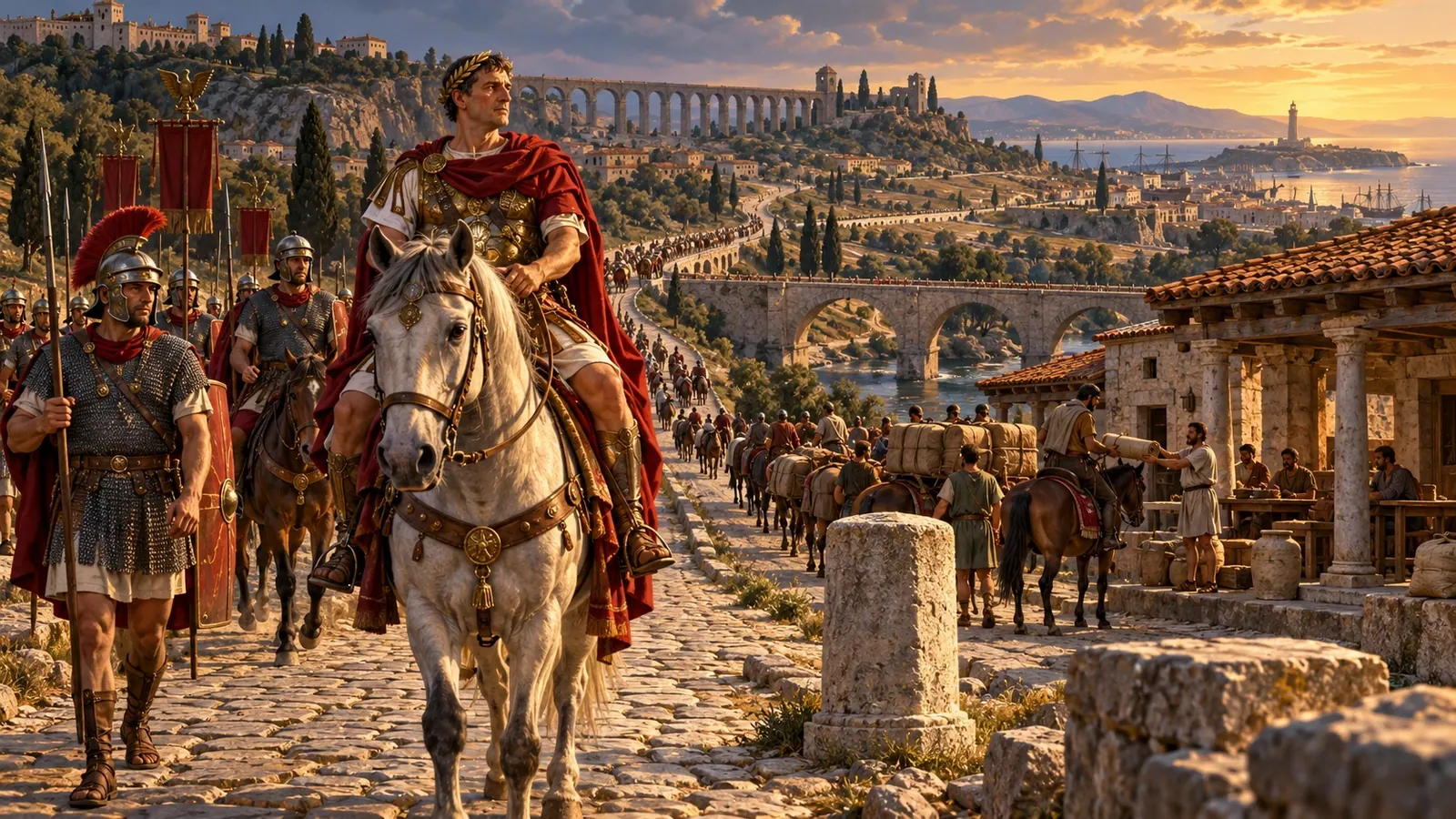
During Trajan's reign, the total length of Roman roads is estimated to have exceeded tens of thousands of kilometers, lined with way stations and milestones. Legions on the move and messengers could thus cover the whole empire at a steady pace, a state-level infrastructure rare in the Ancient World.
Aqua Anio Novus
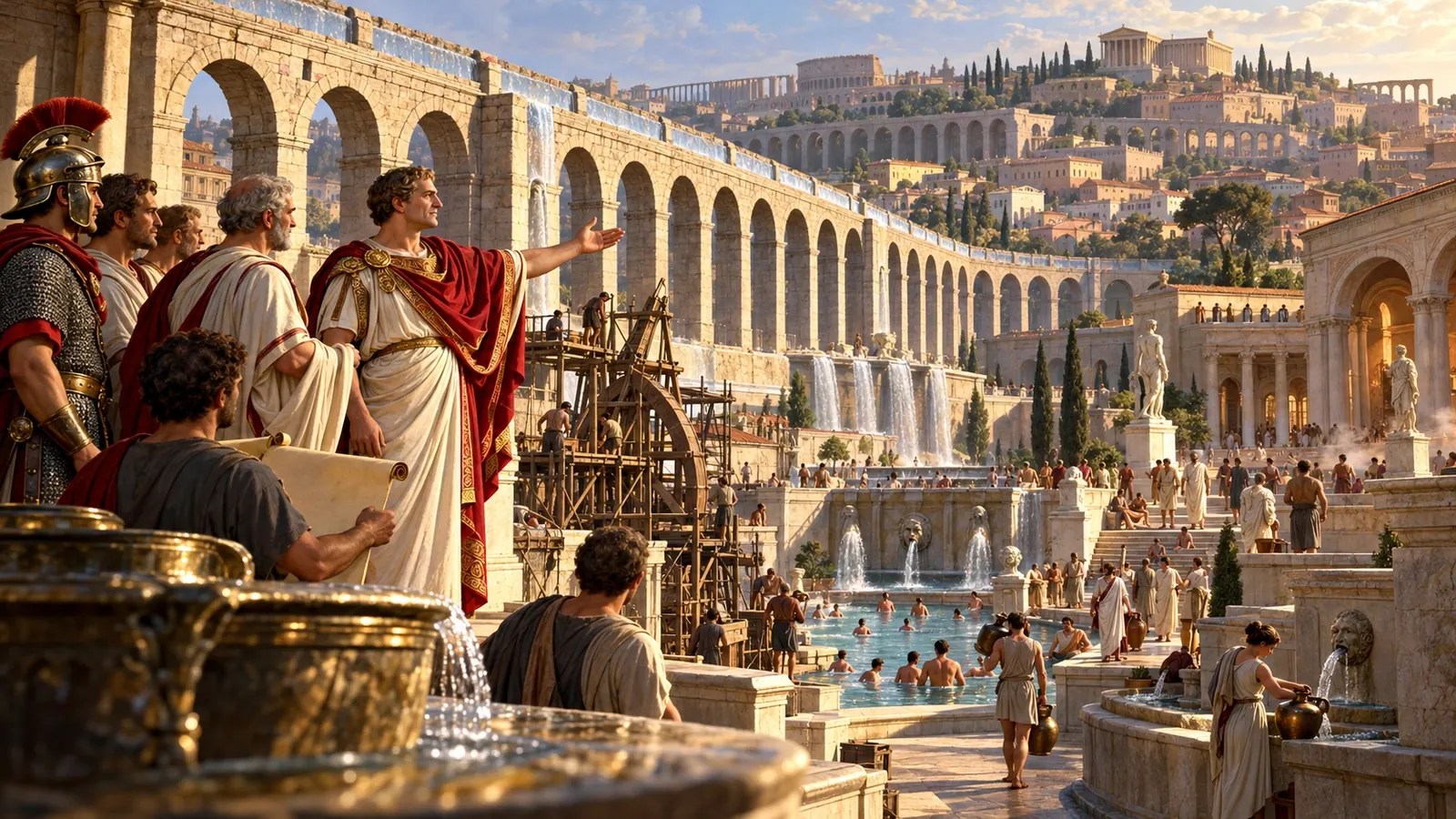
Trajan completed the Aqua Anio Novus. By this time more than ten aqueducts were supplying the city of Rome at once, serving public baths, fountains, and private homes alike. By modern estimates, daily water use per person even exceeded that of many early modern cities.
The long legacy of infrastructure
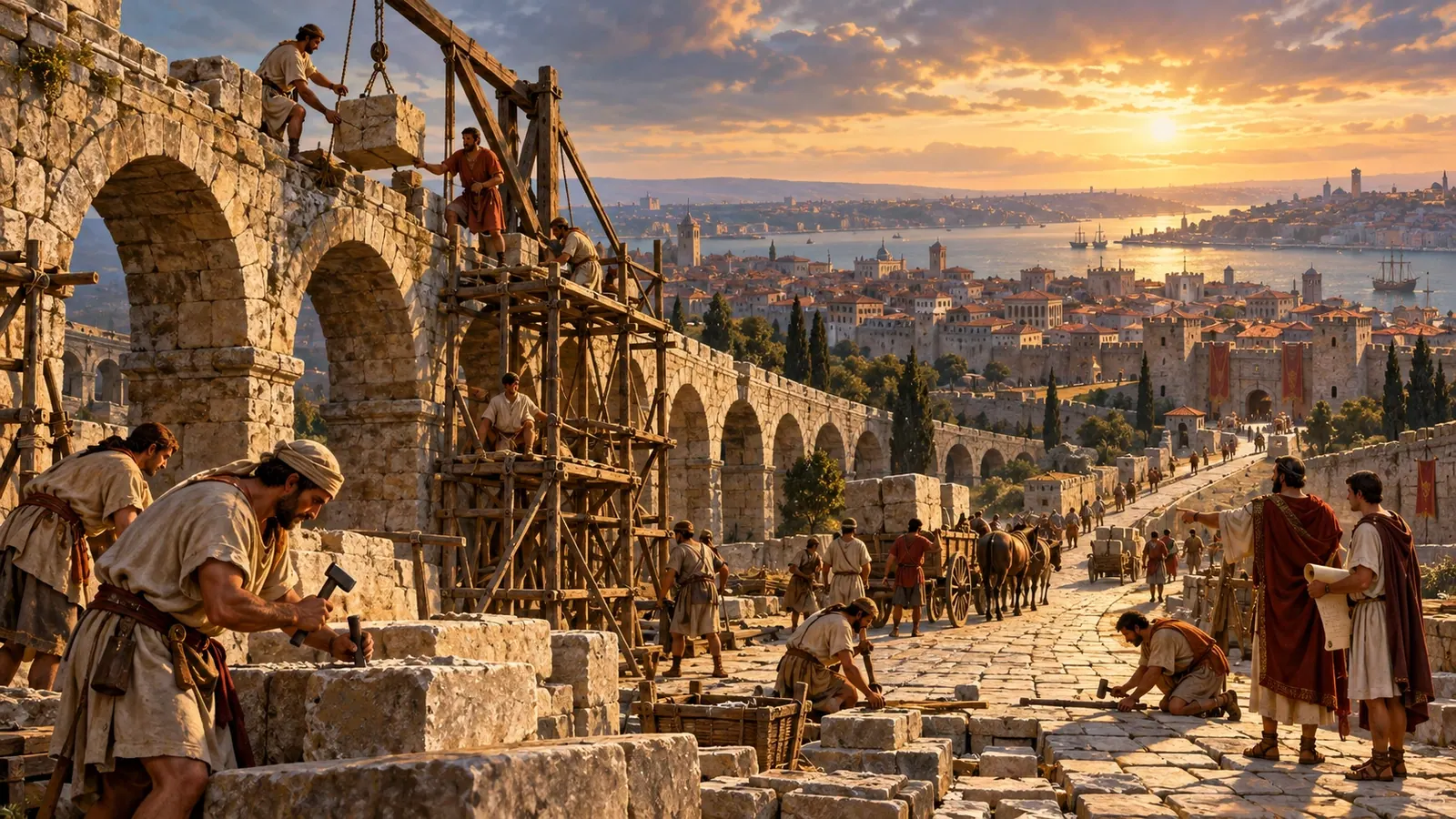
By the time Constantine moved the capital to Byzantium, Rome's roads and aqueducts had been running for centuries. Amid the constant wars that followed in Europe, many stretches of road and aqueduct remained in use and were even repaired, and it was not until the modern era that Europe again built public works on the same scale.