Zhu Yuanzhang: From Beggar to Emperor
The founding emperor of humblest birth in Chinese history, and also the harshest toward his officials. He rebuilt a Han Chinese dynasty and pushed imperial power to unprecedented heights.
Famine in Huaixi
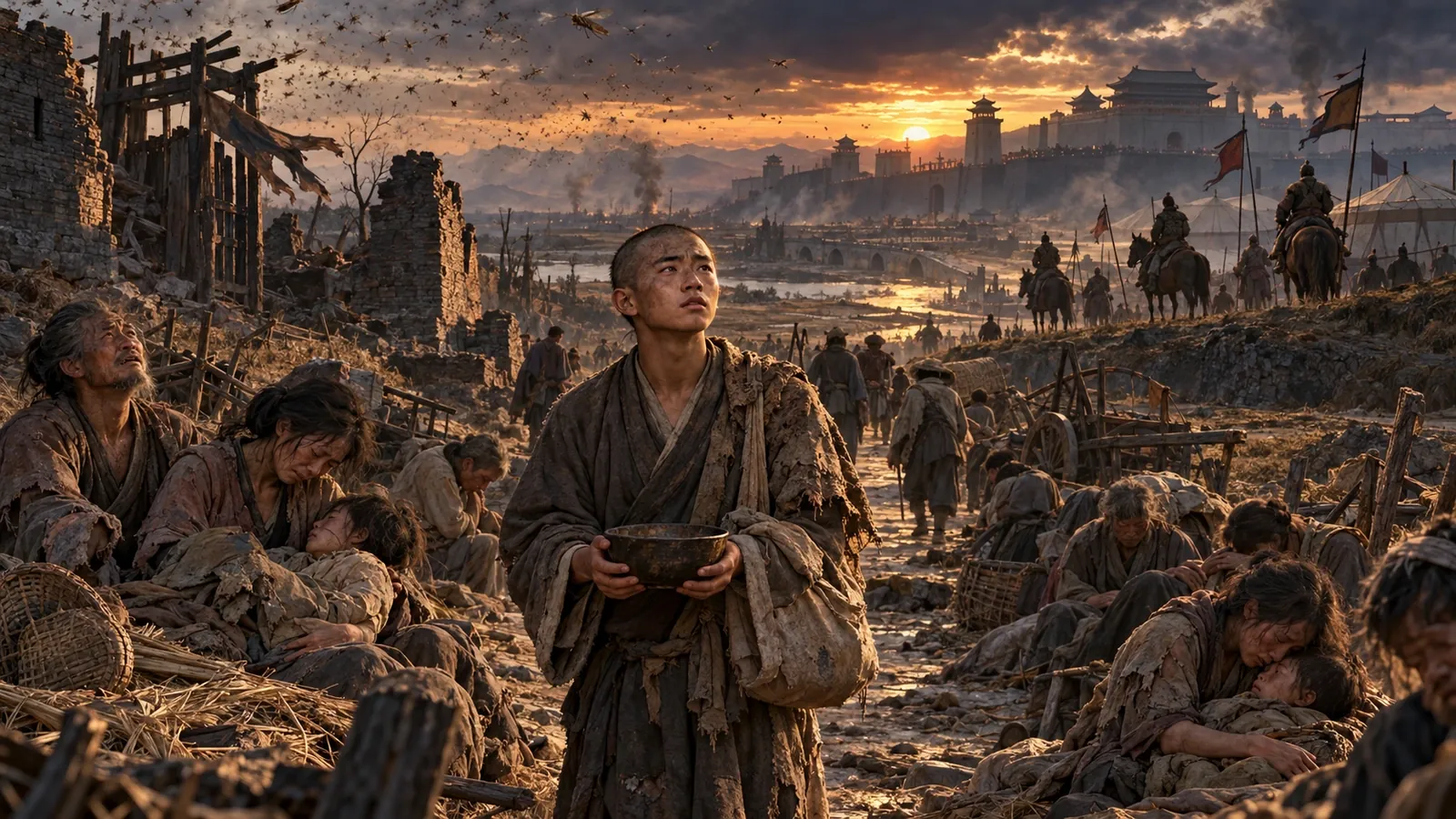
Drought, locusts and plague came one after another, and within half a month the seventeen-year-old Zhu Chongba lost his parents and eldest brother, with no land to bury them in. He became a monk at Huangjue Temple, but the temple soon ran out of food too, and he had to wander for three years begging with his alms bowl. Those three years took him all over western Huai and showed him what this dynasty was really made of.
Build high walls, store up grain, be slow to proclaim yourself king
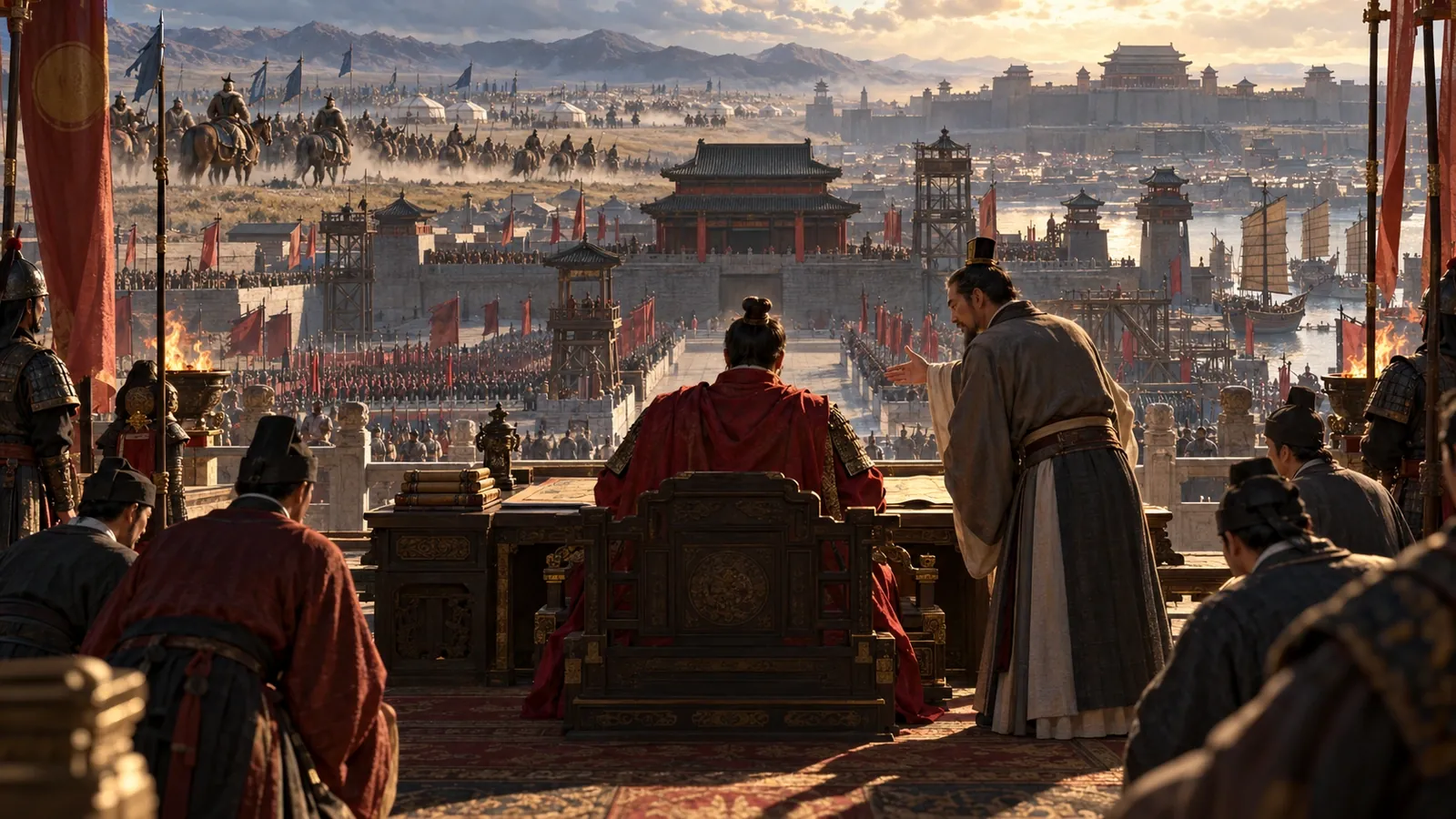
After joining Guo Zixing's Red Turbans he rose quickly, captured Jiqing and renamed it Yingtian. His strategist Zhu Sheng offered a nine-character plan: do not rush to proclaim yourself king; first build up your base. As a result he avoided the brunt of the Yuan main forces and let Chen Youliang and Zhang Shicheng stick their necks out.
Battle of Lake Poyang
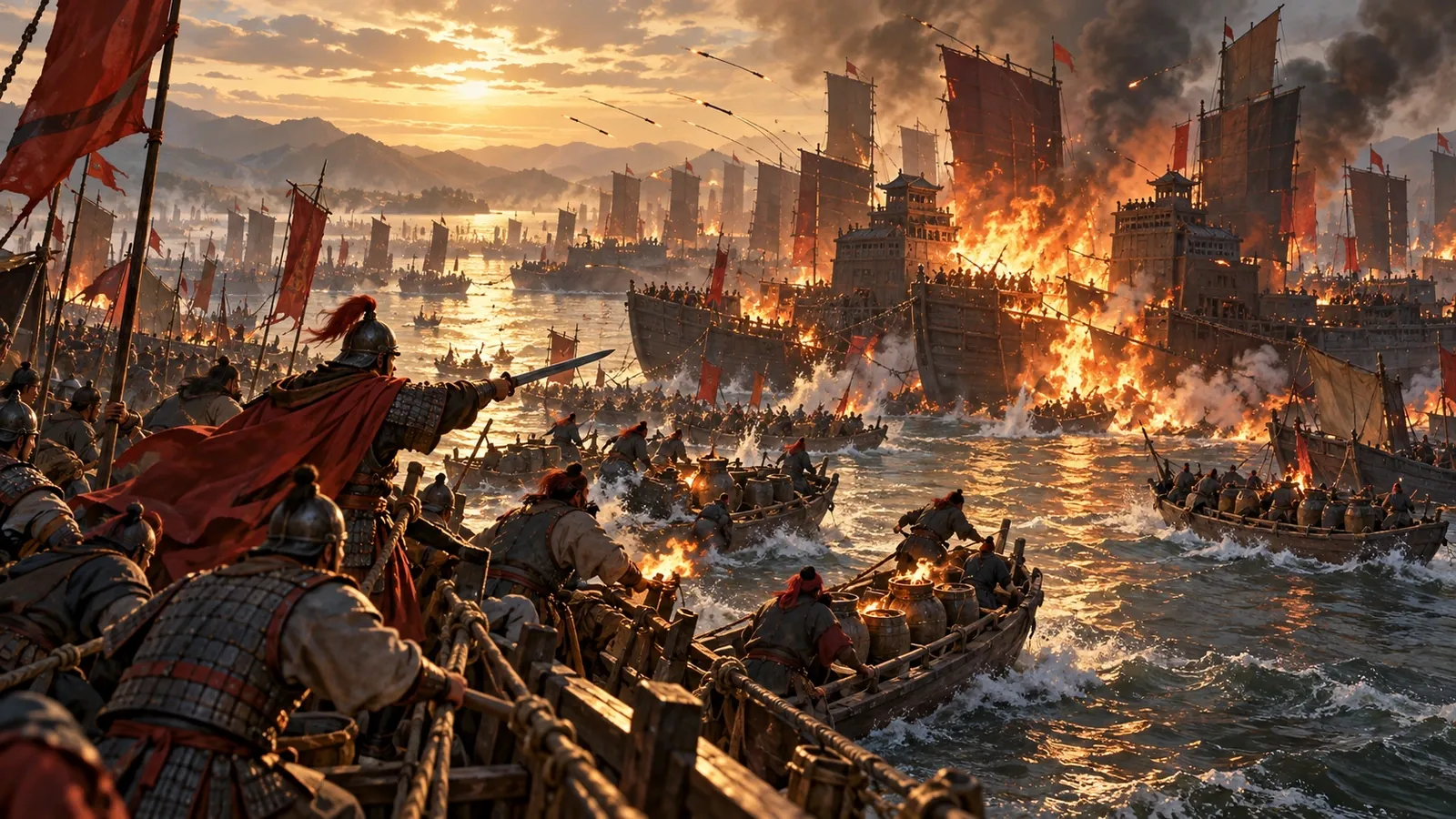
He fought Chen Youliang in a decisive battle on Lake Poyang for 36 days, 600,000 against 200,000. Chen's giant warships were chained together, and Zhu's forces used small boats loaded with gunpowder to set fires downwind. Chen Youliang was killed by a stray arrow and the Han army collapsed. It was one of the largest naval battles in Chinese history, and it decided who would unify the land south of the Yangtze.
Expelling the Barbarians · Founding of the Ming Dynasty
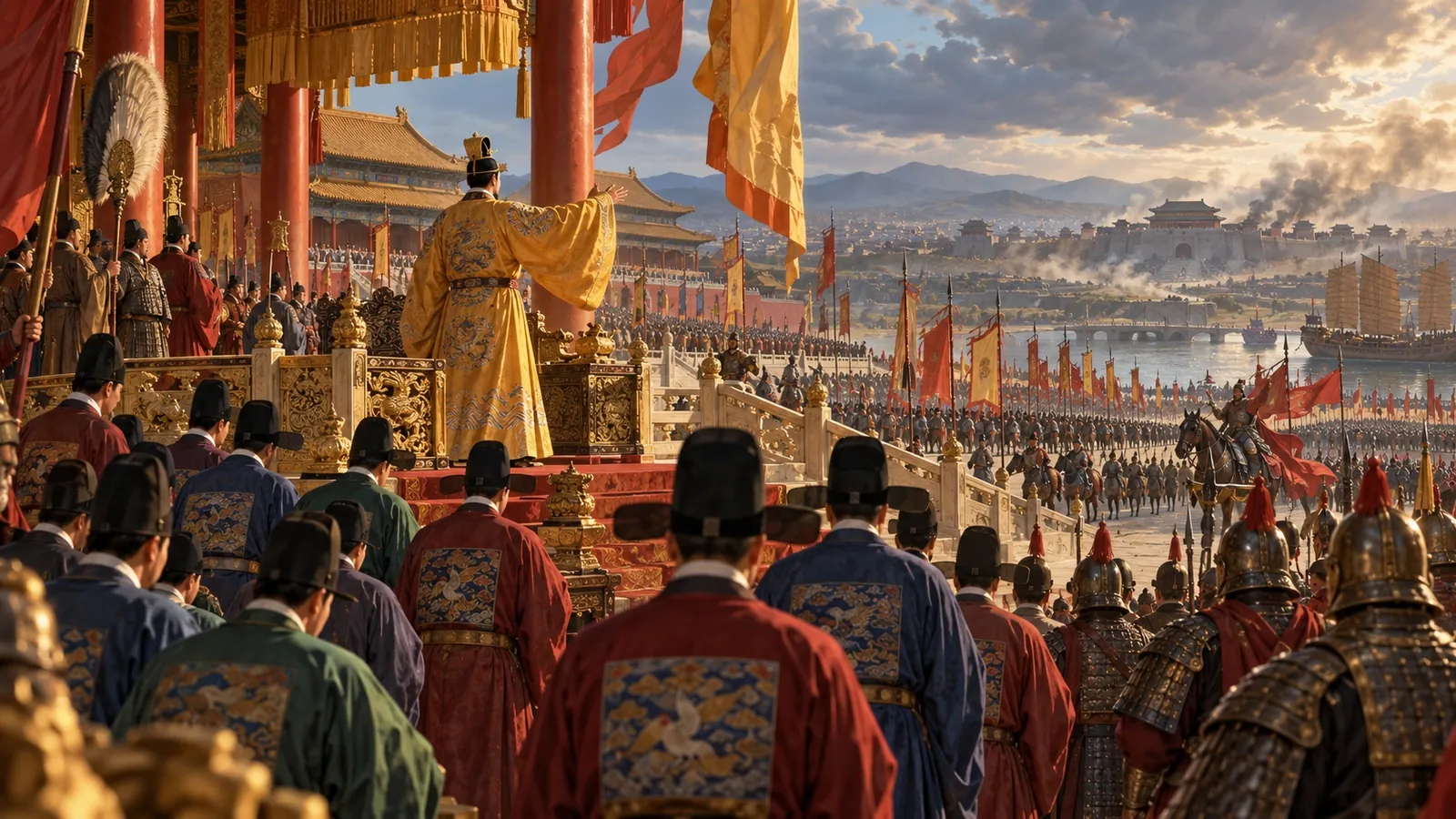
Zhu Yuanzhang proclaimed himself emperor, named his dynasty Ming and made Yingtian his capital. That same year Xu Da's northern expedition took Dadu and Emperor Shun of Yuan fled north. The proclamation read: "Drive out the barbarians, restore China, establish order and discipline, and relieve the people." It was the first time in four hundred years that a Han Chinese regime had unified the country from south to north.
Hu Weiyong Case · Abolished the Chancellorship
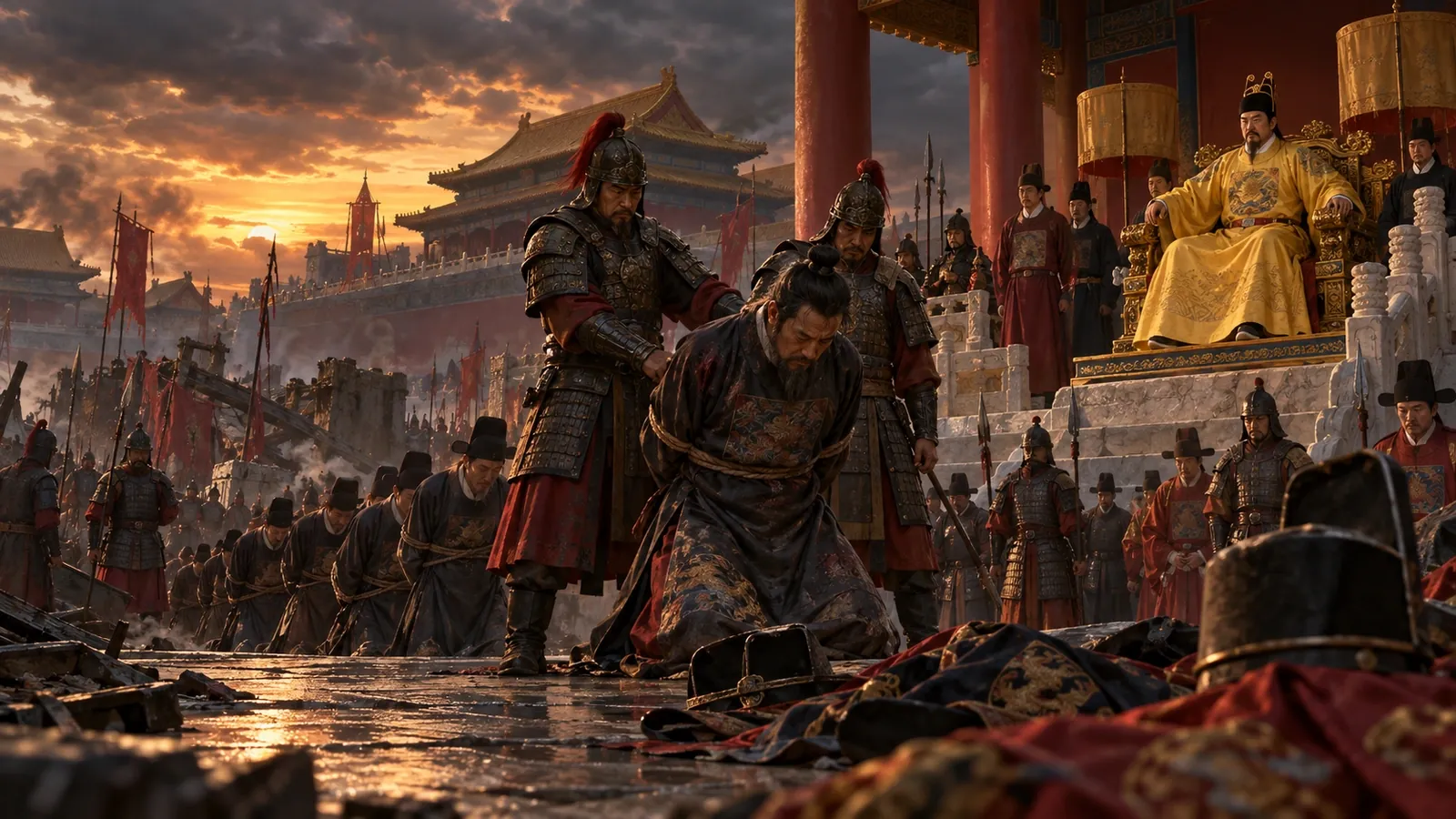
Chancellor Hu Weiyong was executed for treason, and over the years more than 30,000 people were implicated. The Secretariat and the office of chancellor were then abolished, the Six Ministries answered directly to the emperor, and an ancestral injunction was laid down: "Descendants in later generations may not discuss appointing a chancellor; any minister who dares to propose it shall be put to death." The chancellorship, which had operated for 1,600 years, came to an end.
Lan Yu Case and the Embroidered Uniform Guard
The Lan Yu Case killed another 15,000 people, and the founding meritorious officials were almost all wiped out. The Embroidered Uniform Guard ran the imperial prison, and officials were flogged in the palace courtyard. He cleared away every threat he could see for his grandson, but never expected the threat to come from his own fourth son.