Zhu Yuanzhang
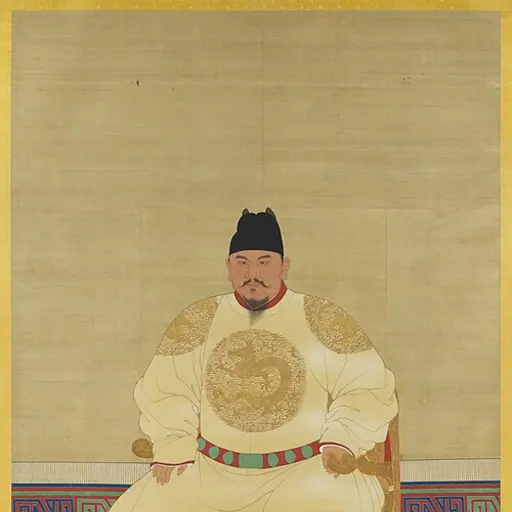

Rose in revolt from humble origins to found the Ming dynasty, abolished the chancellorship and vastly strengthened imperial power.
Life
From beggar monk to soldier
Zhu Yuanzhang was born to poor peasants in Haozhou. As a youth he lost his parents and elder brother to famine and plague, became a monk at Huangjue Temple and begged to survive. In the late Yuan dynasty, the Yellow River changed course, taxes and labor levies were heavy, and the Red Turbans rose across north and south; at twenty-five he joined Guo Zixing's forces, and through bravery in battle and skill in using men he gradually gained military command.
Drove out the Yuan, founded the Ming
He adopted the strategy of "build high walls, store up grain, and be slow to proclaim yourself king," destroyed Chen Youliang at the Battle of Lake Poyang, then eliminated Zhang Shicheng. In 1368 he proclaimed himself emperor and founded the Ming, and the same year his Northern Expedition took Dadu, ending Yuan rule over the Central Plains. He then had the land surveyed, compiled the Yellow Registers and fish-scale land registers, instituted the weisuo garrison and lijia systems, and revived agriculture.
Centralization and harsh punishment
He abolished the chancellorship and the Secretariat, giving power to the Six Ministries and concentrating it in the emperor; he set up the Embroidered Uniform Guard to watch over officials, and used the Hu Weiyong and Lan Yu cases to execute tens of thousands. His institutions laid the foundation for the highly centralized political structure of the Ming and Qing; restoring people's livelihoods went hand in hand with harsh laws and punishments, and he has long been a sharply polarizing ruler.
Legacy
Zhu Yuanzhang rose from abject poverty to become a dynastic founder. He ended the wars of the Late Yuan, restored and developed agricultural production, and consolidated a unified multiethnic state. The highly centralized political system he established had a profound influence on both the Ming and Qing dynasties. But he ruled with harsh laws and severe punishments, used several major purges to slaughter meritorious officials and bureaucrats on a massive scale, and set up the Embroidered Uniform Guard to tighten surveillance, all of which make him a historical figure judged in sharply opposing ways.
Major works & achievements
- Founded the Ming dynasty in 1368; his Northern Expedition took Dadu
- Abolished the chancellorship and divided power among the Six Ministries
- Compiled the Yellow Registers and Fish-Scale Registers
- Promulgated the Great Ming Code
- Implemented the weisuo garrison system and lijia system
Did you know? His tomb, the Ming Xiaoling Mausoleum, lies on Purple Mountain in Nanjing and was inscribed as a World Cultural Heritage site in 2003.
Key dates
- 1344Parents die; becomes a monk at a temple
- 1352Joined Guo Zixing's rebel forces
- 1356Captures Jiqing and renames it Yingtian
- 1363Destroyed Chen Youliang at the Battle of Lake Poyang
- 1367Eliminates Zhang Shicheng and unifies Jiangnan
- 1368Proclaims himself emperor and founds the Ming; Northern Expedition takes Dadu
- 1380Hu Weiyong case; chancellorship abolished
- 1381Compiles the Yellow Registers and reorganizes taxes and labor service
- 1398Dies; succeeded by his grandson, the imperial heir