Cardinal Richelieu
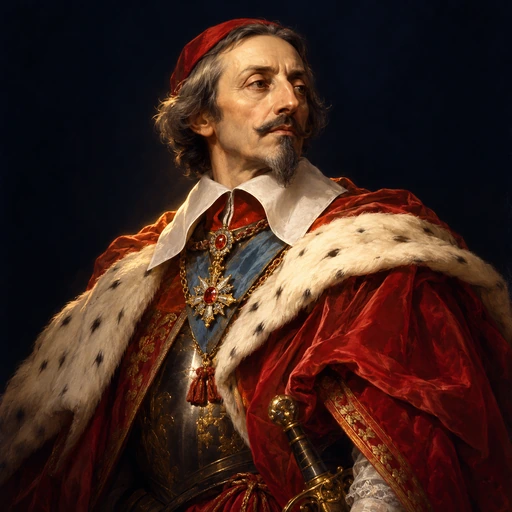
Chief minister of Louis XIII who strengthened royal power with an iron hand, laying the foundation for France's hegemony in Europe.
Life
Cardinal
Cardinal Richelieu came from the petty nobility, became Bishop of Luçon at 21 and later a cardinal. In 1624 he joined the royal council and became Louis XIII's chief minister, holding power for 18 years.
Raison d'état
At home, he weakened the political power of the great nobles and the Huguenots: in 1628 he took the Protestant stronghold of La Rochelle while preserving their freedom of worship; he sent royal intendants to the provinces, demolished nobles' castles and banned dueling. Abroad, he put the interests of the state first: although a cardinal, he subsidized Protestant Sweden and entered the Thirty Years' War directly to oppose the House of Habsburg.
Académie française
In 1635 he founded the Académie française. He died in 1642, and his successor Mazarin continued his policies.
Legacy
Cardinal Richelieu put forward the diplomatic principle that raison d'état stands above religion, laying the foundation for France's power in the age of Louis XIV.
Major works & achievements
- Académie française
Did you know? Alexandre Dumas's The Three Musketeers cast him as a villain.
Key dates
- 1607Became Bishop of Luçon
- 1622Became a cardinal
- 1624Became chief minister
- 1628Took La Rochelle
- 1635Founded the Académie française; declared war on Spain
- 1642Died