Ibn Battuta
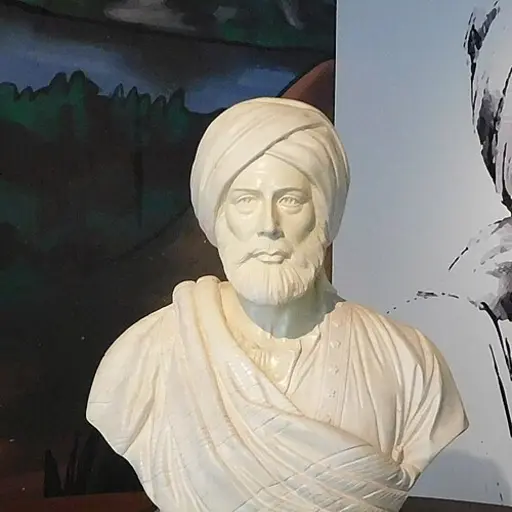

Traveled three continents for nearly thirty years, leaving a firsthand record of the 14th century.
Life
Student from Tangier
Ibn Battuta was born into a family of judges in Tangier, Morocco, and was educated in Islamic law. Although the 14th-century Islamic world was politically divided, it was knit together by a shared language, law and pilgrimage routes, and merchants and scholars could find posts far from home on the strength of their learning; this made his journeys possible.
Thirty years of travel
In 1325, aged twenty-one, he left home on the pilgrimage to Mecca. Over the next nearly thirty years he traveled through Egypt, Syria, Iraq, Persia, the East African coast, Asia Minor, the Golden Horde, Central Asia and India, served as a judge in the Delhi Sultanate for eight years, was sent as an envoy to China, and also visited the Maldives, Ceylon and Southeast Asia.
Travelogue and historical source
After returning home he dictated his experiences, which the scribe Ibn Juzayy edited into the Travels (Rihla); his journeys reportedly totaled more than 120,000 km. Its accounts of cities, customs, prices and officials are an important source for the 14th-century Indian Ocean world and trans-Saharan trade, though parts are secondhand or exaggerated.
Legacy
Ibn Battuta was one of the most widely traveled travelers of the premodern era. His travelogue vividly describes the political, economic and social life of the 14th-century Islamic world and its neighbors, and is an important source for the study of Indian Ocean trade, the Mali Empire in West Africa and the Yuan dynasty's foreign communications at the time. Scholars have also found that parts of the book may borrow from other travel accounts, and whether he personally visited northern China in particular is questioned.
Major works & achievements
- Dictated The Travels of Ibn Battuta
- Journeys reportedly exceeded 120,000 km
- Served as a judge in the Delhi Sultanate for eight years
- Visited Quanzhou and other Chinese ports
Did you know? A small crater on the Moon is named after him.
Key dates
- 1325Left Tangier on pilgrimage to Mecca
- 1330Traveled the ports of the East African coast
- 1332Went north via Asia Minor and the Golden Horde
- 1334Arrives in Delhi and becomes a judge
- 1342Sent as envoy to China
- 1346Reached Quanzhou and other Chinese ports
- 1349Returned to Morocco
- 1352Crossed the Sahara to visit Mali
- 1355Dictated his travelogue