Gajah Mada
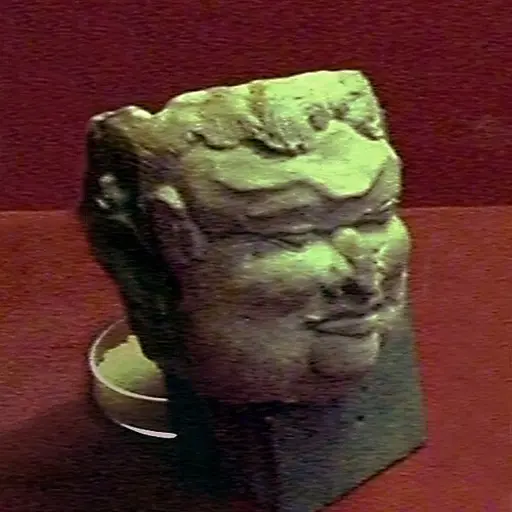

The most famous chief minister of Majapahit, known for the Palapa Oath and his ambition to unify the archipelago.
Life
Guard captain quells a revolt
Gajah Mada's origins are unknown; what is known of his life comes mainly from the 14th-century court poem Nagarakretagama and the later chronicle Pararaton, and many details have a legendary quality. According to these accounts, he began as captain of the royal guard, and when the official Kuti rebelled in 1319, he escorted King Jayanagara to safety and devised a plan to crush the revolt, for which he was promoted to regional governor.
Palapa Oath
After Jayanagara died, his half-sister Tribhuwana ruled as queen. In 1331 Gajah Mada suppressed a rebellion in Sadeng and then became chief minister of Majapahit. According to the Pararaton, on taking office he swore an oath not to enjoy "palapa" (generally interpreted as some kind of pleasure or spice) until Nusantara (the lands of the archipelago) had been brought under Majapahit. He then directed the conquest of Bali and other lands; Majapahit conquered Bali in 1343, and its influence spread across the archipelago.
Bubat and aftermath
In 1357 the king of Sunda led his royal family to escort a princess to marry Hayam Wuruk, King of Majapahit, but the two sides clashed at Bubat over questions of ceremonial status, and almost the entire Sundanese royal party was killed. This became known as the Bubat incident, and Gajah Mada's standing suffered as a result. He died in 1364. After the Indonesian national movement arose in the 20th century, he came to be seen as a symbol of the unification of the archipelago, and one of Indonesia's oldest universities is named after him.
Legacy
Gajah Mada was Majapahit's most powerful chancellor, and the expansion he led made Majapahit one of the strongest states in insular Southeast Asia. Since the 20th century, Indonesian nationalists have interpreted his oath as a precursor of the unification of the archipelago, and it has become an important symbol of national identity. Scholars note, however, that Majapahit's control over many areas was largely a nominal tributary relationship, and its actual territory may have been exaggerated by later national narratives.
Major works & achievements
- 1319: suppressed the Kuti rebellion
- Swore the Palapa Oath, vowing to unify the archipelago
- Led the conquest of Bali
- Extended Majapahit's power across the archipelago
Did you know? Indonesia's first domestic communications satellite was named "Palapa" after his Palapa Oath.
Key dates
- 1319Suppressed Kuti's revolt and protected King Jayanagara
- 1331Suppressed the Sadeng rebellion and became chief minister
- 1336Swore the Palapa Oath (one account gives 1334)
- 1343Majapahit conquered Bali
- 1357Bubat incident
- 1364Died