Harun al-Rashid
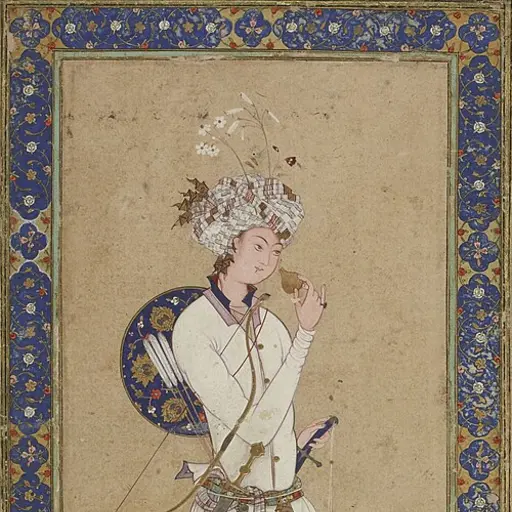

Embodiment of the Abbasid golden age, when Baghdad was one of the largest cities of its time.
Life
Succeeded as caliph
Harun came from the Abbasid family and as a youth led troops against Byzantium; in 786, after his elder brother's death, he succeeded as caliph. The Abbasid Caliphate had made Baghdad its capital only some twenty years earlier; the empire stretched from North Africa to Central Asia, trade routes flourished, and Persian bureaucratic traditions deeply shaped the workings of the court.
Golden Age and Diplomacy
In his early reign he relied on the Barmakid family to run finances and administration. Agriculture and long-distance trade thrived, Baghdad became one of the largest cities in the world, and the movement to translate Greek and Persian works gathered pace. He fought Byzantium repeatedly and forced it to pay tribute, and exchanged envoys and gifts with Charlemagne of the Franks.
Purge and Partition
In 803 he abruptly purged the Barmakid family and concentrated power in his own hands; late in life he divided the empire between two sons, sowing the seeds of civil war after his death. His court was romanticized into legend in One Thousand and One Nights; in reality his rule combined prosperity with autocracy, and it is often seen as the peak of the Abbasid golden age.
Legacy
The age of Harun al-Rashid is often regarded as the golden age of the Abbasid Caliphate. The prosperity of Baghdad and the luxury of his court, passed down through "One Thousand and One Nights," made him one of the best-known images of a monarch in the Islamic world. But historians also note that his sudden purge of the Barmakids revealed an autocratic side, and his arrangement dividing the empire between two sons led directly to the civil war between al-Amin and al-Ma'mun after his death. Beneath the so-called golden age lay the latent danger of division.
Major works & achievements
- Relied on the Barmakid family to manage finances and administration
- Repeatedly invaded Byzantium, forcing it to pay tribute
- Exchanged envoys with Charlemagne
- His court became a gathering place for scholars and poets
Did you know? Among his gifts to Charlemagne was an elephant named "Abul-Abbas," which reached Aachen in 802 CE.
Key dates
- 780Led armies against Byzantium
- 786Succeeded as caliph
- 791Sent troops into Asia Minor again
- 797Made peace with Byzantium in exchange for annual tribute
- 798Sent envoys to Charlemagne of the Franks
- 803Purged the Barmakid family
- 806Invades Asia Minor and forces Byzantium to pay tribute
- 809Died of illness at Tus during an eastern tour