Arthur Phillip
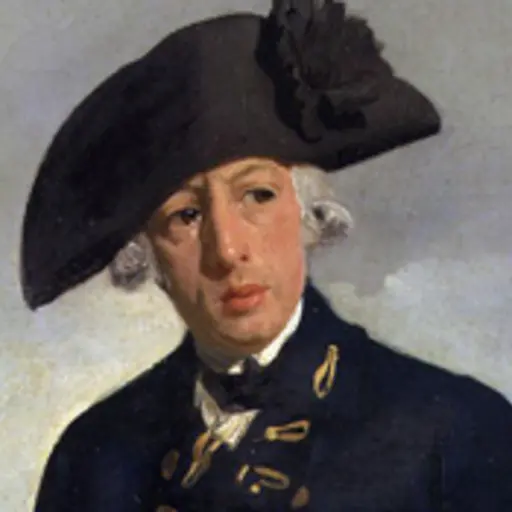

Led the First Fleet to Sydney Cove and founded Britain's first colony in Australia.
Life
Naval career
Phillip was born in London in 1738, went to sea in the merchant service as a youth, and later joined the Royal Navy, serving in the Seven Years' War. From 1774 to 1778 he was permitted to serve in the Portuguese navy, taking part in the conflict between Portugal and Spain off the coast of Brazil and gaining experience in ocean voyages and colonial affairs. In 1786 the British government appointed him governor of the penal colony to be established in New South Wales.
First Fleet
In May 1787 he led the First Fleet of eleven ships out of Portsmouth, carrying more than 700 convicts along with marines, officials and their families, and reached Botany Bay after more than eight months. Judging the water and soil there poor, he moved north to Port Jackson, and on January 26, 1788, raised the flag at Sydney Cove and founded the colony; that day later became Australia Day, and also a day of Indigenous protest.
A hard beginning
In the colony's first years food was severely short, and at one point it came close to famine. Phillip tried to establish contact with the local Eora people and kept an Aboriginal man, Bennelong, with him to learn the language; when he was speared by Aboriginal people in 1790 he ordered that there be no reprisals, but later that same year he sent out a punitive expedition. Smallpox and other diseases spread widely among the Indigenous population. In 1792 he returned to Britain due to illness, and he died in Bath in 1814.
Legacy
Phillip is regarded as one of the founders of the modern Australian nation. He kept the colony alive under extremely difficult conditions and tried to treat the Indigenous peoples with relative restraint, making him comparatively pragmatic among the colonial officials of his day. But the colony he founded meant from the very start the loss of Indigenous land and a sharp decline in Indigenous population; to this day many Indigenous Australians call January 26 "Invasion Day," and its historical meaning remains deeply contested.
Major works & achievements
- Led the First Fleet to Australia
- Established a colony at Sydney Cove in 1788
- Kept the colony alive through famine
Key dates
- 1738Born in London
- 1774Served in the Portuguese navy
- 1786Appointed Governor of New South Wales
- 1787Led the First Fleet out of Portsmouth
- 1788Founded the colony at Sydney Cove on January 26
- 1792Returned to Britain due to illness
- 1814Died in Bath