Kimpa Vita
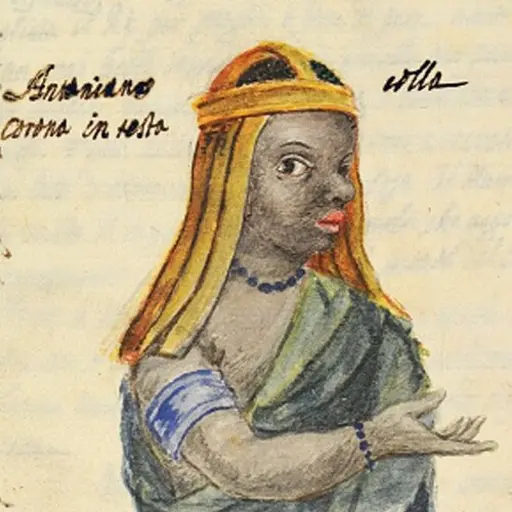

Called for the reunification of the Kingdom of Kongo in the name of Saint Anthony and was burned at the stake at twenty-two.
Life
Growing up amid civil war
Kimpa Vita was born c. 1684 into a Kongo noble family and was baptized Beatriz. In the era in which she grew up, the Kingdom of Kongo had fallen into prolonged civil war after the Battle of Mbwila; the capital, San Salvador, had been destroyed and abandoned, several claimants to the throne each held their own territory, and war and the slave trade brought great suffering to the common people.
Antonian movement
In 1704 she claimed that she had died during an illness and come back to life possessed by Saint Anthony, and she immediately began to preach. She taught that Jesus and the Virgin Mary were Kongolese, criticized European missionaries, and called on people to return to the abandoned capital and rebuild a unified kingdom. Her followers were known as the "Antonians," and large numbers of people responded, resettling San Salvador.
Burned at the stake and legacy
Her movement threatened Pedro IV, one of the contenders for the throne. In 1706 she was arrested and, with the involvement of Italian Capuchin missionaries, condemned for heresy and burned at the stake, at only about twenty-two years of age. Yet her movement furthered the reunification of Kongo, and Pedro IV recaptured the capital in 1709. Today she is regarded as a forerunner of indigenized African Christianity and of national awakening.
Legacy
The Antonian movement led by Kimpa Vita was one of Africa's earliest indigenized Christian movements. She combined Christian narratives with Kongo traditions, answering the longing of people amid war for unity and peace. Her movement objectively helped bring about the reunification of the Kingdom of Kongo. Some later regard her as a forerunner of African national awakening, while some scholars stress that she should be understood within the specific context of the religious and dynastic struggles of her time.
Major works & achievements
- Founded the Antonian movement
- Called for a return to San Salvador
- Advocated an indigenized Christianity
Key dates
- 1684Born around this year
- 1704Claimed to be possessed by Saint Anthony and began preaching
- 1705Followers returned to São Salvador
- 1706Arrested and burned at the stake
- 1709Pedro IV reunified Kongo