Moses Maimonides
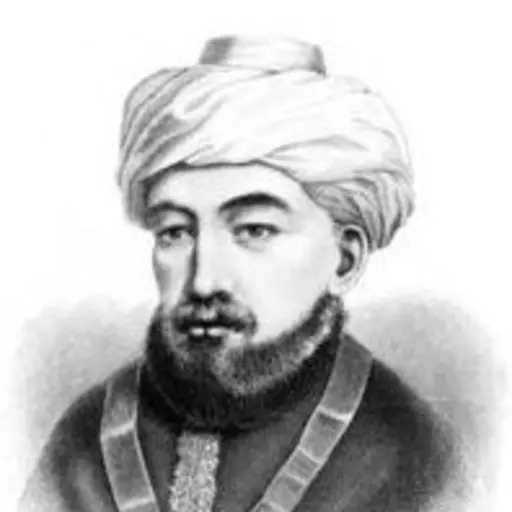

A Jewish thinker born in Córdoba who wrote The Guide for the Perplexed, attempting to reconcile Aristotle's philosophy with the Jewish faith.
Life
Young Exile
Moses Maimonides was born in Córdoba into a family of scholars; his father was a Jewish judge, and some accounts place his birth in 1135. Around 1148 the Almohads captured Córdoba and imposed harsh religious policies, forcing Jews and Christians to convert or leave, and Maimonides' family began more than a decade of exile, moving from place to place across al-Andalus and on to Fez in North Africa.
Physician of Fustat
Around 1165 they moved via Palestine to Egypt and settled in Fustat. He became the leader of the local Jewish community and served as physician to al-Qadi al-Fadil, Saladin's vizier. In the Mishneh Torah he systematically organized Jewish law, and in The Guide for the Perplexed, written in Arabic, he tried to interpret scripture through Aristotelian philosophy, arguing that reason and faith are compatible.
Controversy and Reverence
His works sparked long controversy in the Jewish world, with some rabbis accusing him of excessive rationalism, but he was ultimately revered as the greatest Jewish thinker of the Middle Ages. Latin translations of The Guide for the Perplexed influenced Scholastic philosophers such as Thomas Aquinas. His life also mirrors the shift of al-Andalus's pluralistic culture from flourishing to contraction.
Legacy
Moses Maimonides was the most important Jewish thinker of the Middle Ages. His systematic codification of Jewish law is still widely studied today, and the principles of faith he formulated entered the Jewish liturgy. The Guide for the Perplexed attempts to explain faith through reason; it once provoked fierce controversy in the Jewish world, with some opponents even bringing about the burning of the book, but it was ultimately revered as a classic. His works also influenced Christian scholars such as Aquinas, reflecting the intellectual exchange among the three great religions of the medieval Mediterranean.
Major works & achievements
- Mishneh Torah
- The Guide for the Perplexed
- Commentary on the Mishnah
- Formulates the "Thirteen Principles" of the Jewish faith
Did you know? According to tradition, his body was later reburied in Tiberias, and his tomb is now a place of pilgrimage.
Key dates
- 1138Born in Córdoba
- 1148Almohads capture Córdoba; the family flees into exile
- 1160Moves to Fez
- 1165Moves to Palestine, later settles in Egypt
- 1168Completes the Commentary on the Mishnah
- 1180Completes the Mishneh Torah
- 1190Completes The Guide for the Perplexed
- 1204Died in Fustat