Koxinga
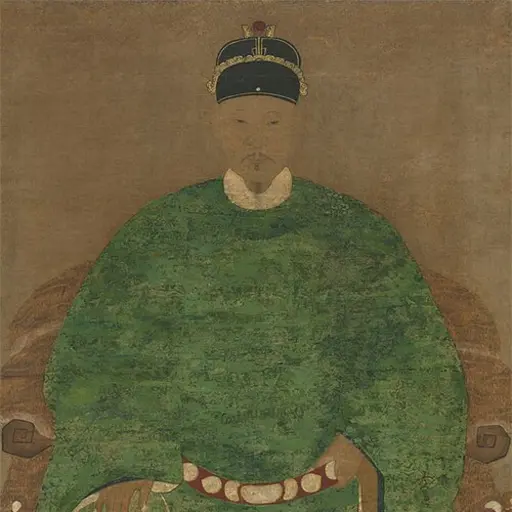

Led an army to expel the Dutch East India Company and recover Taiwan.
Life
Lord of the Imperial Surname
Koxinga was born in Hirado, Japan. His father, Zheng Zhilong, was the leader of a maritime trading and pirate force that ranged across East Asian waters, and his mother was Japanese. As a child he returned to Fujian to study and once entered the Imperial Academy in Nanjing. After the fall of the Ming, the Longwu Emperor granted him the imperial surname Zhu and the name Chenggong, so he was popularly called "Lord of the Imperial Surname."
Resisting the Qing and the Northern Expedition
After the Qing army entered through Shanhai Pass, his father Zheng Zhilong defected to the Qing, but he refused to defect and instead kept up resistance to the Qing. From his bases at Xiamen and Jinmen he launched repeated northern expeditions, at one point reaching the walls of Nanjing but failing to take it. In 1661 he led an army across the sea to besiege Fort Zeelandia on Taiwan, held by the Dutch East India Company; the following year the Dutch garrison surrendered, ending more than 30 years of Dutch colonial rule on Taiwan.
Recovering Taiwan
He died of illness soon after recovering Taiwan, aged only 38, and the Zheng regime on Taiwan lasted more than 20 more years before the Qing dynasty destroyed it. He has long been commemorated on both sides of the Taiwan Strait, but with different emphases: some narratives stress his loyalty and righteousness in resisting the Qing to restore the Ming, while others highlight his achievements in expelling the colonists and developing Taiwan; each narrative has its own emphasis, and later generations often draw on them separately.
Legacy
Koxinga expelled the Dutch colonists, recovered Taiwan, established prefectures and counties there and promoted land reclamation, and is honored as a national hero on both sides of the Taiwan Strait. His image of loyalty and righteousness in resisting the Qing to restore the Ming was highly praised in traditional histories, while his achievements in recovering Taiwan and resisting foreign colonialism have been especially emphasized in modern times. Some historians point out shortcomings such as his harsh military discipline and the misjudged Northern Expedition, but his historical standing is generally affirmed.
Major works & achievements
- Resisted the Qing from bases at Xiamen and Jinmen
- In 1659 marched north to the gates of Nanjing
- Expelled the Dutch colonists and recovered Taiwan in 1662
Did you know? Dutch records call him Koxinga, a transcription of the Southern Min pronunciation of "Lord of the Imperial Surname."
Key dates
- 1644Studied at the Imperial Academy in Nanjing
- 1645Granted the surname Zhu by the Longwu Emperor
- 1646His father defected to the Qing; he refused and rose in revolt against the Qing
- 1658Northern Expedition reached the walls of Nanjing
- 1659Northern Expedition failed; fell back to Xiamen
- 1661Crossed the sea to besiege the Dutch garrison on Taiwan
- 1662Dutch surrender; he died of illness the same year