Ibn Khaldun
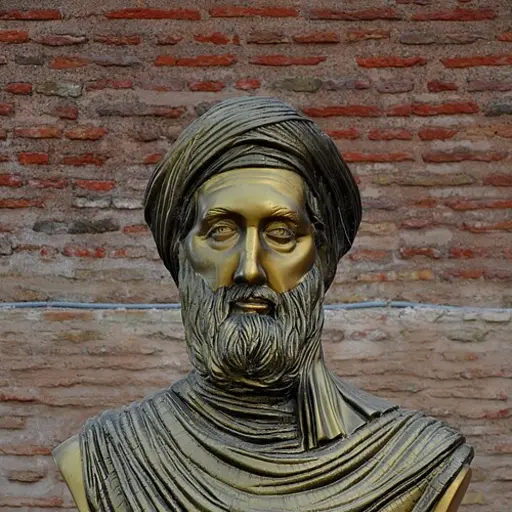

Wrote the Muqaddimah, a systematic analysis of the rise and fall of dynasties, and is regarded as a forerunner of sociology.
Life
Ups and downs in office
Ibn Khaldun came from an Andalusian immigrant family in Tunis and received a traditional Islamic education. As a young man he served at the courts of several dynasties in North Africa and al-Andalus, repeatedly becoming embroiled in political struggles and changes of power, which gave him firsthand observations of how regimes rise and fall.
Writing the Muqaddimah
Around 1375 he withdrew to a castle in the Algerian countryside to escape political turmoil and used the time to concentrate on writing history. In 1377 he completed the Muqaddimah, which introduced the concept of "asabiyyah" (group cohesion) to explain the cyclical pattern by which dynasties rise, reach their zenith and decline, raising historical study from mere chronicle to a systematic analysis of social structures and economic factors. In his later years he moved to Cairo, where he served as Maliki chief judge, and during Timur's siege of Damascus he met and spoke with Timur in person.
Posthumous fame
Modern scholars widely regard the Muqaddimah as a founding work of sociology, the philosophy of history and demographic economics, and Ibn Khaldun is therefore often called one of the "fathers of sociology." This title, however, was largely conferred after Western scholars rediscovered his work in the 19th century; in his own time and for centuries afterward, the book's influence within the Islamic world was in fact quite limited, and it was not widely admired until modern times.
Legacy
Ibn Khaldun sought to explain the rise and fall of dynasties through climate, economics, the differences between nomadic and settled life, and the waxing and waning of group cohesion, and he argued that historians should check whether their sources were plausible, something extremely rare in premodern historiography. In modern times he has been hailed as a forerunner of sociology and the philosophy of history, and Arnold Toynbee and others admired him greatly; some scholars caution, however, that calling him outright "the father of sociology" projects modern disciplines back onto a figure of the past.
Major works & achievements
- The Muqaddimah
- Wrote the universal history Kitab al-Ibar, of which The Muqaddimah is the introduction
- Proposed the theory of asabiyyah, or group cohesion
- In later years served as Maliki chief judge in Cairo
Did you know? In 1401 he met Timur outside Damascus and recorded the conversation in his autobiography.
Key dates
- 1332Born in Tunisia
- 1352Began serving at the royal courts of North Africa
- 1362Moved to Granada in Andalusia
- 1375Wrote in seclusion at a castle in Algeria
- 1377Completed the Muqaddimah
- 1382Moved to Cairo and became chief judge
- 1401Met Timur outside Damascus
- 1406Died in Cairo