Alfred the Great
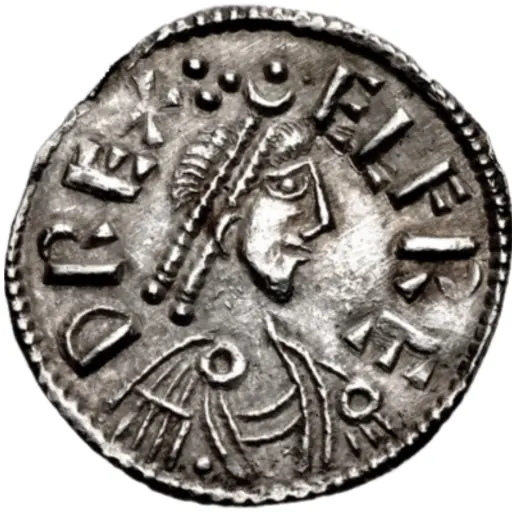

He turned the tide and drove back the Vikings, and is the only English monarch to bear the title "the Great."
Life
Succeeded in a Crisis
Alfred was the youngest son of King Aethelwulf of Wessex and came to the throne in 871 after his elder brothers died one after another. By then the "Great Heathen Army" from Scandinavia had overrun the kingdoms of northeastern England, and Wessex was the last Anglo-Saxon kingdom not yet conquered; its situation was precarious.
Battle of Edington
In 878 a Viking surprise attack succeeded, and Alfred was forced for a time to take refuge in the Somerset marshes. He then regrouped and decisively defeated the Viking leader Guthrum at the Battle of Edington, forcing him to be baptized as a Christian and to conclude a treaty fixing the boundary of the "Danelaw." Afterward Alfred carried out military reforms, built a system of fortresses and created the beginnings of a navy to counter coastal raids; he also vigorously promoted education and organized the translation of Latin classics into Old English.
The Title "the Great"
Alfred is the only monarch in English history generally given the title "the Great," and his military and administrative reforms laid the foundation for the later unification of England. He did not, however, "unify England" as some later accounts imply: at his death northeastern England was still under the Danelaw, and unification was essentially completed only in his grandsons' generation—a point often overlooked in simplified national narratives.
Legacy
When the Vikings had nearly conquered all of England, Alfred held on to Wessex; his network of fortresses and rotating military service laid the foundation for later recovering lost territory. He valued education and translation, advanced the development of Old English prose, and may have prompted the compilation of the Anglo-Saxon Chronicle. His descendants went on to unify England step by step. Later generations cast him as the founder of the English nation, an image colored in part by Victorian-era romanticization.
Major works & achievements
- Defeated Guthrum at the Battle of Edington in 878 CE
- Concluded a treaty with the Vikings, defining the Danelaw
- Built a network of burh fortresses
- Had Latin classics translated into Old English
Did you know? The story of him burning a peasant woman's cakes while hiding in the marshes first appears in accounts written about a hundred years after his death and is mostly regarded as legend.
Key dates
- 849Born at Wantage
- 871Became King of Wessex
- 878Crushed the Vikings at the Battle of Edington
- 880Concluded a treaty with Guthrum
- 886Recaptures London and strengthens the defenses
- 893Repelled a new wave of Viking invasions
- 899Died