Ardashir I
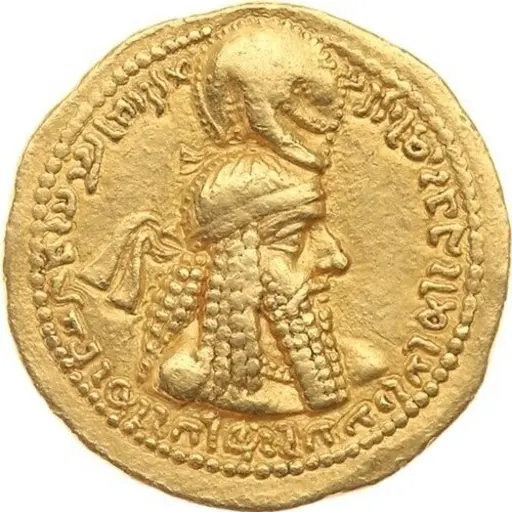

Overthrew Parthia, founded the Sasanian Empire, and made Zoroastrianism the state religion.
Life
Prince of Fars
Ardashir I came from a family of local princes in Istakhr in the Persian region of Fars. At the time, the Parthian Empire ruling the Iranian Plateau had been weakened by internal divisions, and regional lords submitted to it in name while in practice ruling on their own.
Overthrew Parthia
He first consolidated his power in his homeland and then rose in revolt against his Parthian suzerain. In 224 CE, at the Battle of Hormozdgan, he personally defeated and killed the last Parthian king, Artabanus IV, and was soon crowned "King of Kings" at the old capital Ctesiphon, founding the Sasanian Empire. He also strongly supported the Zoroastrian priesthood, establishing Zoroastrianism as the state's orthodox faith, and rebuilt Persia's ritual system and bureaucracy.
Founding and legend
The founding of the Sasanian Empire is often told as a clean change of dynasty, but in fact the resistance of Parthian remnants and local nobles lasted for years before it was gradually put down. Accounts of him in later Persian sources such as the epic Shahnameh also contain many legendary elements and need to be checked against contemporary material evidence such as coins and inscriptions.
Legacy
The Sasanian Empire founded by Ardashir I lasted more than 400 years and was the last great Iranian empire before the Islamic conquest. It took "Iran" as its national identity and engaged in a prolonged standoff with Rome and Byzantium. He tied royal power closely to Zoroastrianism, forming a state system in which throne and religion supported each other, and his court and administrative traditions deeply influenced later Islamic dynasties. Middle Persian works such as the Book of the Deeds of Ardashir portray him as a hero chosen by destiny.
Major works & achievements
- Defeated the last Parthian king at the Battle of Hormozgan
- Crowned "King of Kings of Iran," founding the Sasanian Empire
- Supported the Zoroastrian priesthood
- Built the circular capital of Gur at Firuzabad
Did you know? In the relief at Naqsh-e Rostam he is shown on horseback receiving the ring symbolizing royal power from the supreme god Ahura Mazda.
Key dates
- 180Born c. in the Fars region of Persia
- 205Inherited the local rule of Istakhr
- 220Rose in revolt against his Parthian suzerain
- 224Overthrew Parthia at the Battle of Hormozdgan and founded the Sasanian Empire
- 226Crowned King of Kings at Ctesiphon
- 230Made Zoroastrianism the state religion
- 242Died