Boyi
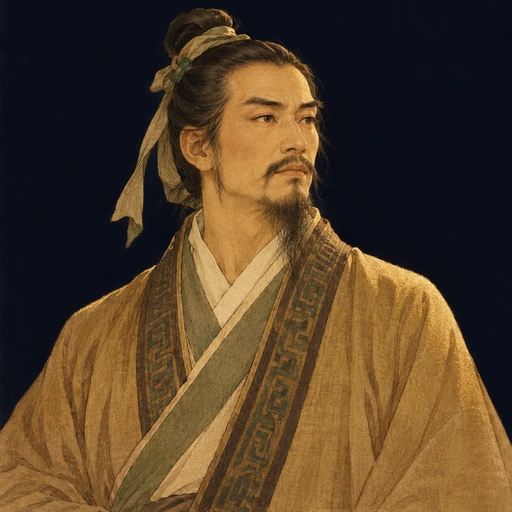
With his younger brother Shuqi, yielded the throne and left; seized King Wu's horse to oppose his campaign against King Zhou; refused to eat the grain of Zhou and starved to death on Mount Shouyang.
Life
Yielded the throne and left
Boyi and Shuqi were two sons of the ruler of the state of Guzhu. Their father wanted to make Shuqi his heir, but after the father died Shuqi wanted to yield the throne to Boyi. Boyi said this had been their father's command and left the country; Shuqi also refused to take the throne and followed him.
Halting the horses to remonstrate
Hearing that Chang, Earl of the West (King Wen of Zhou), treated the elderly well, they went to join him, but by the time they arrived King Wen had died. When King Wu of Zhou set out east to attack King Zhou of Shang, carrying King Wen's wooden spirit tablet, they stopped King Wu's horse and remonstrated, saying that taking up arms before burying one's father, and a subject killing his sovereign, were neither benevolent nor filial. His attendants wanted to kill them, but Jiang Taigong said, "These are righteous men," and had them led away.
Gathering ferns on Mount Shouyang
After King Wu conquered the Shang, they considered it shameful to eat the grain of the Zhou dynasty, so they lived as recluses on Mount Shouyang, gathering ferns to eat, and eventually starved to death.
Legacy
Confucius called Boyi and Shuqi "worthy men of old," and they became symbols of steadfast integrity in Chinese history; Sima Qian placed the "Biography of Boyi" first among his seventy biographies.
Did you know? In his Biography of Boyi, Sima Qian famously questioned whether the saying "Heaven's way shows no favoritism; it always sides with the good" could be believed.
Key dates
- 1046 BCESeized King Wu's horse to oppose his campaign against King Zhou
- 1045 BCERefused to eat the grain of Zhou and starved to death on Mount Shouyang (approx.)