The world in 476 CE
476 CE, Mesopotamia: Sasanian Persia (Peroz I); Iran: Sasanian Empire (Peroz I); India: Gupta Empire (Budhagupta); Rome: Barbarian kingdoms (Odoacer). The main event that year: Fall of the Western Roman Empire.
476 CE: the table below lists the states and rulers of 25 regions of the world, followed by 3 events from around that year.
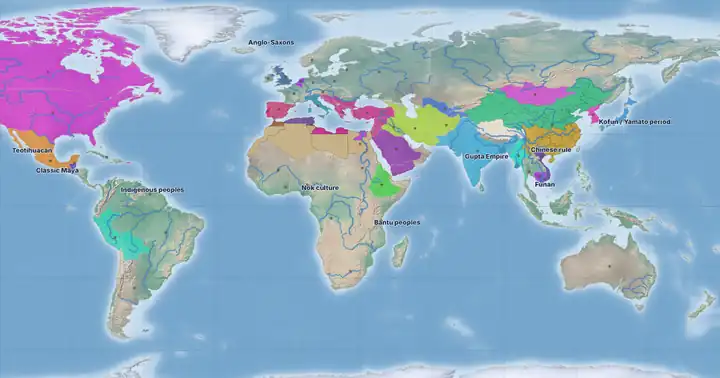
States and rulers by region
| Region | State or period | Ruler that year |
|---|---|---|
| United Kingdom | Anglo-Saxons | — |
| Rome | Barbarian kingdoms | Odoacer |
| Turkey | Byzantine Anatolia | — |
| Egypt | Byzantine Egypt | — |
| Mesopotamia | Sasanian Persia | Peroz I |
| India | Gupta Empire | Budhagupta |
| China | Northern & Southern Dynasties | — |
| Japan | Kofun / Yamato period | King Ko of Wa |
| Greece | Byzantine Empire | — |
| North Africa | Vandal Kingdom | Genseric |
| Sudan | Post-Meroitic kingdoms | — |
| Maya | Classic Maya | — |
| Mongolia | Rouran Khaganate | — |
| Indonesia | Kutai · Tarumanagara | Purnavarman (Tarumanagara) |
| Spain | Visigothic Kingdom | Euric |
| Portugal | Kingdom of the Suebi | (Gap in the sources; rulers unknown) |
| Korean Peninsula | Three Kingdoms of Korea | Goguryeo · King Jangsu / Baekje · King Munju / Silla · Jabi Maripgan |
| Iran | Sasanian Empire | Peroz I |
| Saudi Arabia | Nabataeans & Himyar | (Frequent changes on the Himyarite throne) |
| Uzbekistan | Sogdians, Hephthalites & Turks | Hephthalites (White Huns, c.) |
| Netherlands | Frankish Kingdom | Childeric I (based at Tournai) |
| Cambodia | Funan | Sri Indravarman |
| Austria | Migration Period | — |
| Ireland | Early Christian Ireland | — |
| Afghanistan | Kushano-Sasanians & Hephthalites | — |
The “Ruler that year” column comes from TimelineSurf's dated lists of rulers and heads of government. A blank means no record for that year, not that the region had no ruler. A few lists are incomplete, so the name may be the most recent one on record.
Events around this year
- 475Fall of Hanseong
King Jangsu of Goguryeo captured the Baekje capital of Hanseong and King Gaero was killed; Baekje moved south to Ungjin (present-day Gongju), losing the lower Han River. - 476Fall of the Western Roman Empire
Europe enters the Middle Ages. - 476Fall of the Western Roman Empire
A Germanic chieftain deposes the last emperor; Europe enters the Middle Ages.