The Franks: From Clovis to Verdun
How a Germanic tribe became master of Western Europe, and how, when its empire was divided in three, it gave rise to the future France and Germany.
Soissons
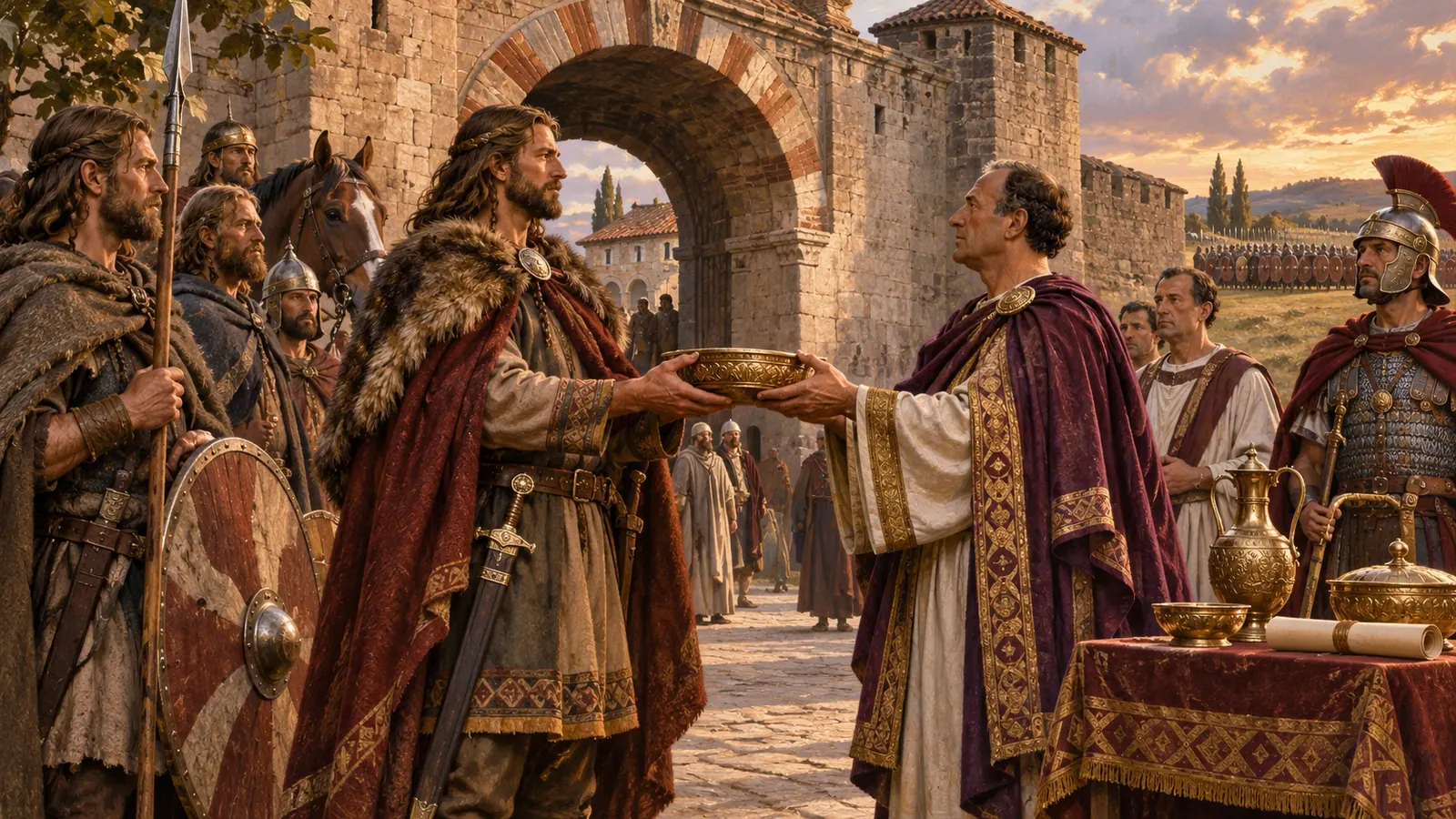
Clovis I, chief of the Salian Franks, defeated the last Western Roman power in Gaul, then kept expanding until he had united most of Gaul.
Baptized at Reims

According to the traditional date, Clovis I was baptized at Reims and converted to Catholicism, winning the support of the Gallo-Romans and the Church; thereafter most kings of France were crowned at Reims.
The Hammer

As the Merovingian kings lost real power, the mayor of the palace Charles Martel drove back an Umayyad army between Tours and Poitiers, earning the nickname "the Hammer."
Carolingian dynasty
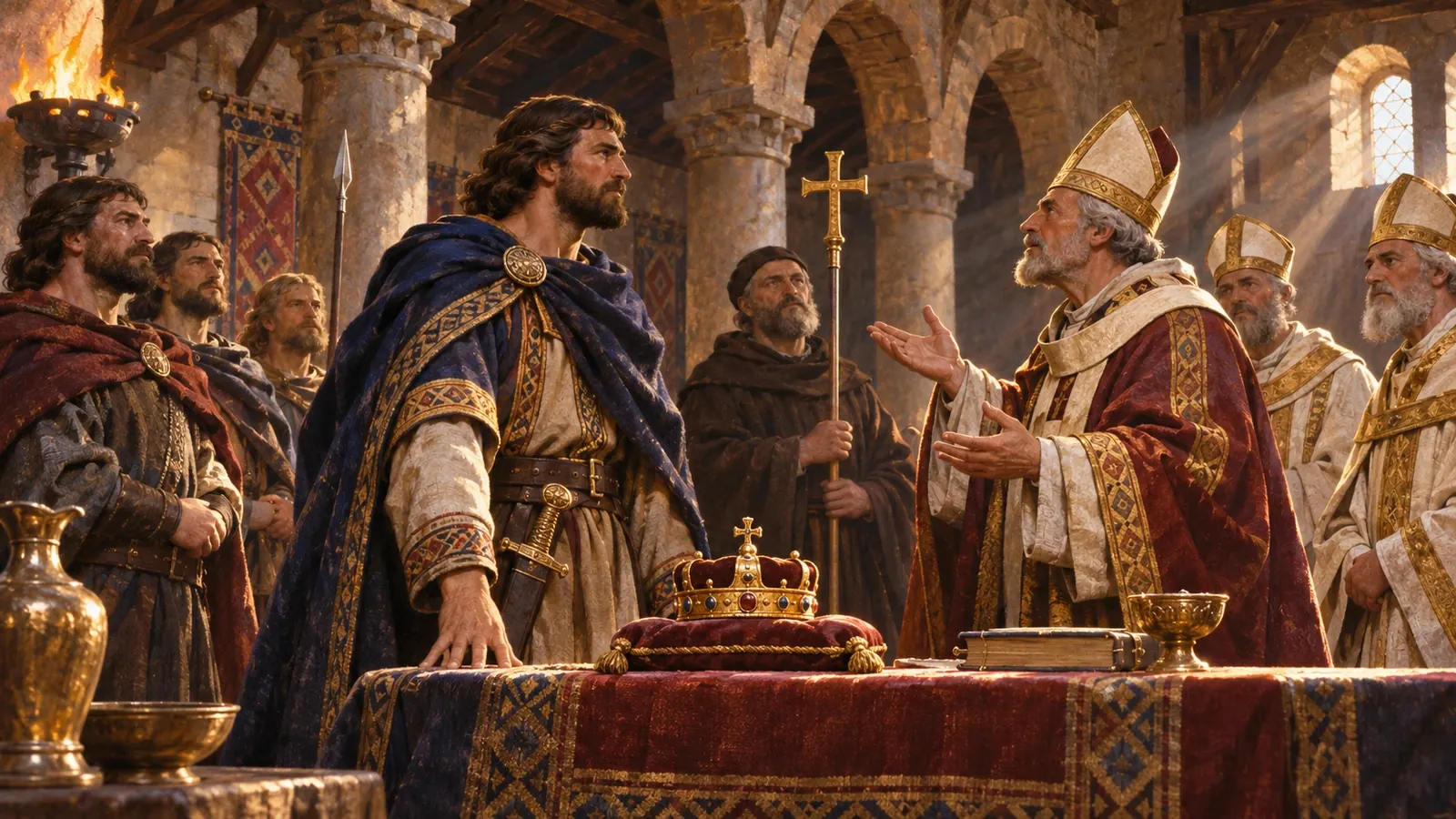
With the Pope's backing, Charles Martel's son Pepin deposed the last Merovingian king and proclaimed himself king, then gave the Italian lands he had seized to the Pope.
Coronation of Charlemagne
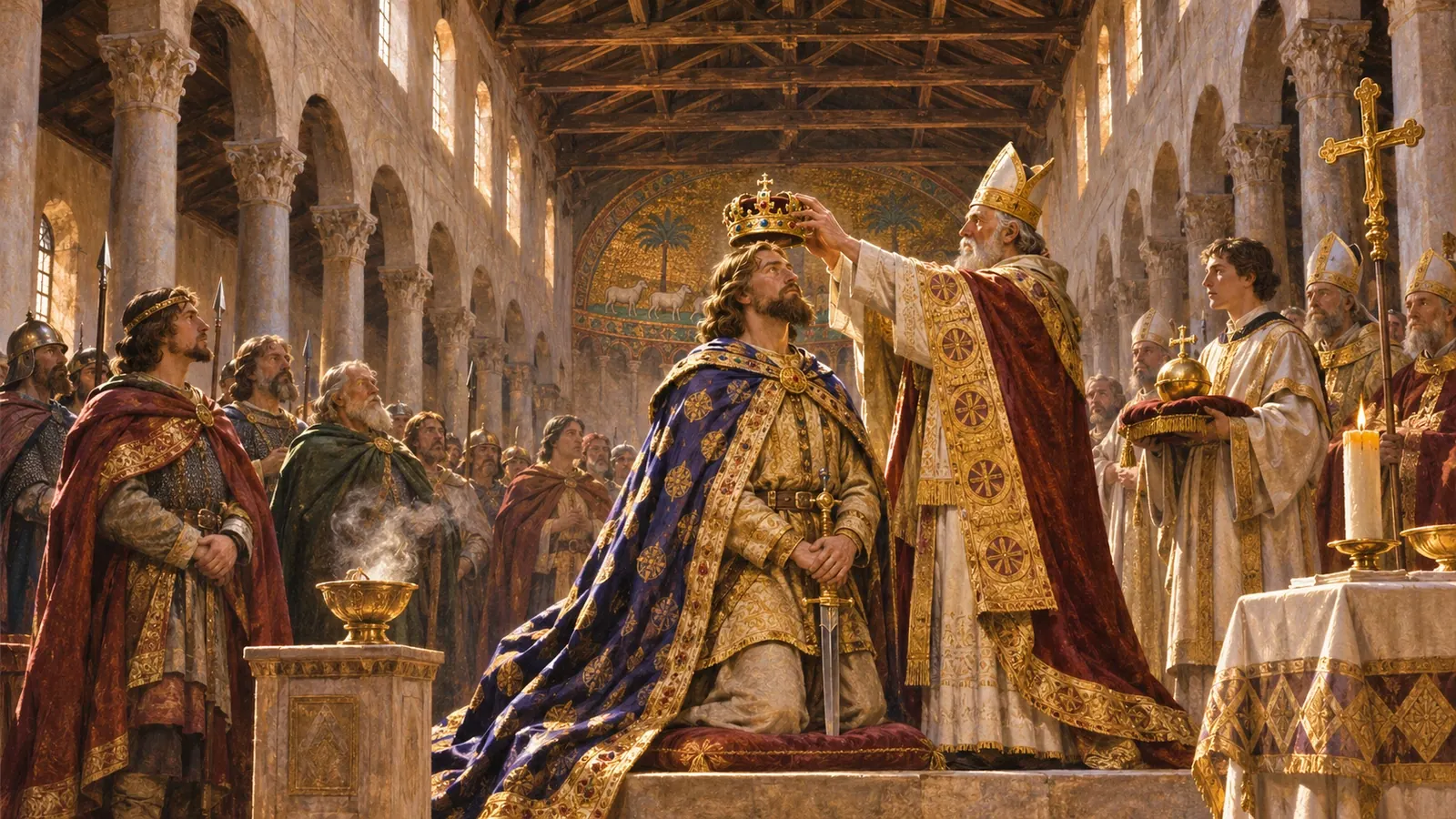
Pepin's son Charlemagne conquered Saxony and Lombardy, and on Christmas Day 800 CE was crowned "Emperor of the Romans" by the Pope in Rome; most of Western Europe was united once more.
Treaty of Verdun
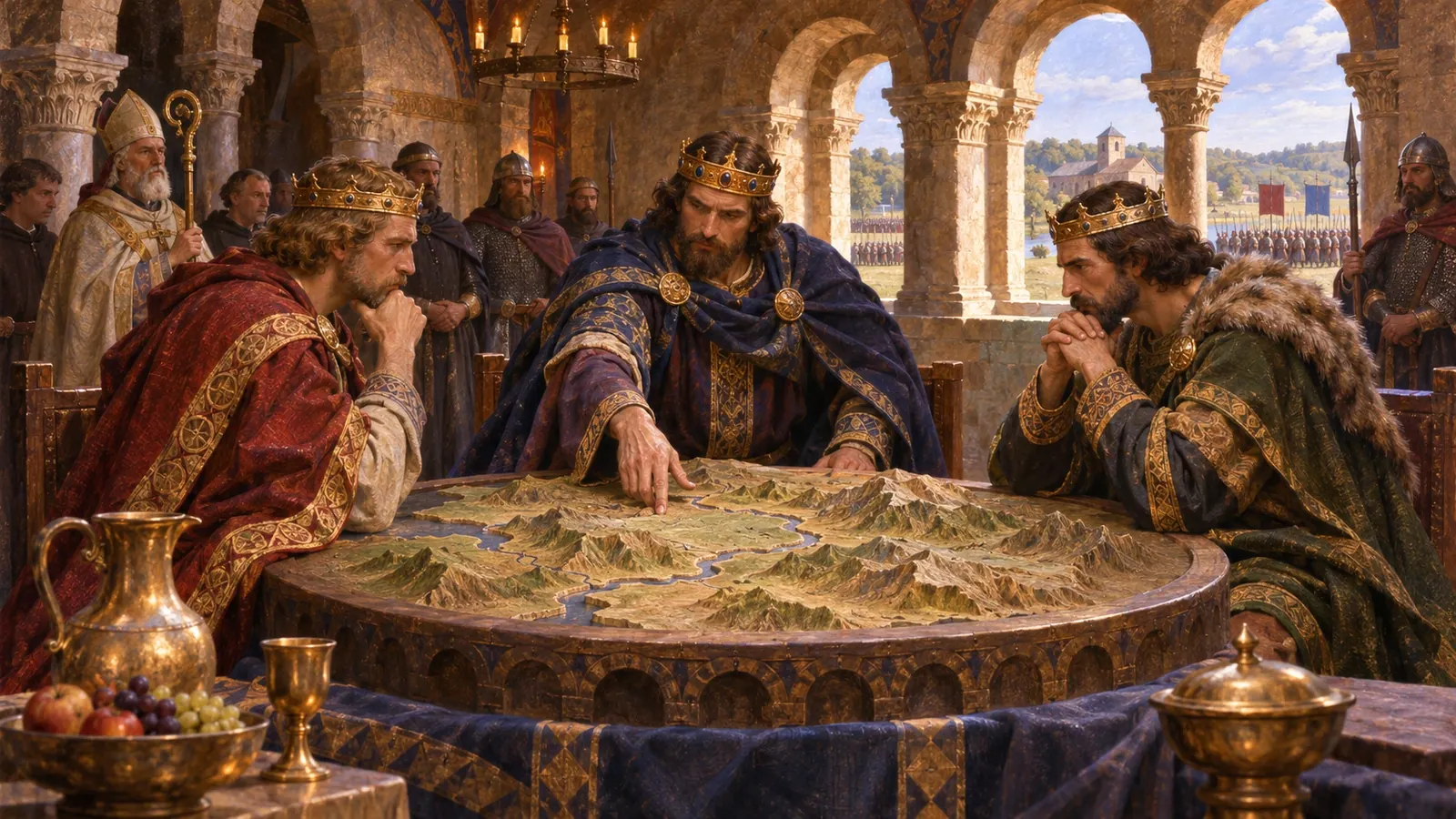
Charlemagne's three grandsons divided the empire: West Francia later grew into France, East Francia into Germany, and Lotharingia in between became land the two countries fought over for a thousand years.