Wu Zetian
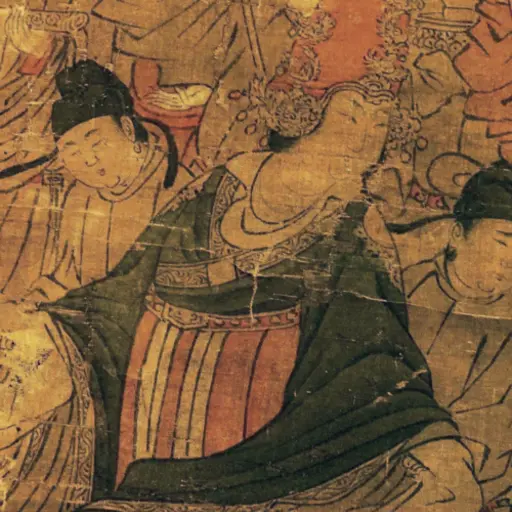

Proclaimed herself emperor of the Zhou and expanded the imperial examinations; China's only female emperor.
Life
Entering the palace as empress
Wu Zetian came from a family of timber merchants and officials in Bingzhou. At fourteen she entered the palace as a cairen (consort) of Emperor Taizong of Tang; after Taizong's death she briefly became a nun, but was brought back by Emperor Gaozong of Tang and made Empress in 655. Taking advantage of Gaozong's frequent illness, she took part in governing, gradually purged senior ministers such as Zhangsun Wuji, and was called one of the "Two Sages" together with Gaozong.
Taking the throne and renaming the dynasty Zhou
After Gaozong's death she deposed Emperors Zhongzong and Ruizong in turn, and in 690 proclaimed herself emperor and renamed the state Zhou, becoming the only female emperor in Chinese history. She greatly expanded the regular and special examinations, created the palace examination and the military examination, and promoted scholars of humble birth beyond the usual rules; at the same time she employed cruel officials and set up bronze boxes for secret denunciations, harshly suppressing her opponents.
Abdication and assessment
During her reign the economy kept growing, and frontier territory once lost was partly recovered, preserving the talent and institutions on which the Kaiyuan golden age would build. In the Shenlong Coup of 705 she was forced to abdicate and died soon after, leaving behind the Wordless Stele. Later histories mostly condemned her usurpation of the Tang and her private conduct, while modern assessments have become more varied.
Legacy
Wu Zetian was the only legitimate female emperor in Chinese history. During her rule the economy kept developing, the population grew, recruitment through the imperial examinations expanded, and talents such as Di Renjie and Yao Chong were given important posts, laying the foundation for Emperor Xuanzong's Kaiyuan golden age. Traditional historians, judging by Confucian ethical norms, mostly condemned her for usurping the Li family's Tang and employing cruel officials; since modern times assessments have become more diverse, paying more attention to her ability to govern and her historical significance as a woman in power. The Wordless Stele at the Qianling Mausoleum has also left endless room for later commentary.
Major works & achievements
- Proclaimed herself emperor in 690 CE, founding the Wu Zhou
- Expanded the imperial examinations, introducing the palace examination and the military examination
- Installed copper petition boxes, opening channels for both advice and denunciations
- Promoted talents such as Di Renjie and Yao Chong outside the usual rules
Did you know? She created more than a dozen new characters, and the one she coined for her own name, "Zhao" (meaning the sun and moon shining over the sky), is still in use today.
Key dates
- 637Entered the palace as a cairen (consort) of Emperor Taizong of Tang
- 655Made empress of Emperor Gaozong of Tang
- 660Began taking part in state affairs
- 674Called the "Two Sages" together with Gaozong
- 683Gaozong dies; she rules as regent from the court
- 690Proclaims herself emperor; state renamed Zhou
- 693Expands the examinations; creates the palace and military examinations
- 705Abdicates after the Shenlong Coup; dies the same year