Ramesses II
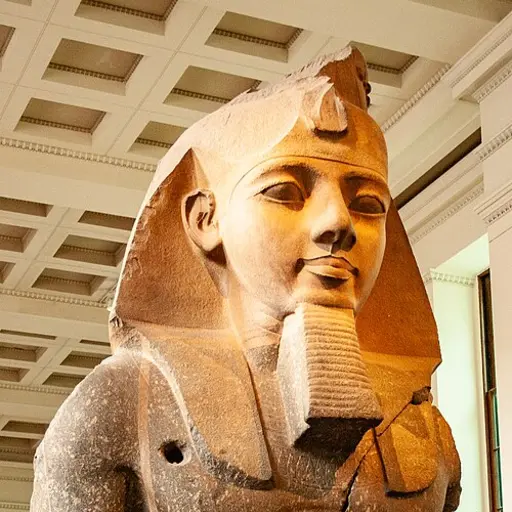

Pharaoh of Egypt who reigned for 67 years, made peace with the Hittites and built on a grand scale.
Life
Boyhood co-regency
Ramesses II was the son of Seti I and belonged to the Nineteenth Dynasty; from youth he campaigned alongside his father and was made co-regent. When he took the throne in 1279 BCE, Egypt had just recovered from the religious upheaval of the Amarna period and was contending with the Hittite Empire to the north for control of Syria.
Kadesh and the treaty
In the fifth year of his reign he led his army in fierce fighting against the Hittites at Kadesh on the Orontes River, and neither side won a decisive victory. The war then dragged back and forth for more than a decade, and in 1259 BCE the two sides concluded the earliest surviving international peace treaty. At home he built the temples of Abu Simbel, the mortuary temple of the Ramesseum and the new capital Pi-Ramesses.
Longevity and deification
His 67-year reign was one of the longest in Egyptian history, and he left an unprecedented number of statues and inscriptions, so later ages repeatedly deified him. However, his massive construction projects drained the state's strength, and his successors were already struggling when they faced the invasions of the Sea Peoples. He is often seen as a symbol of both the zenith and the turning point of the New Kingdom.
Legacy
Ramesses II is one of the most famous pharaohs of ancient Egypt, and the fact that many later pharaohs took the name "Ramesses" shows his prestige. He publicized the Battle of Kadesh as a great victory won by his personal valor, whereas Hittite records show otherwise, making it a classic case of ancient political propaganda. His treaty with the Hittites survives in both Egyptian and Hittite versions. He is often linked to the pharaoh of the Book of Exodus, but there is no firm proof.
Major works & achievements
- Faced the Hittites at the Battle of Kadesh
- Concluded with the Hittites the oldest surviving international peace treaty
- Built the temples of Abu Simbel
- Built the Ramesseum and a new capital
Did you know? When the Aswan High Dam was built in the 1960s, the Abu Simbel temples were cut into more than a thousand blocks and moved as a whole to higher ground, where they were reassembled.
Key dates
- 1279 BCEBecame pharaoh
- 1274 BCEFaces the Hittite army at the Battle of Kadesh
- 1270 BCEKeeps contesting Syria
- 1264 BCEBuilds the Abu Simbel temples
- 1259 BCEMakes peace with the Hittites
- 1246 BCEMarries a Hittite princess
- 1213 BCEDied; buried in the Valley of the Kings