Norodom Sihanouk
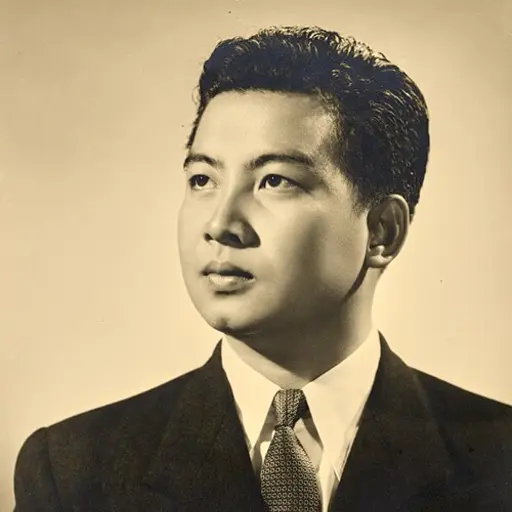

The king who led Cambodia to independence and remained at the center of Cambodian politics for more than half a century afterward.
Life
Boy king
Sihanouk descended from both the Norodom and Sisowath branches of the Cambodian royal family. In 1941 the French colonial authorities chose him as king, at the age of eighteen. After the Japanese disarmed the French forces in March 1945, he declared Cambodia independent; when France returned after the war, he launched the "Royal Crusade for Independence," lobbying at home and abroad, and on November 9, 1953, Cambodia gained full independence, earning him the title "Father of Independence."
Neutrality and Civil War
In 1955 he abdicated in favor of his father, founded the Sangkum (People's Socialist Community), and governed as prime minister, becoming head of state in 1960. He pursued a policy of neutrality, attended the Bandung Conference, maintained friendly relations with China, and tried to keep Cambodia out of the Vietnam War. In March 1970 he was deposed by the National Assembly while on a trip abroad, and he promptly founded the National United Front of Kampuchea in Beijing, allying with the Khmer Rouge. After the Khmer Rouge took power in 1975, he returned home as nominal head of state; he resigned the following year and was placed under house arrest, and several of his children and relatives were killed during this period.
Restoration and Later Years
After 1979 Sihanouk lived in long exile in Beijing and Pyongyang. In 1982 he became president of the Coalition Government of Democratic Kampuchea and campaigned internationally on the Cambodian question. After the Paris Peace Agreements were signed in 1991, he returned to Phnom Penh as chairman of the Supreme National Council, and in 1993 he was restored as king. He abdicated in 2004 and was succeeded by his son Norodom Sihamoni, and he died in Beijing in 2012. Sihanouk lived through colonialism, independence, civil war, mass killing and reconstruction, and his political choices are still judged in differing ways today.
Legacy
Sihanouk is revered by Cambodians as the "Father of Independence." He won national independence amid a complex international environment and long held to neutrality; an old friend of the Chinese people, he maintained a friendship with China for more than half a century. His life saw several rises and falls, from king to prime minister to exile and then to restored king, mirroring the twists and turns of modern Cambodian history. Critics argue that he suppressed the opposition while in power, and his decision to ally with the Khmer Rouge after 1970 remains highly controversial.
Major works & achievements
- Led the royal campaign for independence
- Won Cambodia full independence in 1953
- Pursued a neutral foreign policy and attended the Bandung Conference
- Founded the National United Front of Kampuchea
- Restored as King in 1993
Did you know? A lover of cinema, in the 1960s he wrote, directed and acted in a number of films himself.
Key dates
- 1922Born in Phnom Penh
- 1941Chosen as king
- 1953Cambodia gained full independence
- 1955Abdicated in favor of his father and founded the Sangkum
- 1970Deposed by the National Assembly; founded the National United Front in Beijing
- 1976Resigned as nominal head of state and was placed under house arrest
- 1993Restored as king
- 2004Abdication
- 2012Died in Beijing