Túpac Amaru II
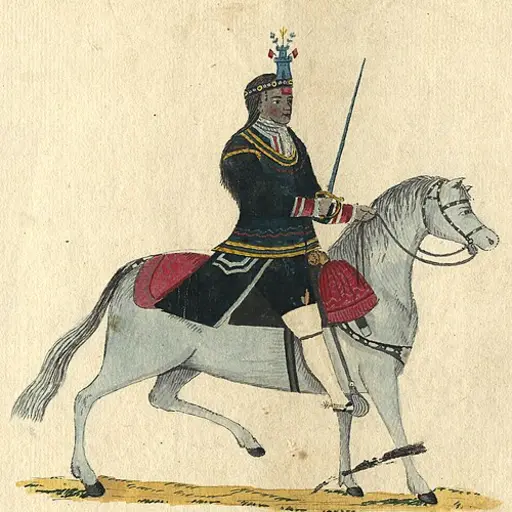

Indigenous chief who claimed descent from the last Inca and in 1780 led one of the largest Indigenous uprisings in the colonial Americas.
Life
Inca descendant
Túpac Amaru II, born José Gabriel Condorcanqui, came from an Indigenous noble family in the Tinta region south of Cusco and claimed descent from Túpac Amaru, the last Inca ruler, executed in 1572. Educated at a Jesuit school in Cusco, he inherited the chieftainship of several villages and ran a mule-train business, traveling between Cusco, Potosí and Lima.
Petition and revolt
In the late 18th century the Bourbon Reforms raised sales taxes and tightened trade controls, while the "reparto," under which officials forced Indigenous people to buy goods, and the mita labor draft made life unbearable. Condorcanqui repeatedly petitioned through legal channels for exemption from the mita, without success. In November 1780 he seized and executed the local corregidor, Arriaga, in Tinta and rose in revolt in the name of Túpac Amaru, demanding the abolition of the reparto, the mita and oppressive taxes.
Defeat and symbol
The rebel army quickly swelled to tens of thousands and defeated the first force sent to suppress it at Sangarará, but its subsequent siege of Cusco failed. In April 1781 he was betrayed and captured, and in May he was executed together with his family in the main square of Cusco. The uprising continued in southern Peru and Upper Peru until 1782. His name then became a symbol of Andean resistance to colonial rule, and Peru's military government of the 20th century even used his image as the emblem of its land reform.
Legacy
The uprising led by Túpac Amaru II was one of the largest Indigenous revolts of the colonial era in Spanish America. Although brutally suppressed, it forced the colonial authorities to abolish abuses such as the reparto, and it is regarded as a precursor of the Latin American independence movement. Scholars disagree over whether his ultimate goal was to reform colonial rule or to restore Inca rule. Today he is revered in Peru as a national hero and a symbol of Indigenous resistance.
Major works & achievements
- Petitioned to abolish mita forced labor
- Rose in revolt at Tinta in 1780
- Defeated colonial troops at the Battle of Sangarará
Did you know? The American rapper Tupac Shakur was named after him.
Key dates
- 1738Born in the Tinta region
- 1777Petitioned in Lima for exemption from the mita (approx.)
- 1780Executed the corregidor Arriaga and rose in revolt
- 1780Victory at the Battle of Sangarará
- 1781Siege of Cusco failed; captured
- 1781Executed in Cusco