Patrice Lumumba
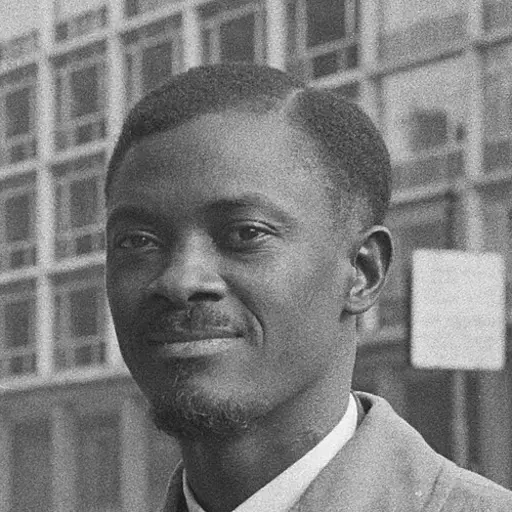

Led the Congo to independence, only to be overthrown and killed a few months after independence.
Life
Postal Clerk and Évolué
Lumumba was born in 1925 in Onalua, Kasai Province, Belgian Congo, and was educated in mission schools. He later worked at the post office in Stanleyville and also as a salesman for a brewery. He was active in the associations of the native intellectuals known as "évolués," wrote articles, and gradually became a political activist.
Independence and the Speech
In 1958 he co-founded the Congolese National Movement, one of the few national parties that sought to transcend ethnic and regional divisions. That same year he attended the All-African People's Conference in Accra and was deeply influenced by Nkrumah's Pan-Africanism. In 1959 he was arrested for organizing a rally; released the following year, he attended the Round Table Conference in Brussels. In the May 1960 elections the Congolese National Movement became the largest party, and he became the first Prime Minister. At the independence ceremony on June 30, he delivered an impromptu speech recounting the humiliations of colonial rule.
Killed amid Crisis
After independence the Congo quickly plunged into crisis: the army mutinied, Katanga seceded, and Belgium intervened militarily. He sought aid from the UN and the Soviet Union, arousing suspicion in Western countries. In September he was dismissed by President Kasa-Vubu, and Mobutu then staged a coup; Lumumba was placed under house arrest, escaped, was arrested, and in January 1961 was handed over to the Katanga authorities and killed. In 2002 the Belgian government apologized for its responsibility in these events.
Legacy
Lumumba was an iconic figure of Africa's independence movements. He sought to unify the Congo beyond its ethnic divisions, and his Independence Day speech confronted the violence of colonial rule head-on, displaying the dignity of the new nation. Only a few months into his rule he was overthrown and killed amid Cold War rivalry and a secessionist crisis; a Belgian parliamentary inquiry confirmed that Belgium bore moral responsibility, and the CIA's assassination plot has also been publicly confirmed. His fate became a symbol of great-power interference in Africa during the Cold War.
Major works & achievements
- Co-founded the Congolese National Movement
- First Prime Minister of the Congo
- Delivered the Independence Day speech
- Sought aid from the UN and the Soviet Union
Did you know? In 2022, Belgium returned his only surviving remains, a single tooth, to DR Congo.
Key dates
- 1958Co-founded the Congolese National Movement
- 1958Attended the All-African People's Conference in Accra
- 1959Arrested and imprisoned
- 1960First Prime Minister of the Congo
- 1960Dismissed and placed under house arrest
- 1961Killed