Nnamdi Azikiwe
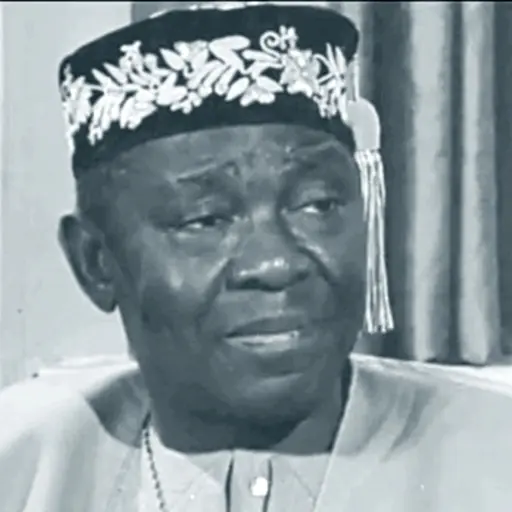

Roused nationalism through newspapers and political parties, and became first President after Nigerian Independence.
Life
Study in America and Journalism
Azikiwe was born in 1904 in Zungeru in Northern Nigeria; his family came from Onitsha in the southeast, and he was known as "Zik." In 1925 he went to study in the United States, studying political science and anthropology at several universities, and taught for a time. In 1934 he went to the Gold Coast to edit a newspaper, and in 1937 he returned to Lagos and founded the West African Pilot, whose impassioned criticism of colonial rule influenced a generation of young people.
Independence movement leader
In 1944 he co-founded the National Council of Nigeria and the Cameroons with Herbert Macaulay and later became the party's president, emerging as one of the most important leaders of the independence movement. From 1954 to 1959 he was Premier of the Eastern Region. When Nigeria became independent in 1960 he became Governor-General, and after the country became a republic in 1963 he served as its first President until the military coup of 1966.
Civil War and Later Years
During the civil war he initially supported Biafra, but in 1969 he switched to calling for peace and unity. He later ran for president twice more, without success. In his later years he was widely revered as an elder statesman, and he died in 1996. He championed a nationalism that transcended ethnic groups, yet in the politics of his generation, regional and ethnic factors always proved hard to escape.
Legacy
Azikiwe is revered as the "father of Nigerian nationalism." Using newspapers as his platform, he awakened national consciousness among the youth of West Africa and influenced a generation of independence movement leaders, Nkrumah among them. He championed a nationwide nationalism that transcended ethnic groups and helped Nigeria achieve independence through negotiation. After independence, however, Nigerian politics became mired in regional and ethnic rivalry, his ideal of unity was never fully realized, and his shift of position during the civil war has also drawn differing views.
Major works & achievements
- Founded the West African Pilot
- Co-founded the National Council of Nigeria and the Cameroons
- Became Nigeria's first governor-general and president
- Promoted the founding of the University of Nigeria
Did you know? His portrait appears on Nigeria's 500-naira banknote.
Key dates
- 1925Went to study in the United States
- 1937Founded the West African Pilot
- 1944Co-founded the National Council of Nigeria and the Cameroons
- 1954Became Premier of the Eastern Region
- 1960Became Governor-General of Nigeria
- 1963Became first President
- 1966Left office after a military coup
- 1996Died