Said bin Sultan
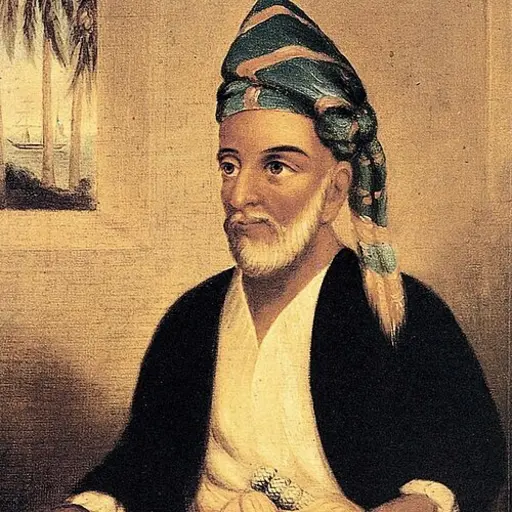

The sultan of Oman who moved his court from Muscat to Zanzibar, making Zanzibar the center of the clove and ivory trade.
Life
Ruling Oman
Said bin Sultan came from Oman's Al Busaid dynasty and seized power amid a family feud in 1806. At the time Oman's control of the East African coast was only nominal, with local powers such as the Mazrui family of Mombasa going their own way. Drawing on cooperation with Britain to strengthen his sea power, Said gradually restored suzerainty over the Swahili coast, and in 1837 he finally subdued the Mazrui and took Mombasa.
Moved the capital to Zanzibar
Drawn by Zanzibar's fine harbor and fertile land, he moved his court there in stages, roughly between 1830 and 1840. He vigorously promoted clove cultivation on Zanzibar and Pemba, which for a time became the world's largest producer of cloves; the plantations relied heavily on the labor of slaves shipped from the mainland. He encouraged Indian merchants to settle and do business, Zanzibari caravans pushed deep into the African interior, and the ivory and slave trades flourished as never before.
Trade and division
Said signed commercial treaties with the United States (1833), Britain and France, and Zanzibar became one of the most important international ports on the western shore of the Indian Ocean. He died during a voyage in 1856, and his two sons fought over the succession; in 1861, through the arbitration of Canning, Governor-General of India, Oman and Zanzibar were divided into two sultanates.
Legacy
Said bin Sultan turned Oman into a maritime commercial empire spanning the Arabian Peninsula and the East African coast, making Zanzibar one of the most prosperous ports on the western Indian Ocean in the 19th century and profoundly shaping the economy and culture of East Africa's Swahili coast. This prosperity, however, rested largely on the slave trade and slave labor on plantations, which caused severe damage to societies in the East African interior.
Major works & achievements
- Restored suzerainty over the Swahili coast
- Moved his court to Zanzibar
- Promoted clove cultivation
- Signed commercial treaties with the US, Britain and France
Key dates
- 1806Took power in Oman
- 1833Signed a commercial treaty with the United States
- 1837Subdued the Mazrui family of Mombasa
- 1840Moved his court to Zanzibar (some say in 1832)
- 1856Died during a voyage
- 1861Oman and Zanzibar split