Abd al-Rahman III
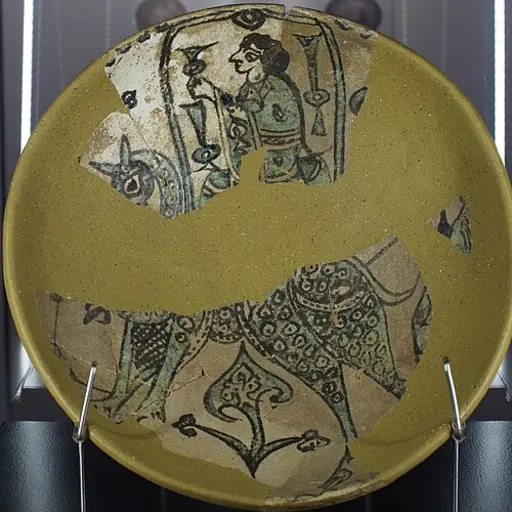

Quelled the internal strife of al-Andalus, proclaimed himself caliph in 929 CE and inaugurated the golden age of Córdoba.
Life
Succeeded amid Turmoil
Abd al-Rahman III was the grandson of Emir Abdallah; according to the sources his mother was a slave woman of northern Christian origin, and his grandmother a princess of Pamplona. In 912 CE, at the age of twenty-one, he succeeded his grandfather and inherited a fragmented emirate: the convert Ibn Hafsun held the southern mountains, Arab nobles and Berber chiefs everywhere went their own way, and Córdoba's orders barely reached beyond the city's outskirts.
Proclaimed Caliph
Over more than twenty years he put down the rebellions one by one, and in 928 CE he took Bobastro, the stronghold of Ibn Hafsun's family. In 929 CE he proclaimed himself caliph, both answering the challenge of the Fatimid Caliphate in North Africa and asserting equal standing with Baghdad. He built the palace city of Madinat al-Zahra, received envoys from Byzantium and the Holy Roman Empire, and propped up allies and seized footholds along the North African coast to contain Fatimid power.
War, Peace and Golden Age
With the Christian kingdoms of the north he alternated between war and peace. After his defeat by King Ramiro II of León at Simancas in 939 CE he never again led a campaign in person, turning instead to diplomacy to intervene in the succession struggles of León and Navarre. During his reign of nearly fifty years, Córdoba's population, wealth and learning reached their peak. Later accounts claim he said he had known only fourteen truly happy days in his life, a story that is hard to verify.
Legacy
Abd al-Rahman III reunified an emirate on the verge of collapse and, by taking the title of caliph, raised Córdoba's international standing, making it one of the richest and most populous cities in 10th-century Western Europe. His court drew on talent from different ethnic groups and religions, and culture and learning flourished. But the highly centralized system he built depended on a strong ruler; less than a century after his death the caliphate fell into civil war and broke apart into numerous taifa kingdoms.
Major works & achievements
- Put down revolts including that of Ibn Hafsun
- Proclaimed himself caliph in 929
- Built the palace city of Madinat al-Zahra
- Backed allies in North Africa to contain the Fatimids
Did you know? The archaeological site of the palace-city of Madinat al-Zahra was inscribed on the World Heritage List in 2018.
Key dates
- 912Succeeds as Emir of Córdoba
- 928Captures Bobastro, crushing the southern rebellion
- 929Proclaims himself Caliph
- 936Begins building the palace-city of Madinat al-Zahra
- 939Defeated at the Battle of Simancas
- 949Received a Byzantine embassy
- 961Died in Córdoba