Paul the Apostle
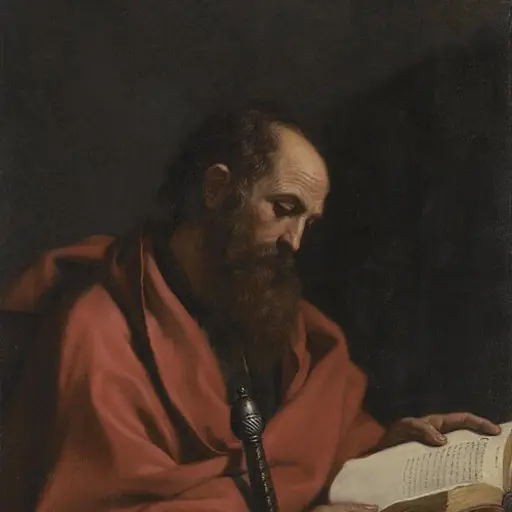

Turned from persecutor to apostle, leading the church out to the Gentiles.
Life
Pharisee disciple
Paul was born in Tarsus in Asia Minor, a Jew who held Roman citizenship. In his youth he received a strict Pharisaic education in Jerusalem, and at first, under the name Saul, he actively took part in persecuting the young Christian community and personally witnessed the stoning of Stephen.
Conversion and mission
On the road to Damascus, by his own account, he encountered a vision, was blinded for three days, and then converted to Christ. He then took the name Paul and made several missionary journeys across Asia Minor, Greece and Macedon, founding many Gentile churches. At the Council of Jerusalem he argued that Gentile converts need not first be circumcised and keep the Law of Moses, laying the foundation for Christianity to break out of the framework of Judaism and spread into the Mediterranean world, and he wrote many letters expounding doctrine.
Martyrdom and controversy
Tradition holds that he was finally martyred in Rome under Nero, beheaded rather than crucified because he was a Roman citizen, but no contemporary document directly records the exact year or circumstances of his martyrdom, which rest mainly on later church tradition. His letters' views on the role of women and on the relationship between the Law and grace have long been debated within Christianity, and different denominations still interpret them differently today.
Legacy
Paul the Apostle is regarded as one of the most pivotal figures in the history of Christianity after Jesus. He carried the faith from a sect within Judaism to Gentiles across the Mediterranean, and his ideas on justification by faith and on grace and the Law profoundly influenced later theologians such as Augustine of Hippo and Martin Luther. Scholars generally hold that about seven of the thirteen letters bearing Paul's name were really written by him, while the authenticity of the rest remains disputed. Some scholars also argue that his systematic interpretation changed the shape of the early disciples' faith.
Major works & achievements
- Made several missionary journeys and founded many Gentile churches
- Letters such as Romans and 1 Corinthians
- Insisted Gentile believers need not be circumcised
- Thirteen letters in the New Testament are attributed to him
Did you know? His letters are the earliest written texts in the New Testament, predating the four Gospels.
Key dates
- 5Born in Tarsus, Cilicia
- 34Converted on the road to Damascus
- 47Set out on his first missionary journey
- 50Council of Jerusalem: Gentile converts need not be circumcised
- 53Third missionary journey; wrote many letters
- 58Arrested in Jerusalem
- 60Sent to Rome to stand trial
- 64Said to have been martyred in Rome