Senusret III
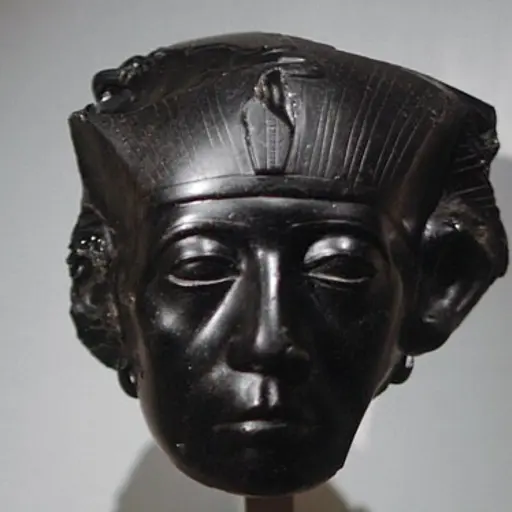

Led expeditions into Nubia, built fortresses and curbed the local nobles.
Life
Border threats and nomarchs
Senusret III was a king of the Twelfth Dynasty of the Middle Kingdom. When he came to the throne Egypt was already quite strong, but its southern frontier in Nubia was repeatedly harassed by native Nubian kingdoms, and at home the hereditary power of the provincial nomarchs remained considerable, constraining centralization.
Southern campaigns and centralization
He personally led several campaigns into Nubia, pushing the border south of the Second Cataract and securing it with a chain of fortresses along the Nile, such as Semna. At home he curtailed the hereditary power of the provincial nomarchs and expanded the bureaucracy appointed directly by the crown; he also sent troops into the Levant to extend Egypt's influence.
Deified after death
In the late Middle Kingdom the Egyptians deified him as the protector god of the Nubian frontier, and his popular cult lasted into the Greco-Roman period. This divine aura added by later ages is often confused with his actual achievements, and historians must rely on the administrative documents of his own time to tell them apart.
Legacy
Senusret III is regarded as one of the most powerful monarchs of the Middle Kingdom. His Nubian frontier defenses and his reforms curbing the nomarchs brought centralization to new heights, and large nomarch tombs became markedly rarer thereafter. Breaking with the idealizing tradition, his statues show a realistic face with heavy bags under the eyes and a weary expression, unique in the history of Egyptian art. The conqueror "Sesostris" of Greek legend is generally thought to be modeled partly on him.
Major works & achievements
- Pushed the frontier south beyond the Second Cataract of the Nile
- Built Semna and other fortresses
- Curbed the power of hereditary nomarchs
- Dredged the channel by the First Cataract
Key dates
- 1878 BCEBecame pharaoh
- 1866 BCEFirst expedition to Nubia
- 1862 BCEBuilt the Semna fortress line
- 1857 BCEAdministrative reforms curbed the local nomarchs
- 1850 BCESent troops into the Levant
- 1839 BCEDied